
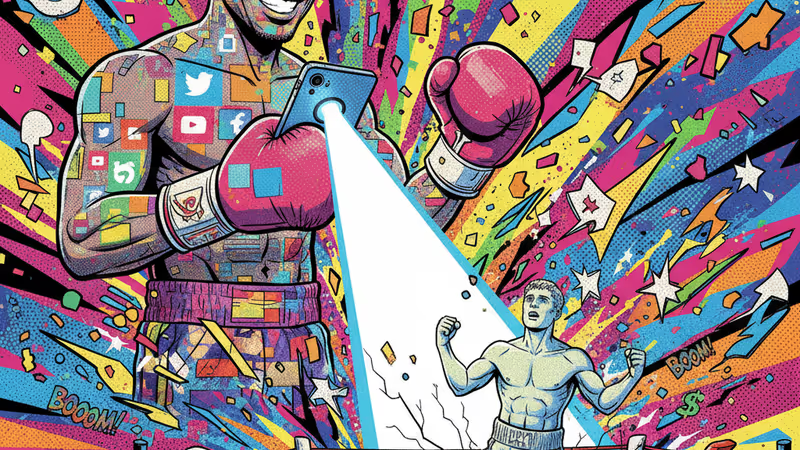
Beyond the Knockout: Why Paul vs. Joshua Signals a Hostile Takeover of Legacy Sports
The Jake Paul vs. Anthony Joshua fight isn't just boxing. It's a blueprint for the creator economy's takeover of legacy sports and media. An analysis.
The Lede: More Than a Fight, It's a Business Model War
The upcoming bout between creator-turned-boxer Jake Paul and heavyweight titan Anthony Joshua is not a sporting event; it's a boardroom-level case study on the collision of two empires. For executives, this isn't about who wins in the ring. It’s about understanding the M&A of audience, where the currency is digital clout, and the target is the multi-billion dollar legacy sports industry. This fight is the ultimate stress test of a new media model, pitting a decentralized, direct-to-fan platform against a century of institutional broadcasting and promotion.
Why It Matters: The Great Audience Unbundling
The Paul-Joshua event represents a fundamental shift in the sports-media complex, with significant second-order effects:
- The End of the Gatekeeper: Traditional broadcasters and promoters are being disintermediated. Paul, through his own promotion company and massive social reach, controls the narrative and a direct channel to millions of fans. This forces legacy players like DAZN or ESPN to become partners, not dictators, of terms.
- Demographic Lifeline: Legacy sports face an aging audience crisis. Joshua brings the boxing purists and the UK market; Paul brings a global, younger, digitally-native demographic that traditional sports desperately need to survive. This is less a fight and more a massive, high-stakes user acquisition strategy.
- Redefining "Athlete": The 21st-century athlete is a media entity first, a competitor second. Their value is increasingly measured not just by performance metrics, but by engagement rates, subscriber counts, and content output. This fight solidifies that new reality.
The Analysis: From Ali to Algorithm
Historically, crossover events relied on the charisma of a singular figure like Muhammad Ali to transcend the sport. Today, the model is scalable and data-driven. Ali was a media sensation; Jake Paul is the media. He's a vertically integrated content machine—promoter, fighter, and broadcaster rolled into one—who understands the algorithm better than any legacy promoter understands a TV ratings sheet.
The competitive dynamic is fascinating. Anthony Joshua represents the pinnacle of the traditional path: Olympic gold, unified world titles, and reliance on established promoters like Matchroom. He needs Paul's audience to maintain cultural relevance and unlock a new pay-per-view ceiling. Paul, conversely, needs Joshua’s institutional credibility to silence critics and legitimize his entire enterprise. It’s a symbiotic, yet deeply disruptive, partnership. Paul isn't playing their game; he's forcing them to play his.
PRISM Insight: The Athlete as a D2C Platform
The underlying trend here is the "Athlete as a Direct-to-Consumer (D2C) Platform." This is a powerful investment thesis. The technology stack enabling this—social media for audience building, streaming platforms for distribution, and blockchain for fan ownership (e.g., tokens)—is creating a new asset class. Venture capital is no longer just funding leagues; it's funding the individual athlete's media empire.
This event's success will be measured in data points far beyond PPV buys: social media sentiment scores, micro-betting volume on non-fight outcomes, and new subscriber data for the host streaming platform. The fight itself is merely the tentpole content for a sprawling, multi-platform digital ecosystem designed for maximum monetization.
PRISM's Take: The Outcome is Irrelevant
PRISM's position is clear: the result in the ring is secondary. Jake Paul has already won by making this fight a reality. He has proven that a creator-led entity can command the attention of the global sports market on equal, if not superior, terms to established institutions. Whether he gets knocked out in the first round or scores a shocking upset, the business model has been validated.
This is the blueprint. Expect to see this replicated across Formula 1, golf, and basketball. Legacy institutions must now decide if they will acquire these new media engines, partner with them, or risk becoming the aging, irrelevant content that these new platforms exploit for their own growth.
Related Articles
A viral Cristiano Ronaldo photo is more than a fitness post. It's a masterclass in personal branding, the creator economy, and the future of media empires.

A fan-made PlayStation 1 yule log is more than nostalgia. It reveals a powerful trend in the creator economy and the infinite lifespan of tech platforms.

TikTok's disastrous first U.S. awards show reveals a critical gap between digital dominance and real-world execution. A deep dive into the creator economy's growing pains.
A photographer's viral project isn't just art. It's the start of a new 'Digital Restoration' economy, using AI to reshape real estate, tourism, and media.