

Beijing Protests as Japanese Lawmakers Deepen Taiwan Ties, Testing Regional Stability
Beijing lodges a protest with Tokyo over visits to Taiwan by senior Japanese LDP lawmakers, escalating tensions amid a downturn in bilateral relations and heightening regional security concerns.
Beijing has lodged a formal protest with Tokyo following a series of high-level visits to Taiwan by Japanese ruling party officials, a move signaling a sharp escalation in tensions between Asia's two largest economies. The diplomatic friction comes as Koichi Hagiuda, a senior lawmaker from the Liberal Democratic Party (LDP), met with Taiwanese leader William Lai Ching-te, highlighting Japan's increasingly assertive engagement with the self-governing island.
Hagiuda, the LDP's executive acting secretary general, is currently on a three-day trip to Taiwan set to conclude on Tuesday, December 23rd. According to reports, his visit is a precursor to a larger wave of engagement, with about 30 other Japanese lawmakers planning to visit the island by the end of the year.
While Japan officially acknowledges Beijing's 'One China' principle as the foundation of their diplomatic ties, it has maintained robust unofficial economic and cultural relations with Taiwan. Recently, however, this relationship has gained a strategic edge. Tokyo increasingly views the stability of the Taiwan Strait and the security of semiconductor supply chains as vital to its own national interest, prompting a more visible push for stronger ties from within the ruling LDP.
China's foreign ministry condemned the visits, framing them as a grave violation of its sovereignty and a move that sends the wrong signals to 'Taiwan independence' forces. The protest serves as a clear warning shot, intended to delineate Beijing's red lines. Japan, in turn, maintains that these are non-governmental exchanges between political parties, a long-standing practice in its diplomacy with Taipei, thereby downplaying Beijing's reaction.
This content is AI-generated based on source articles. While we strive for accuracy, errors may occur. We recommend verifying with the original source.
Related Articles
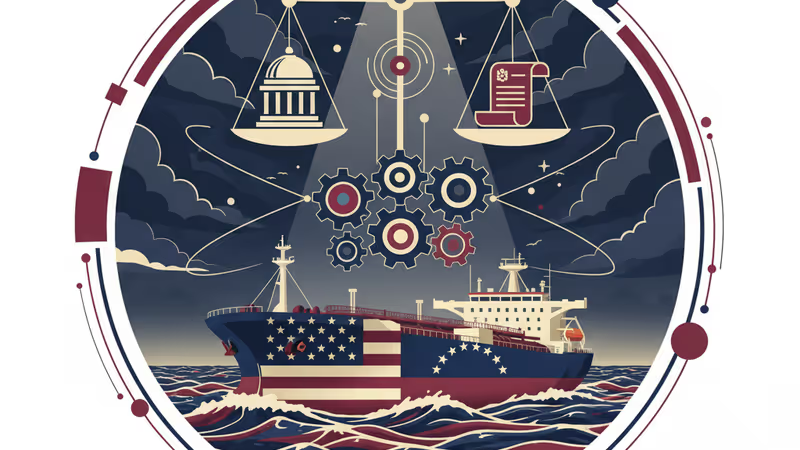
Are U.S. seizures of Venezuelan oil tankers lawful sanctions enforcement or a form of modern piracy? An analysis of the geopolitical and legal battle shaping the rules of global trade.
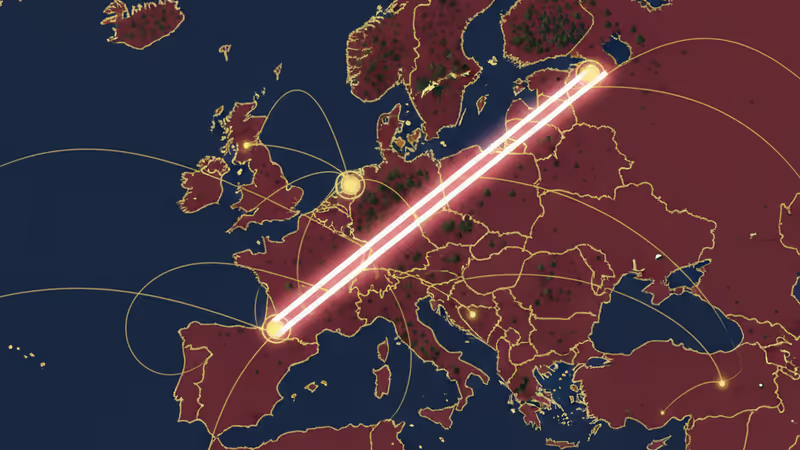
South Korea's military has revised its guidelines for defining the MDL border with North Korea to prevent accidental clashes, but the move raises concerns about a potentially softer response.

Clashes between the Syrian army and Kurdish-led SDF in Aleppo coincide with high-stakes Turkish-Syrian talks on the group's military integration, threatening Syria's fragile stability.
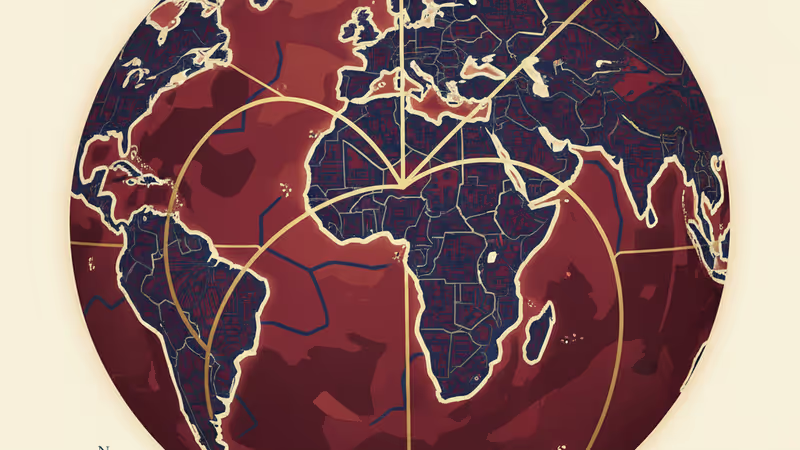
Israel's security cabinet approved 19 new settlement outposts in the occupied West Bank, marking the highest rate of expansion since 2017 and further undermining a two-state solution.