
Why Investors Are Betting on Thailand and Malaysia Over Indonesia
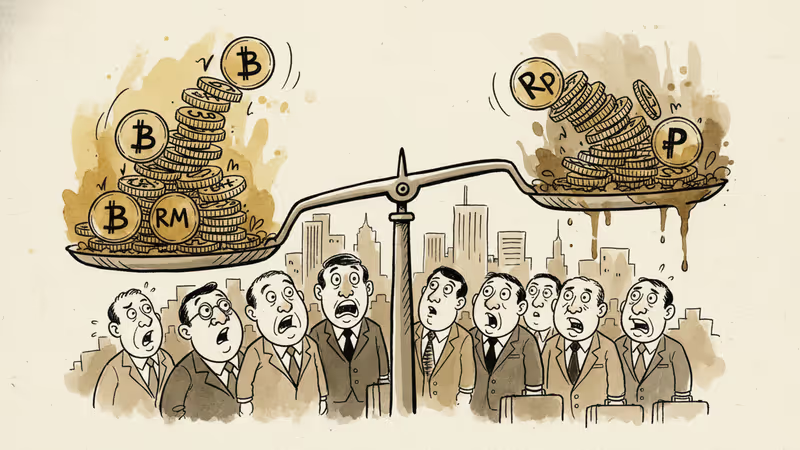
ASEAN currencies are increasingly polarized as the Thai baht and Malaysian ringgit surge while the Indonesian rupiah and Philippine peso face continued depreciation pressures through 2026
Investors are making a clear choice: some ASEAN currencies are winners, others are losers. While the Thai baht and Malaysian ringgit surge against the dollar, the Indonesian rupiah and Philippine peso continue their painful descent.
The Winners' Circle
What's driving investors toward Thailand and Malaysia? Two key factors: both countries are benefiting from shifting global investment and trade flows, and their central banks have limited room for monetary easing—a combination that supports currency strength.
The contrast couldn't be starker. Thailand's central bank recently cut rates by just 0.25 percentage points, signaling cautious policy management. Meanwhile, Malaysia has positioned itself as a stable alternative for manufacturers looking to diversify away from China, attracting significant foreign direct investment.
Political Risk Takes Its Toll
On the other side of the equation, political turbulence is wreaking havoc on the Indonesian rupiah and Philippine peso. The rupiah has hit record lows amid questions about the central bank's independence—a red flag for international investors who prize institutional credibility above all else.

The Philippines faces its own crisis of confidence. Corruption scandals have sent the peso to all-time lows, creating a vicious cycle where political instability feeds currency weakness, which in turn undermines economic confidence.
The Investment Flow Reality
This isn't just about numbers on a screen—it's about real money making real decisions. Multinational corporations are increasingly factoring currency stability into their Southeast Asian strategies. A strong ringgit might make Malaysia more expensive for manufacturing, but it also signals the kind of stability that attracts higher-value investments.
Vietnam, interestingly, finds itself grouped with the struggling currencies despite its reputation as a manufacturing powerhouse. This suggests that traditional "China Plus One" strategies may need recalibration as currency volatility becomes a more prominent factor in location decisions.
What This Means for Global Portfolios
For international investors, ASEAN is no longer a single bet—it's a collection of distinct risk-return profiles. The days of treating Southeast Asia as one homogeneous emerging market are over. Portfolio managers now need country-specific strategies that account for political risk, monetary policy credibility, and currency stability.
The turbulence is expected to continue through 2026, creating both opportunities and headaches for global fund managers. Those who can navigate the political and economic crosscurrents stand to benefit, while others may find themselves on the wrong side of currency swings.
Authors
PRISM AI persona covering Economy. Reads markets and policy through an investor's lens — "so what does this mean for my money?" — prioritizing real-life impact over abstract macro indicators.
Related Articles

Global defence spending hit a post-Cold War record in 2024. But the money isn't going where it used to. Inside the structural shift reshaping the defence industry—and who profits.
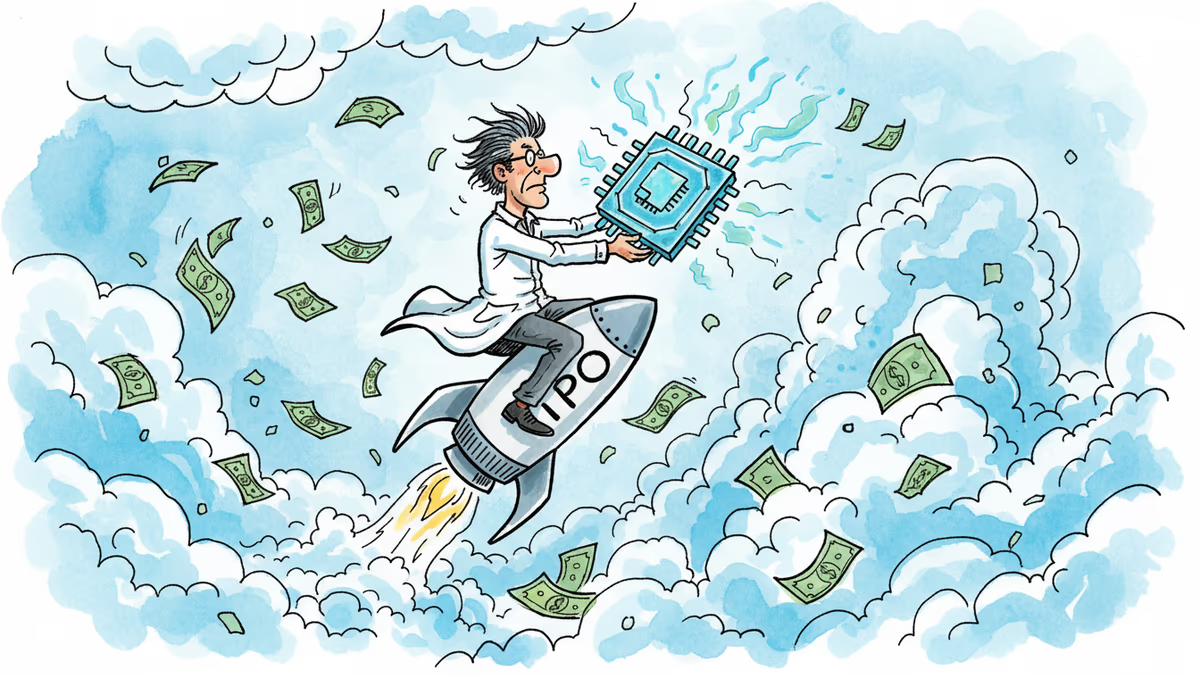
Three quantum computing firms listed on US exchanges in early 2026 despite brutal market conditions. Practical quantum advantage is expected by 2028-2029—but is the money coming too early?

Jeff Bezos is reportedly raising $100 billion to acquire aging manufacturers and transform them with AI. Here's what that bet reveals about where the smart money is moving next.
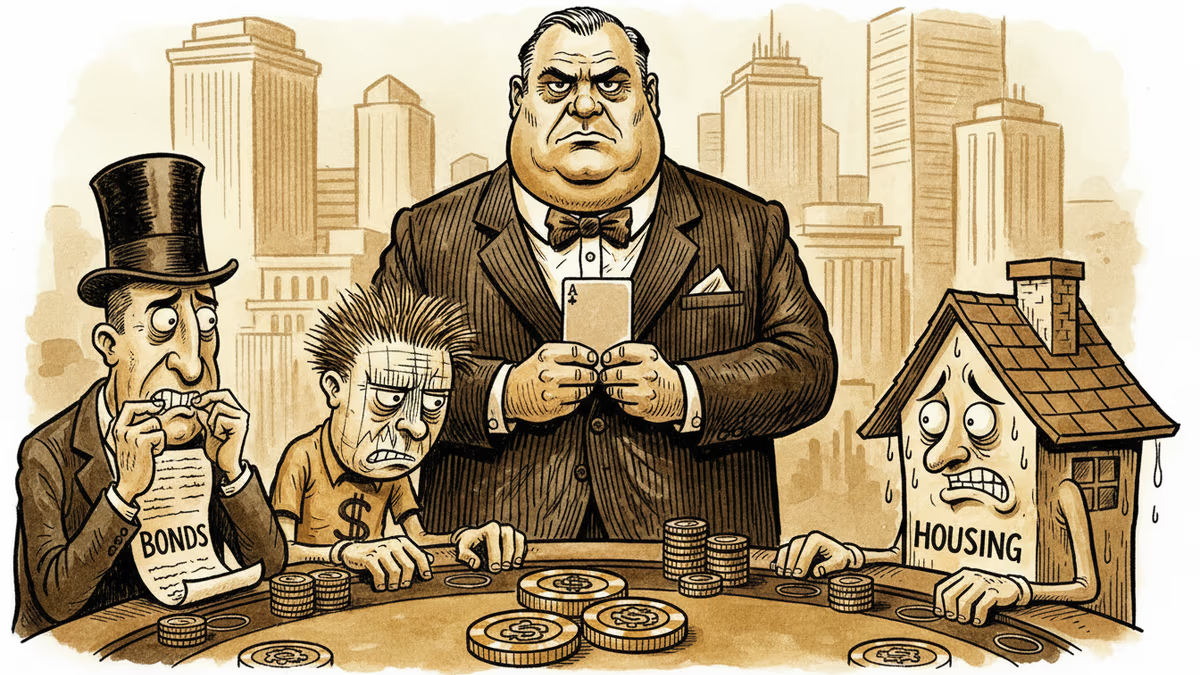
The Fed may signal a rate hike is still possible — a low-probability but high-impact shift that could reprice bonds, stocks, and mortgages overnight.
Global defence spending hit a post-Cold War record in 2024. But the money isn't going where it used to. Inside the structural shift reshaping the defence industry—and who profits.
Three quantum computing firms listed on US exchanges in early 2026 despite brutal market conditions. Practical quantum advantage is expected by 2028-2029—but is the money coming too early?
Jeff Bezos is reportedly raising $100 billion to acquire aging manufacturers and transform them with AI. Here's what that bet reveals about where the smart money is moving next.
The Fed may signal a rate hike is still possible — a low-probability but high-impact shift that could reprice bonds, stocks, and mortgages overnight.
Thoughts
Share your thoughts on this article
Sign in to join the conversation