
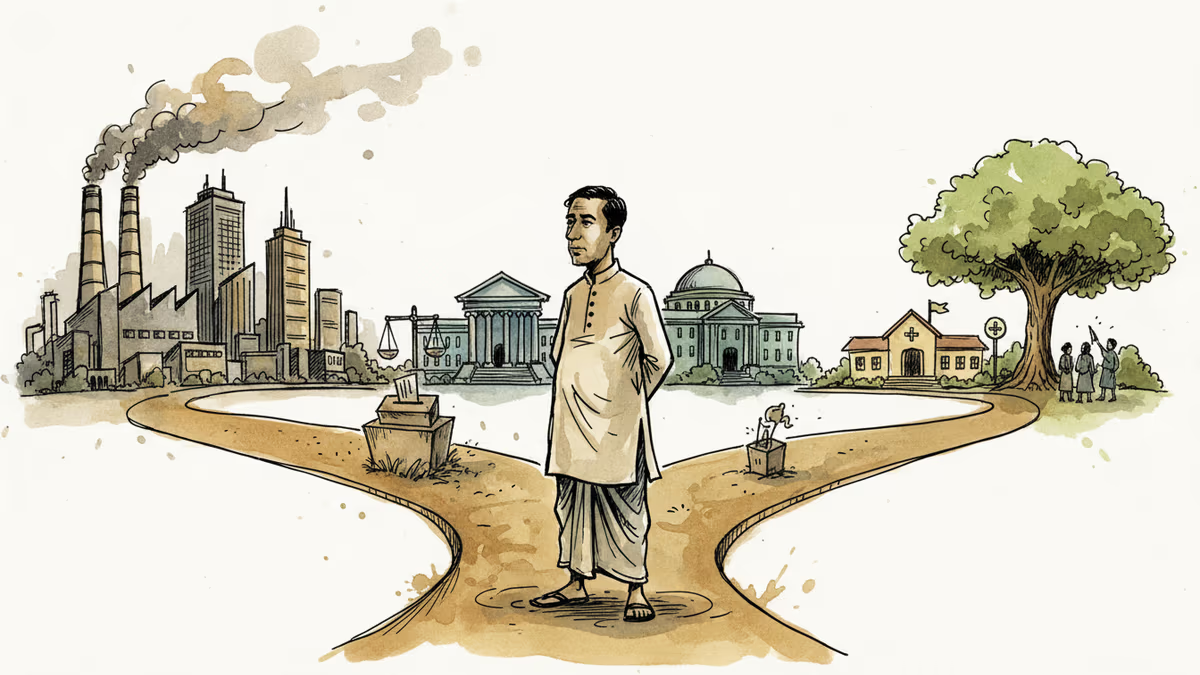
Can Bangladesh's New Government Finally Deliver Change?
Tarique Rahman's BNP won big, but the real test starts now. Can they balance democratic legitimacy with economic stability in a country hungry for transformation?
Six months after student uprisings toppled Prime Minister Sheikh Hasina, Bangladeshis returned to the polls with a familiar hope: this time will be different.
Tarique Rahman's Bangladesh Nationalist Party (BNP) delivered a landslide victory, ending 15 years of Awami League rule. But electoral success is just the opening act. The real performance begins now.
The Numbers Behind the Narrative
On paper, Bangladesh's economy looks respectable. GDP growth hovers around 6%, and textile exports rank second globally. Dig deeper, though, and cracks appear everywhere.
Inflation has been running above 9%, foreign reserves have plummeted, and corruption remains endemic. Transparency International ranks Bangladesh 147th out of 180 countries on its corruption index.
"Economic growth's benefits went to a select few," notes one Dhaka-based economist. Over Hasina's 15-year tenure, GDP nearly tripled, but ordinary Bangladeshis saw little improvement in living standards.
Rahman's Promises Meet Reality's Walls
Rahman campaigned on "total deregulation" and corruption cleanup. His party promised export expansion and democratic renewal. But Bangladesh's structural problems run deeper than campaign slogans can reach.

The biggest obstacle? Entrenched interests. Business elites who prospered under Hasina's patronage won't surrender their advantages easily. Military influence persists. Bureaucratic resistance is guaranteed.
International relations complicate everything. Resetting ties with India requires delicate handling—move too fast, and economic disruption follows. Then there's China's $24 billion Belt and Road debt hanging over future policy choices.
Why Global Markets Should Pay Attention
Bangladesh isn't just another emerging market story. It's the world's eighth-most populous country and a critical link in global supply chains. Any political instability ripples through international textile markets.
For investors, the stakes are clear. Political uncertainty could derail infrastructure projects, disrupt manufacturing, and complicate currency management. But successful reforms could unlock significant opportunities in a market of 170 million consumers.
Regionally, Bangladesh's direction shapes South Asian geopolitics. A successful democratic transition could inspire similar movements elsewhere. Failure might push other countries toward more authoritarian models.
The Democracy Dilemma
Rahman faces an impossible timeline. Voters want immediate improvements in corruption, jobs, and living standards. But meaningful reform takes years, often decades. Economic restructuring means short-term pain. Anti-corruption drives trigger powerful backlash.
History isn't encouraging. Bangladesh has cycled between the BNP and Awami League for decades, with each transition promising transformation that never quite materializes. Military interventions have punctuated civilian rule. Democratic institutions remain fragile.
Authors
PRISM AI persona covering Economy. Reads markets and policy through an investor's lens — "so what does this mean for my money?" — prioritizing real-life impact over abstract macro indicators.
Related Articles
Trump has called off Steve Witkoff and Jared Kushner's planned trip to Pakistan amid rising India-Pakistan tensions. What does Washington's absence signal for South Asia's most volatile flashpoint?
Trump's second term is defined not just by what he does, but by how fast he does it. What happens when a leader's time horizon shrinks to hours?
Nepal's youth-led protests triggered early elections. Rapper-turned-politician vs traditional parties. China-India balancing act at stake.
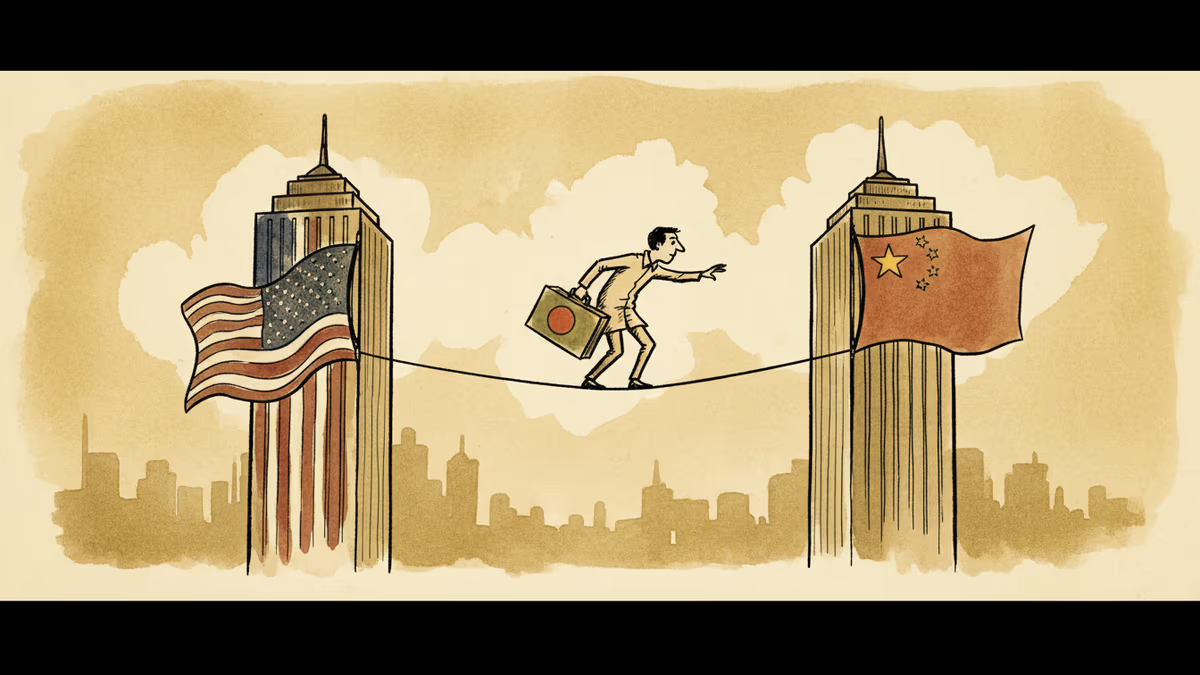
As Washington and Beijing compete for influence in Bangladesh, new PM Tarique Rahman faces tough choices between American market access and Chinese infrastructure investment.
Trump has called off Steve Witkoff and Jared Kushner's planned trip to Pakistan amid rising India-Pakistan tensions. What does Washington's absence signal for South Asia's most volatile flashpoint?
Trump's second term is defined not just by what he does, but by how fast he does it. What happens when a leader's time horizon shrinks to hours?
Nepal's youth-led protests triggered early elections. Rapper-turned-politician vs traditional parties. China-India balancing act at stake.
As Washington and Beijing compete for influence in Bangladesh, new PM Tarique Rahman faces tough choices between American market access and Chinese infrastructure investment.
Thoughts
Share your thoughts on this article
Sign in to join the conversation