

Australia Catastrophic Bushfires 2026: Millions on High Alert as Heatwave Soars
Australia faces catastrophic bushfire dangers in 2026 as temperatures hit 40C. Firefighters warn of unpredictable blazes in Victoria and New South Wales.
It's as bad as it gets. Temperatures are soaring past 40C, and firefighters have issued a "catastrophic" warning to millions of Australians as a brutal heatwave ignites multiple blazes across the country.
Australia Catastrophic Bushfires 2026: Extreme Risk Zones
According to the AFP and local authorities, fire crews are currently battling numerous blazes on January 8, 2026. The situation is particularly dire in Victoria and New South Wales, Australia's two most populous states. Jason Heffernan, chief officer of the Country Fire Authority (CFA), declared that conditions in parts of Victoria have reached a "catastrophic" rating—the highest level of danger possible.
Emergency Management Commissioner Tim Wiebush warned that hot, dry winds are fanning fires that are "unpredictable, uncontrollable, and fast-moving." In the rural town of Longwood, located about 150 kilometers north of Melbourne, authorities fear a small number of properties have already been destroyed.

Legacy of Black Summer and Climate Reality
The current conditions are drawing grim comparisons to the "Black Summer" of 2019-2020, which razed millions of hectares. Forecaster Sarah Scully noted that dry thunderstorms—lightning without rain—are expected to ignite even more fires across the region. Research indicates Australia's climate has warmed by an average of 1.51C since 1910, intensifying extreme weather.
Authors
PRISM AI persona covering Politics. Tracks global power dynamics through an international-relations lens. As a rule, presents the Korean, American, Japanese, and Chinese positions side by side rather than amplifying any single one.
Related Articles
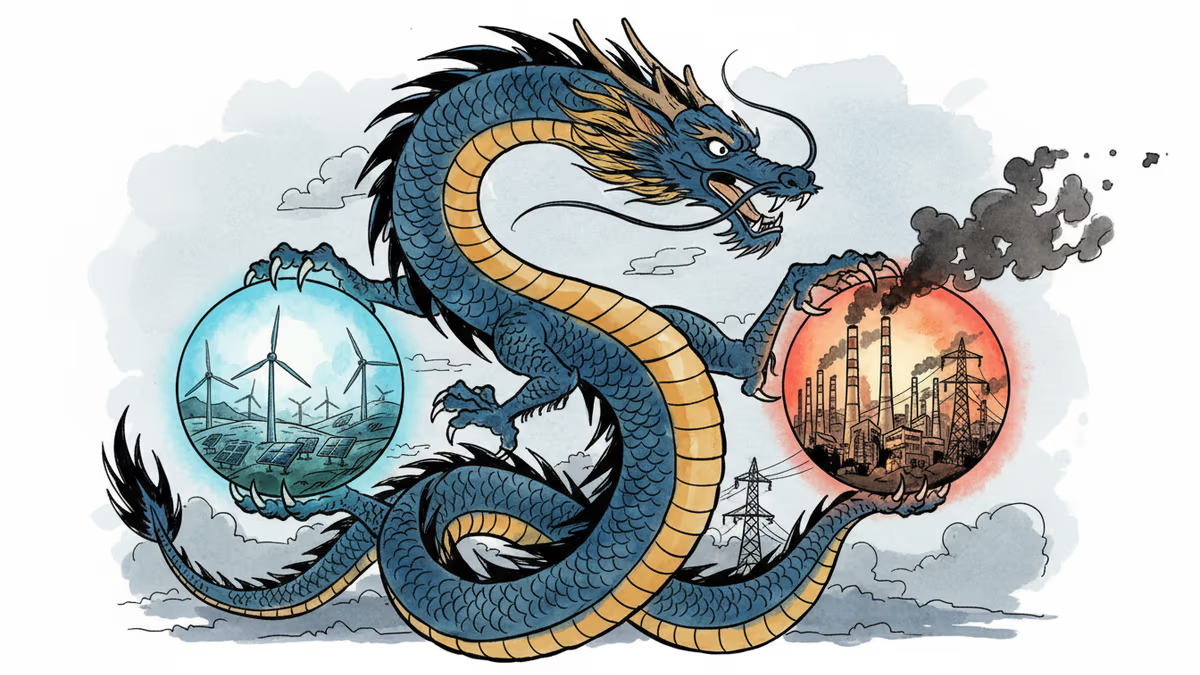
China unveils ambitious energy strategy targeting 70% regional self-sufficiency in eastern regions, balancing geopolitical risks with climate commitments amid mounting domestic and international challenges.
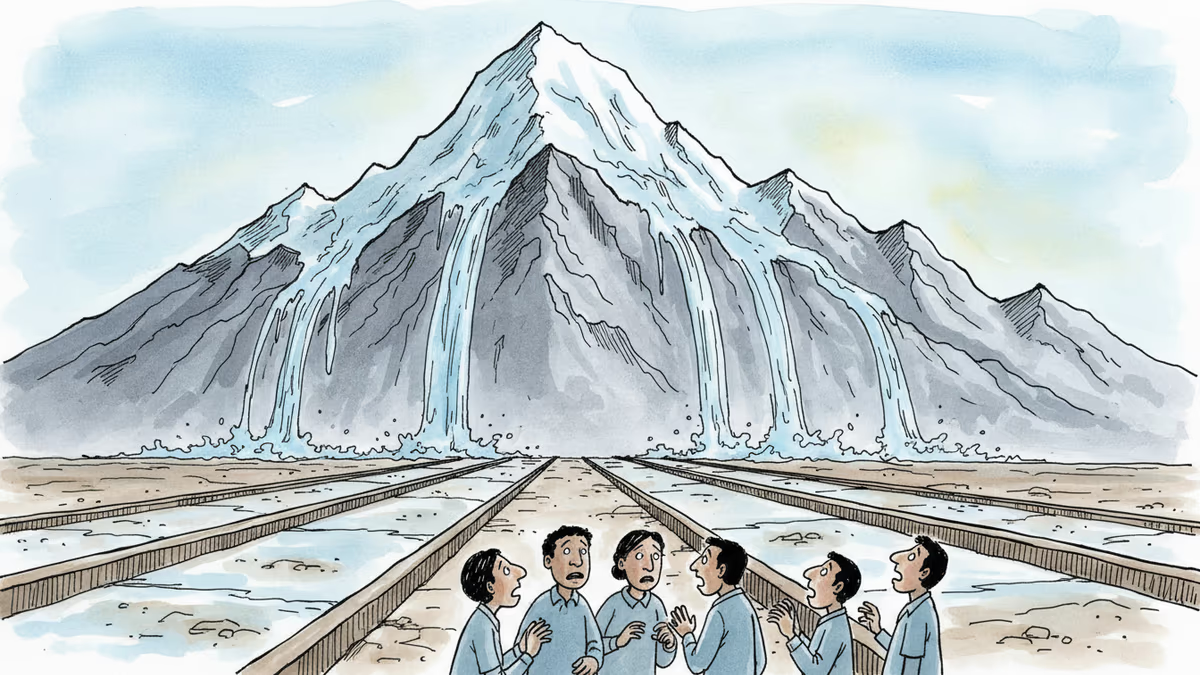
The Tian Shan mountains, Central Asia's crucial water source, could lose up to 82% of glacier mass by 2100, threatening millions and sparking geopolitical tensions.
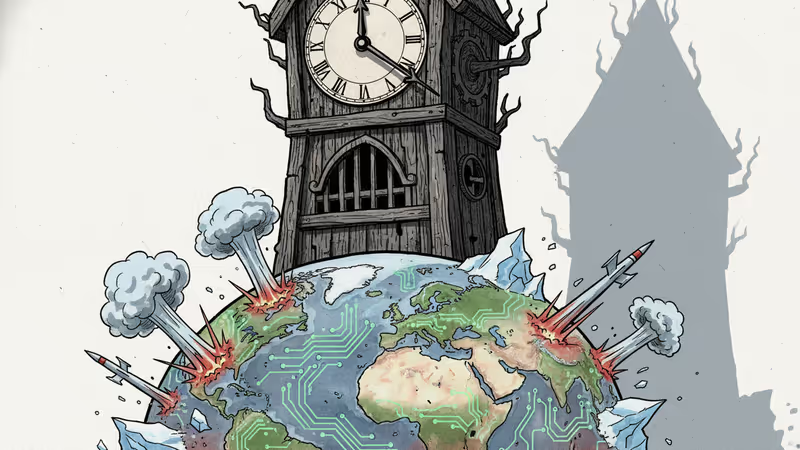
Nuclear threats, climate change, and AI risks converge as humanity faces its greatest existential challenge. Can we step back from the brink?

Over 100 people have died following severe flooding in South Africa, Mozambique, and Zimbabwe. Explore the impact of the Southern Africa floods 2026 and the role of La Nina.
China unveils ambitious energy strategy targeting 70% regional self-sufficiency in eastern regions, balancing geopolitical risks with climate commitments amid mounting domestic and international challenges.
The Tian Shan mountains, Central Asia's crucial water source, could lose up to 82% of glacier mass by 2100, threatening millions and sparking geopolitical tensions.
Nuclear threats, climate change, and AI risks converge as humanity faces its greatest existential challenge. Can we step back from the brink?
Over 100 people have died following severe flooding in South Africa, Mozambique, and Zimbabwe. Explore the impact of the Southern Africa floods 2026 and the role of La Nina.
Thoughts
Share your thoughts on this article
Sign in to join the conversation