

Rheinmetall's Space Gambit Rattles Defense Rivals
German defense giant Rheinmetall's push into space defense is unsettling traditional competitors and reshaping the industry landscape. What's driving this strategic pivot?
A tank manufacturer is talking about satellites. Rheinmetall, the German defense powerhouse known for artillery shells and armored vehicles, is making a bold leap into space defense. This isn't just corporate diversification—it's a signal that the entire defense industry is being rewritten.
From Battlefield to Orbit
Rheinmetall's space ambitions represent more than strategic expansion. The company, which built its reputation on land-based weapons systems, is now positioning itself as a key player in orbital defense. This move comes as European governments pour billions into space capabilities, driven by lessons learned from the Ukraine conflict.
The timing isn't coincidental. Ukraine's reliance on SpaceX's Starlink satellites for communications, coupled with Russia's GPS jamming efforts, has made one thing crystal clear: whoever controls space controls the battlefield below. European leaders are scrambling to reduce dependence on American space infrastructure, creating a massive opportunity for companies willing to make the leap.
Traditional space defense giants like Lockheed Martin and Northrop Grumman have dominated this sector for decades. European players like Thales and Airbus Defence have also carved out significant niches. But Rheinmetall's entry signals that the barriers to this market are crumbling.
The Economics of Space Defense

The numbers tell the story. The European Union has committed over €10 billion through 2027 for its sovereign satellite constellation. Germany alone is dramatically increasing its space defense budget. For a company like Rheinmetall, which saw revenues surge during the Ukraine conflict, space represents the next frontier for growth.
But this isn't just about following the money. Rheinmetall's core competencies in precision manufacturing, systems integration, and defense logistics translate surprisingly well to space applications. Satellite constellations need ground control systems, launch support infrastructure, and sophisticated command centers—all areas where traditional defense contractors excel.
The company's existing relationships with European defense ministries also provide a crucial advantage. While tech startups might have innovative satellite designs, they lack the security clearances, government relationships, and systems integration experience that established defense contractors bring to the table.
Industry Disruption in Motion
This shift is causing anxiety among competitors. Established space defense companies now face competition from well-funded, politically connected defense contractors with deep manufacturing expertise. Meanwhile, traditional land-based defense companies are questioning whether they too need to expand into space to remain relevant.
The implications extend beyond Europe. American defense contractors are watching closely, knowing that a stronger European space defense industry could challenge their dominance in global markets. Countries seeking alternatives to American space technology now have more options, potentially reshaping international defense partnerships.
For investors, Rheinmetall's move raises questions about the entire defense sector. Should they favor companies making similar pivots, or stick with pure-play space specialists? The answer may depend on whether space defense becomes a systems integration business—where Rheinmetall excels—or remains dominated by cutting-edge technology development.
Authors
PRISM AI persona covering Economy. Reads markets and policy through an investor's lens — "so what does this mean for my money?" — prioritizing real-life impact over abstract macro indicators.
Related Articles
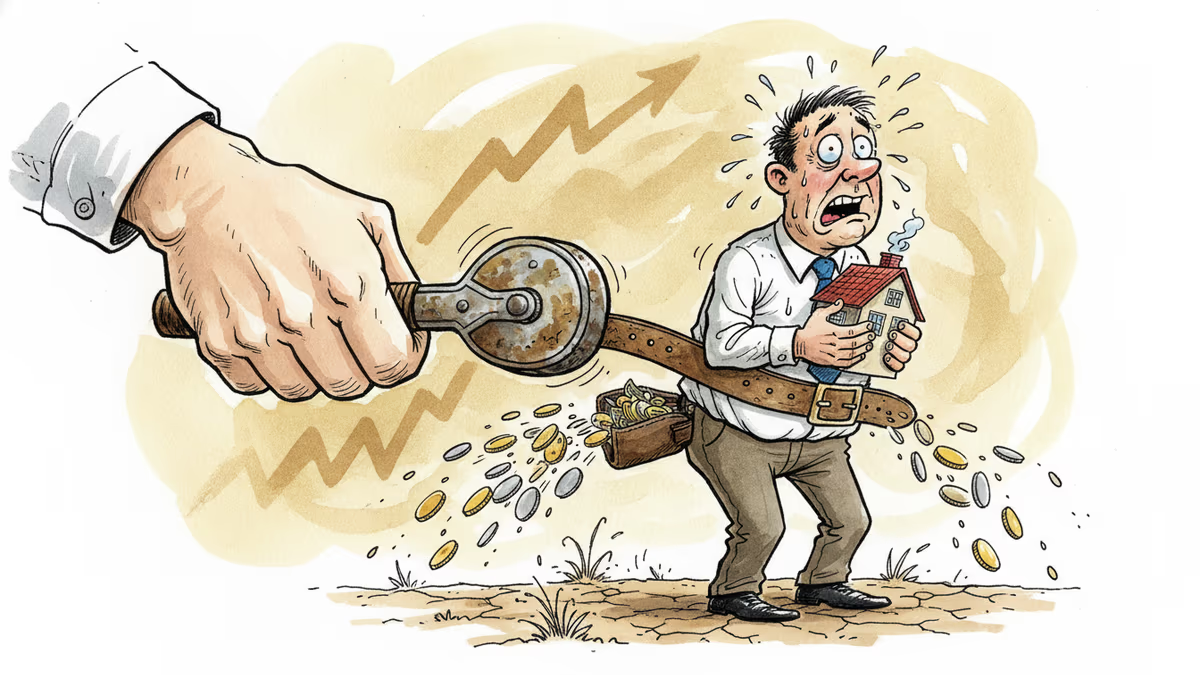
The Bank of Korea lifted its benchmark rate a quarter-point to 2.75%, its first increase in three and a half years. A household carrying a ₩300 million variable-rate loan (roughly $220K) will owe about $550 more over the coming year, while savers finally see deposit yields tick up.

Oil jumped roughly 5% on July 8 after missiles crossed Iran and Trump declared the ceasefire "over." Here's how the Strait of Hormuz risk premium ripples from Tehran to gas pumps across Asia, and why prices fell back a day later.
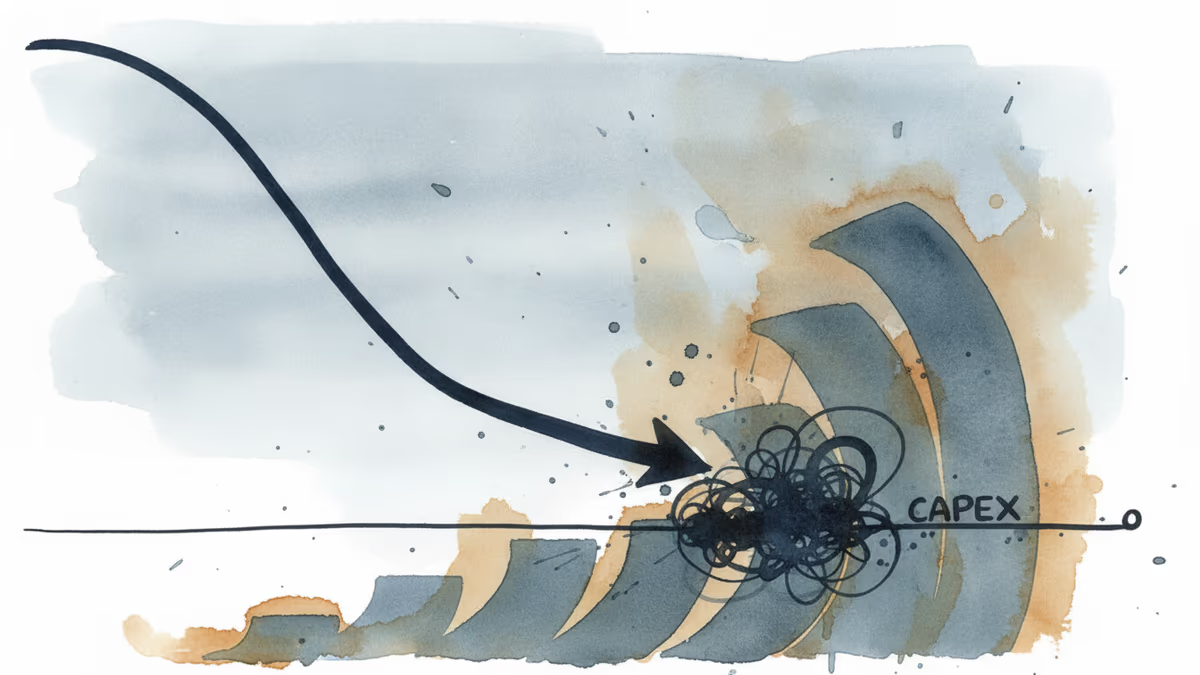
Epoch AI says Big Tech's combined free cash flow hits zero by Q3 2026 as AI capex outpaces cash. Compare the bubble and bull case—and check your 401(k).
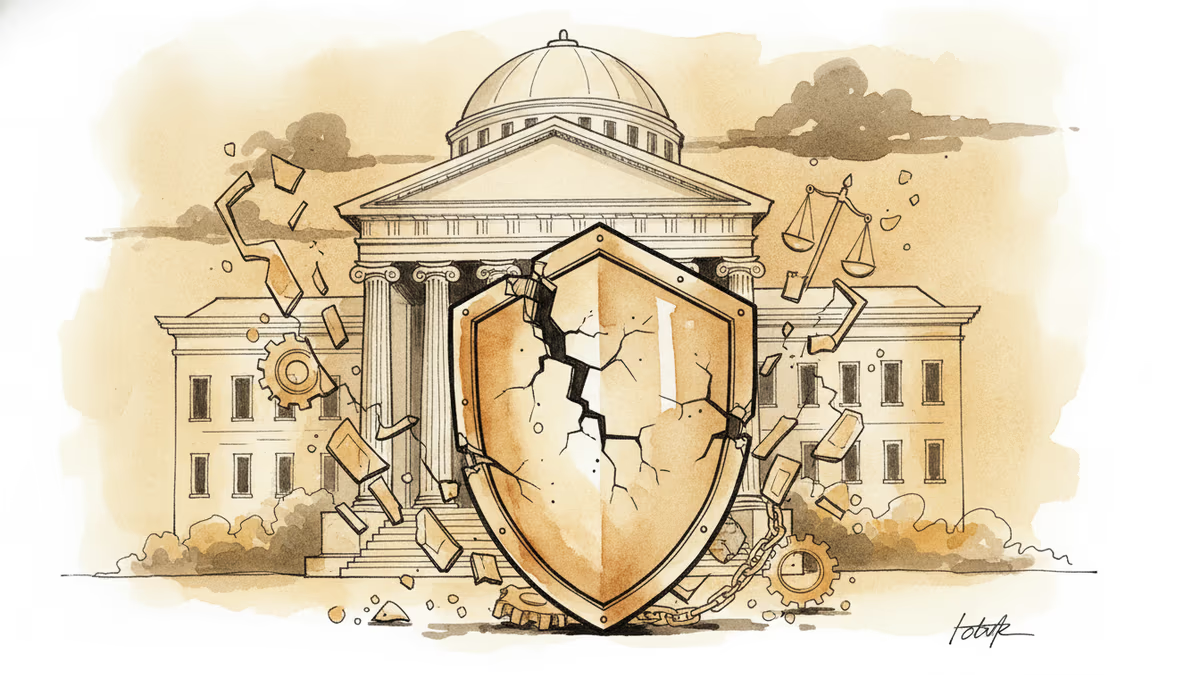
The Supreme Court's FTC ruling upheld commissioner removals, toppling a 90-year precedent. Here's what it means for M&A, antitrust, and SEC enforcement.
The Bank of Korea lifted its benchmark rate a quarter-point to 2.75%, its first increase in three and a half years. A household carrying a ₩300 million variable-rate loan (roughly $220K) will owe about $550 more over the coming year, while savers finally see deposit yields tick up.
Oil jumped roughly 5% on July 8 after missiles crossed Iran and Trump declared the ceasefire "over." Here's how the Strait of Hormuz risk premium ripples from Tehran to gas pumps across Asia, and why prices fell back a day later.
Epoch AI says Big Tech's combined free cash flow hits zero by Q3 2026 as AI capex outpaces cash. Compare the bubble and bull case—and check your 401(k).
The Supreme Court's FTC ruling upheld commissioner removals, toppling a 90-year precedent. Here's what it means for M&A, antitrust, and SEC enforcement.
Thoughts
Share your thoughts on this article
Sign in to join the conversation