
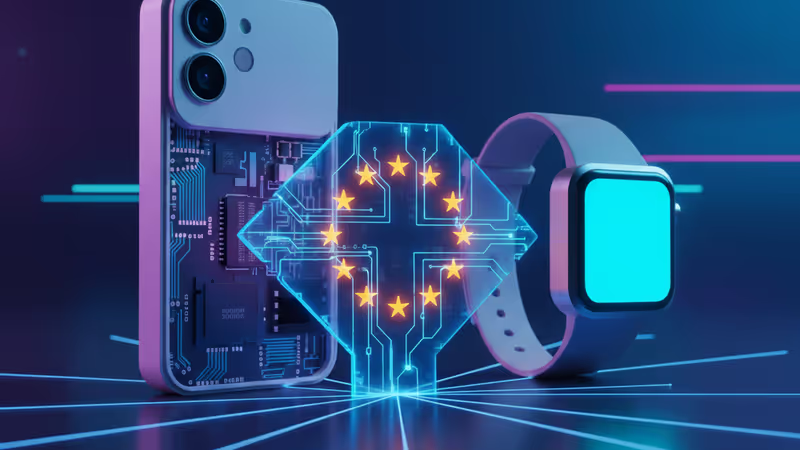
Apple's Next iOS Update Is a Big Win for Europe, Thanks to DMA Pressure
Apple is introducing EU-exclusive features in iOS 26.3 to comply with the Digital Markets Act (DMA), including better third-party device pairing. We analyze the impact of regulation on Apple's ecosystem.
Apple is rolling out significant new interoperability features in , but there's a major catch: they're exclusively for users in the European Union. The move is a direct result of the EU's landmark , and regulators in Brussels are pleased.
According to the Wall Street Journal, a European Commission spokesperson said the "creates new opportunities for developers to bring to market innovative products and services in Europe," calling it "another step towards a more inter-connected digital ecosystem to the benefit of all EU citizens."
The EC's praise appears to be directed at two key features introduced in the beta. The first is 'Notification Forwarding' for third-party smartwatches, allowing non-Apple wearables to receive iPhone alerts more reliably. The second is believed to be 'Proximity pairing,' which would let users pair third-party devices as seamlessly as they connect AirPods to an iPhone. Together, these changes begin to lower the high walls of Apple's famously closed ecosystem.
It's important to note that these updates aren't a voluntary shift in strategy for Apple, which is reportedly unhappy about the new rules. All three of the major compliance-focused features—including a 'Transfer to Android' function to simplify switching ecosystems—are a direct consequence of the requirements. As such, these new capabilities will not be available to customers outside the European Union.
Apple’s is currently in beta and is expected to be released to the public in January 2026.
Apple's EU-only features signal a new era of 'geofenced software,' where a device's capabilities are determined by local laws, not just its hardware. This regulatory fragmentation will force global tech companies to develop multiple, region-specific software branches, creating a complex and potentially inconsistent user experience worldwide.
This content is AI-generated based on source articles. While we strive for accuracy, errors may occur. We recommend verifying with the original source.
Related Articles
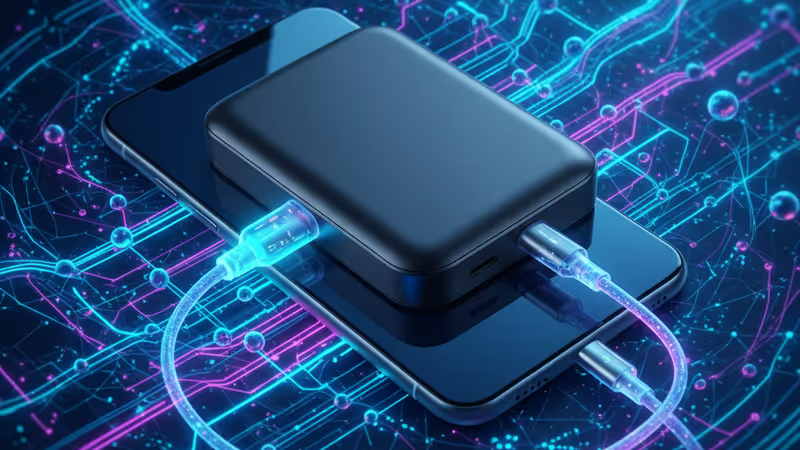
Belkin's Stage PowerGrip is more than a magnetic battery pack, adding a built-in cable and a camera grip. It aims to be the ultimate all-in-one accessory, but some features feel limited.

ServiceNow announces a $7.75 billion cash deal to acquire cybersecurity startup Armis, aiming to build an AI-powered security platform and capitalize on the growing need to protect enterprises from sophisticated AI threats.

Arovia's Splay, born from a 2021 crowdfunder, is a new type of device: a portable, ultra-short-throw projector with a built-in, collapsible screen that turns it into a 24.5" monitor.

In 2025, Amazon's generative AI assistant, Alexa Plus, is reportedly failing at simple smart home tasks like making coffee, raising critical questions about the real-world utility and reliability of advanced AI models.
Belkin's Stage PowerGrip is more than a magnetic battery pack, adding a built-in cable and a camera grip. It aims to be the ultimate all-in-one accessory, but some features feel limited.
ServiceNow announces a $7.75 billion cash deal to acquire cybersecurity startup Armis, aiming to build an AI-powered security platform and capitalize on the growing need to protect enterprises from sophisticated AI threats.
Arovia's Splay, born from a 2021 crowdfunder, is a new type of device: a portable, ultra-short-throw projector with a built-in, collapsible screen that turns it into a 24.5" monitor.
In 2025, Amazon's generative AI assistant, Alexa Plus, is reportedly failing at simple smart home tasks like making coffee, raising critical questions about the real-world utility and reliability of advanced AI models.