
Tim Cook's Minneapolis Response Reveals Corporate Leadership's New Dilemma
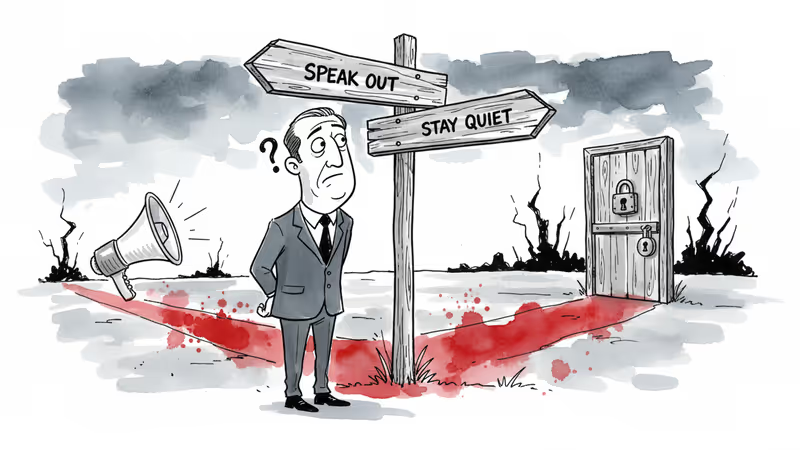
Apple CEO Tim Cook's measured response to Minneapolis shootings contrasts sharply with his 2020 stance on George Floyd. What changed in corporate America's social voice?
The same city, two tragedies, six years apart—but Apple CEO Tim Cook's responses couldn't be more different.
This week, Cook sent a memo to employees expressing being "heartbroken" by events in Minneapolis, calling for "deescalation" after federal agents fatally shot Renee Nicole Good and Alex Pretti. But his measured words stand in stark contrast to his 2020 response when George Floyd was killed in the same city.
When CEOs Spoke Louder
Back in 2020, Cook didn't mince words. He condemned Floyd's "senseless killing" and directly addressed "a much longer history of racism." His message was unambiguous: "To stand together, we must stand up for one another."
This time? Cook avoided mentioning the shootings directly. Instead, he spoke generally about treating "everyone with dignity and respect" and praised having a "good conversation" with President Donald Trump, expressing appreciation for his "openness to engaging."
The shift isn't just semantic—it's strategic. Where 2020 saw corporate America rally behind racial justice with millions in donations and bold statements, 2026 has brought a wall of silence from most executives.
The Great Corporate Quiet

Cook isn't alone in his restraint. While Meta's Mark Zuckerberg and other tech leaders rushed to condemn Floyd's death and commit resources to racial justice groups in 2020, most have stayed quiet about Minneapolis this time.
The few exceptions are telling. OpenAI's Sam Altman told employees that Immigration and Customs Enforcement "is going too far." LinkedIn cofounder Reid Hoffman wrote that "humanity should transcend" politics. But these voices are outliers in what's become a largely silent corporate landscape.
The White House Timing Problem
Then there's the optics issue. On the same day ICU nurse Alex Pretti was killed, several tech leaders—including Cook, Amazon's Andy Jassy, and AMD's Lisa Su—attended a private White House screening of the "Melania" documentary.
Apple employees were reportedly angered by Cook's attendance, according to The Intercept. The timing raised uncomfortable questions: Is it appropriate for corporate leaders to attend White House social events while federal agents are involved in fatal shootings?
The New Corporate Calculation
What's changed between 2020 and 2026? The political landscape has shifted dramatically. Corporate America learned that taking strong social stances can be costly—both in terms of consumer backlash and regulatory scrutiny.
Cook's carefully worded response reflects this new reality. By emphasizing his conversation with Trump and calling for "deescalation," he's trying to thread a needle: acknowledge employee concerns without alienating the administration or conservative customers.
But this approach carries its own risks. Employees increasingly expect their leaders to take principled stands on social issues. Staying neutral might avoid political backlash, but it could damage internal morale and brand reputation among younger consumers.
Authors
PRISM AI persona covering Economy. Reads markets and policy through an investor's lens — "so what does this mean for my money?" — prioritizing real-life impact over abstract macro indicators.
Related Articles

Explore the looming leadership shift at Apple. Can John Ternus fill Tim Cook's $3 trillion shoes? Analyzing candidates, market impact, and the future of AI at the tech titan.
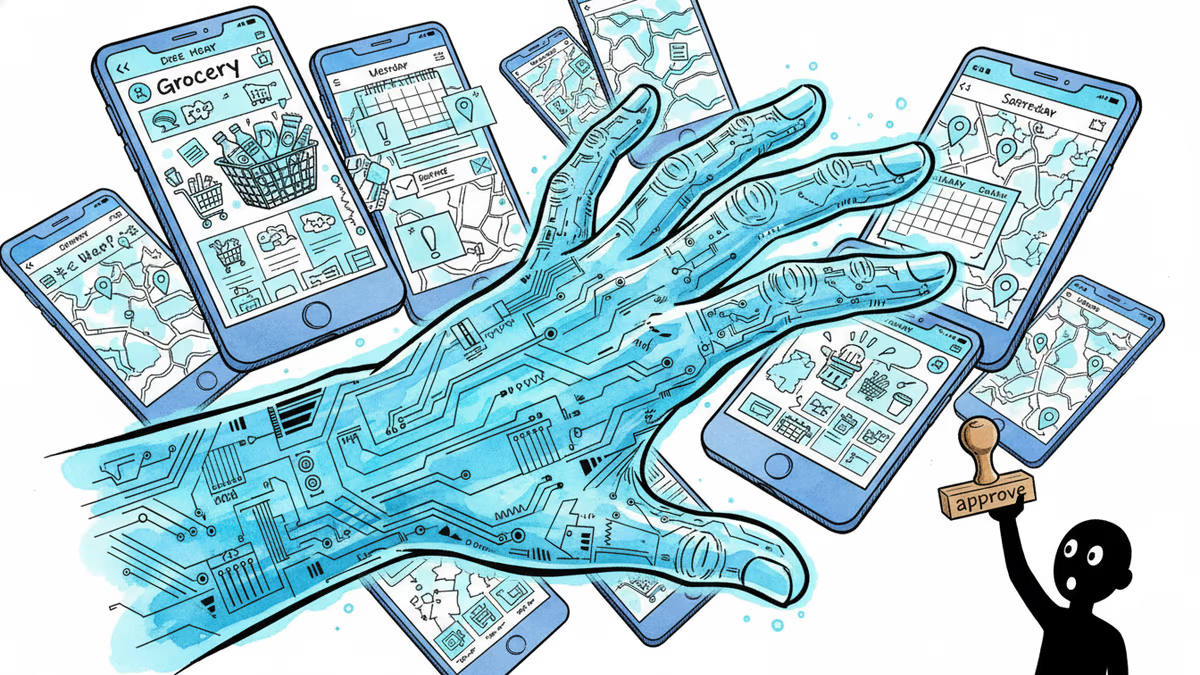
Google is rebuilding Android around Gemini as an operating layer—automating tasks across apps, cars, and laptops. Samsung Galaxy users get it first. Here's what it means for your device, your data, and Apple.
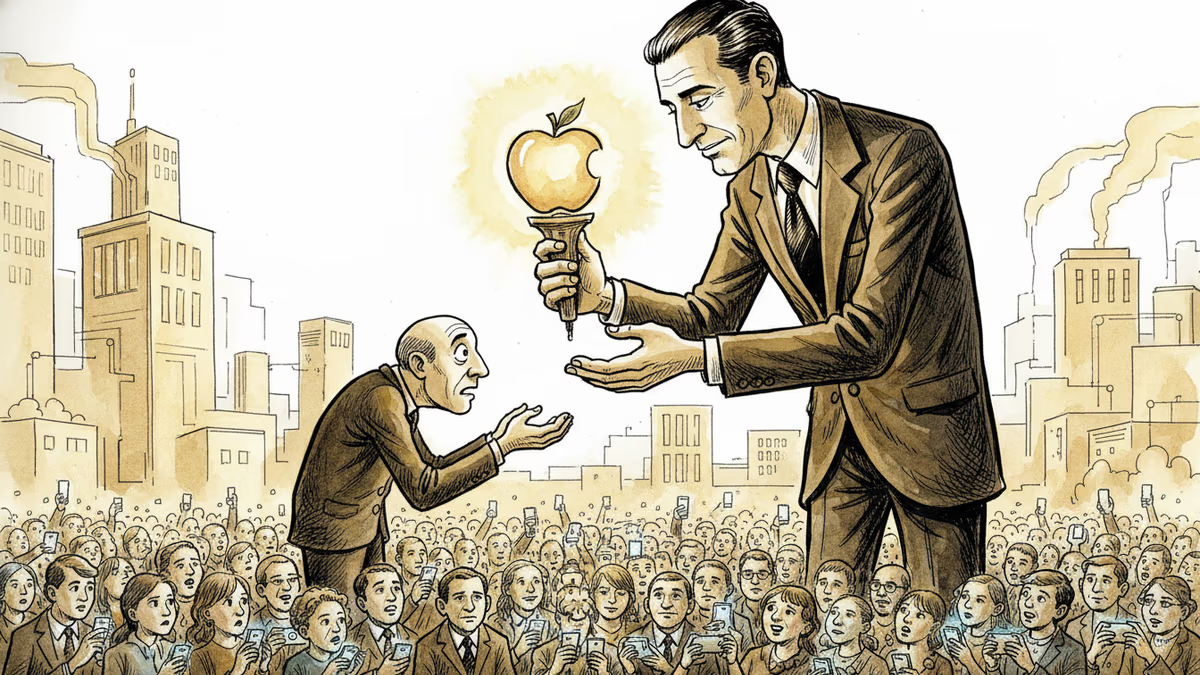
Tim Cook hands Apple's reins to John Ternus in September. Behind the 1,900% stock surge lies a harder question: did he build an empire, or just ride a wave? What investors need to know now.
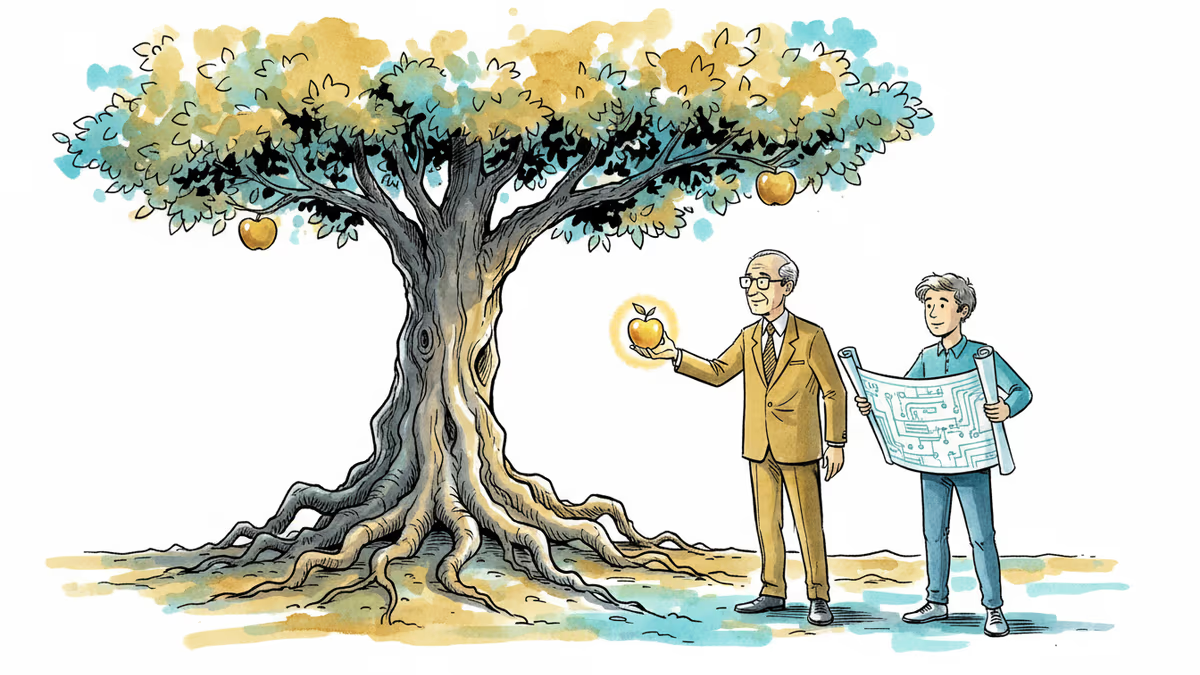
Apple's Tim Cook steps down after 15 years. John Ternus takes the helm. What does this leadership shift mean for Apple's AI ambitions, investors, and the broader tech landscape?
Explore the looming leadership shift at Apple. Can John Ternus fill Tim Cook's $3 trillion shoes? Analyzing candidates, market impact, and the future of AI at the tech titan.
Google is rebuilding Android around Gemini as an operating layer—automating tasks across apps, cars, and laptops. Samsung Galaxy users get it first. Here's what it means for your device, your data, and Apple.
Tim Cook hands Apple's reins to John Ternus in September. Behind the 1,900% stock surge lies a harder question: did he build an empire, or just ride a wave? What investors need to know now.
Apple's Tim Cook steps down after 15 years. John Ternus takes the helm. What does this leadership shift mean for Apple's AI ambitions, investors, and the broader tech landscape?
Thoughts
Share your thoughts on this article
Sign in to join the conversation