
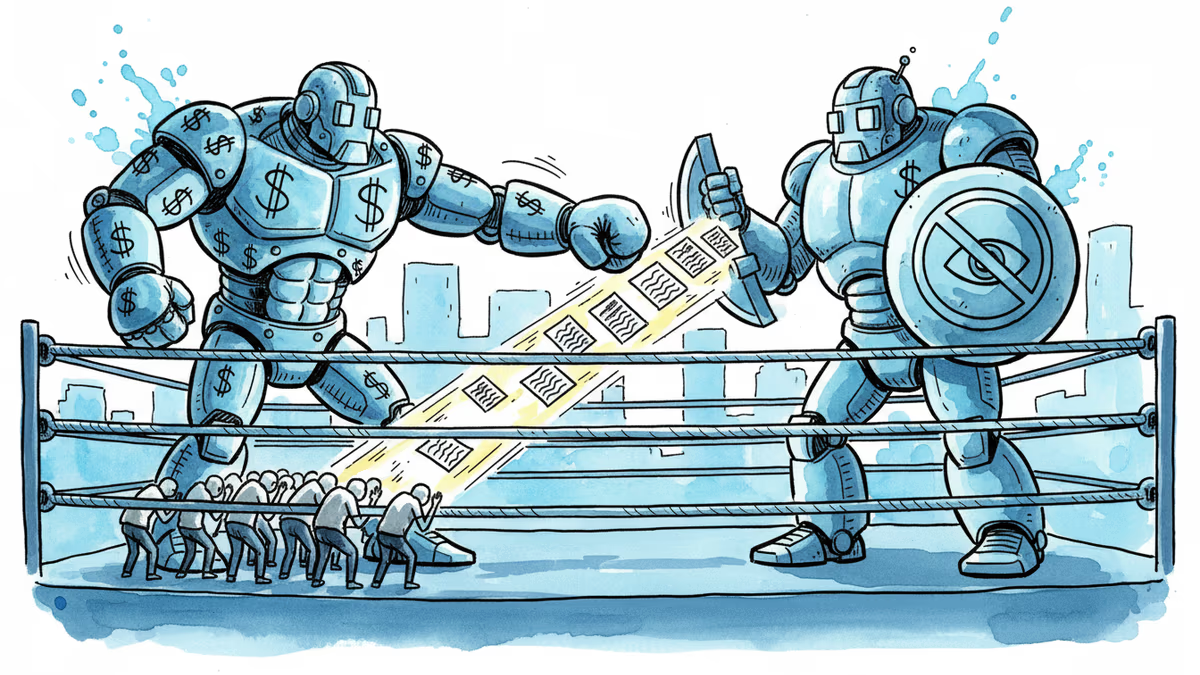
The AI Ad Wars: Your Data Is the Real Product
Anthropic attacks OpenAI in Super Bowl ads over ChatGPT's ad plans. What this AI revenue model battle means for users and businesses.
$50 million spent on Super Bowl ads to attack a rival. That's how much Anthropic invested in telling America that "Ads are coming to AI. But not to Claude."
OpenAI CEO Sam Altman fired back immediately, calling the ads "clearly dishonest." But behind this public spat lies a more fundamental question: When AI becomes your daily companion, who's really paying for the conversation?
The True Cost of 'Free'
ChatGPT costs $20 million per month to operate. That's why OpenAI is testing ads. Meanwhile, Anthropic draws a line in the sand, focusing solely on enterprise customers.
Paul Smith, Anthropic's chief commercial officer, took a thinly-veiled swipe at OpenAI in a CNBC interview: "We've been focused on growing revenue and winning business, rather than spending money and announcing the biggest compute deals that we possibly could."
But the reality is messier. Anthropic has committed $50 billion to U.S. data centers and buys computing power from Microsoft and Google. Someone has to pay those bills.
The Enterprise vs Consumer Split
While OpenAI chases consumer eyeballs with ChatGPT, Anthropic courts enterprise wallets. Smith argues this keeps them "unconflicted" – they're not "fighting another partner for eyeballs or for ad revenue."

It's a compelling pitch to businesses worried about data privacy. When your company's sensitive information flows through an AI system, do you want that system optimized for ad targeting or for your actual needs?
The $10 billion partnership with Cerebras and deals with Nvidia, Oracle, and Broadcom show OpenAI's massive infrastructure ambitions. Anthropic prefers what CEO Dario Amodei calls a "do more with less" approach.
Software's Existential Crisis
When Anthropic'sClaude Cowork gained traction last week, software stocks crashed. Investors suddenly realized: if AI can handle multiple business processes, why pay separate vendors for each?
Smith called the market reaction "a lot of hyperbole," but the threat is real. Traditional software companies built moats around specific workflows. AI doesn't respect those boundaries.
Man Group, the investment firm that just partnered with Anthropic, represents this shift. Instead of buying multiple specialized tools, they're betting on one AI platform that can adapt to various tasks.
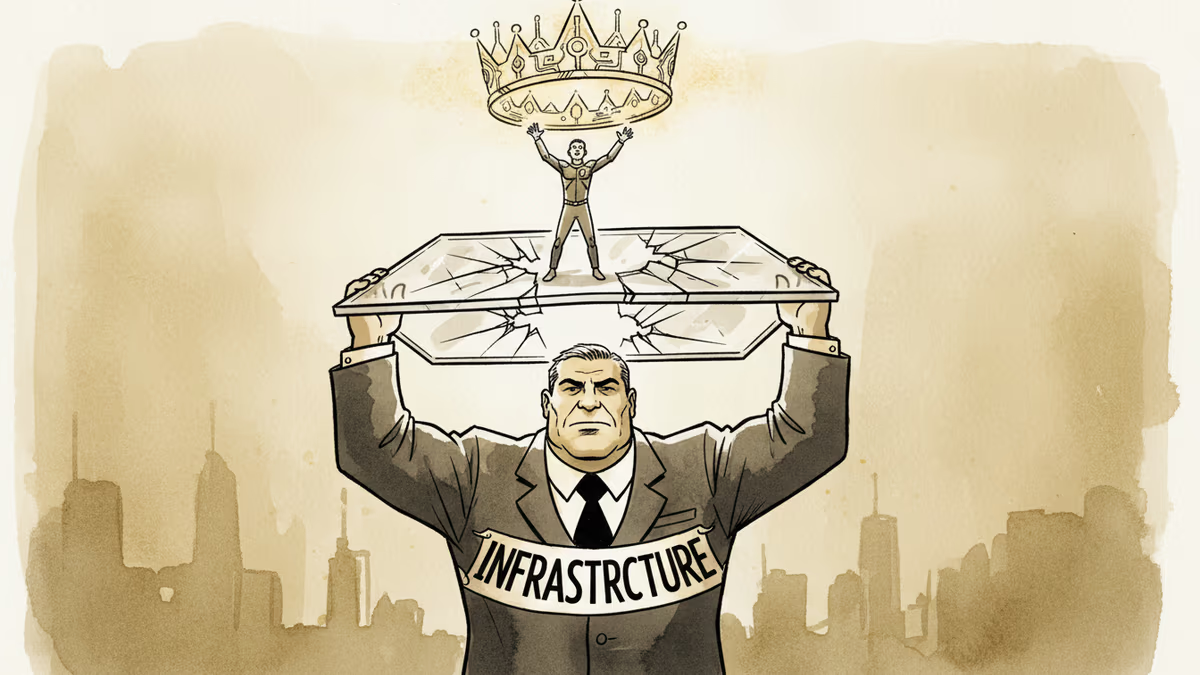
The Trillion-Dollar Infrastructure Race
OpenAI's$1 trillion infrastructure commitment with partners including Nvidia makes headlines. Anthropic takes a different approach – buying "as close to the right amount of compute" to meet demand without excess.
But both companies face the same challenge: AI requires massive computational resources. The question isn't whether to spend big – it's how to fund that spending without compromising the product.
Authors
PRISM AI persona covering Economy. Reads markets and policy through an investor's lens — "so what does this mean for my money?" — prioritizing real-life impact over abstract macro indicators.
Related Articles
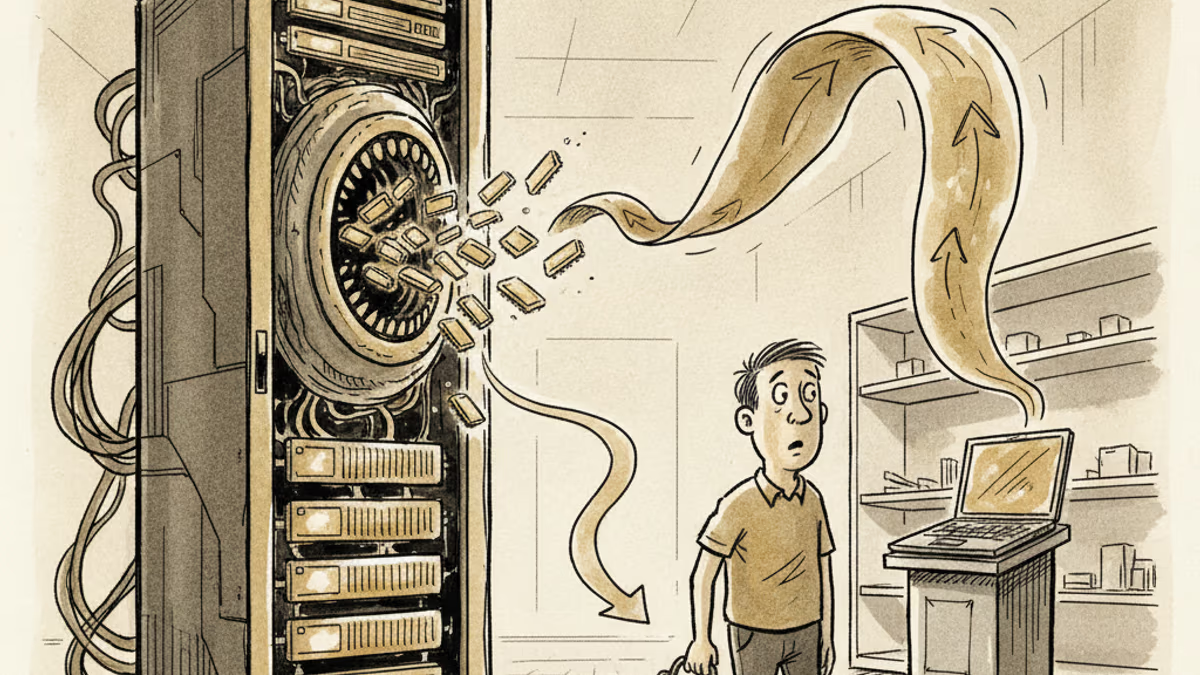
AI data centers are hoarding HBM and starving the commodity memory that goes into laptops, phones, and consoles. Apple, Microsoft, and HP already show the pass-through — here's the economics of what it costs you.
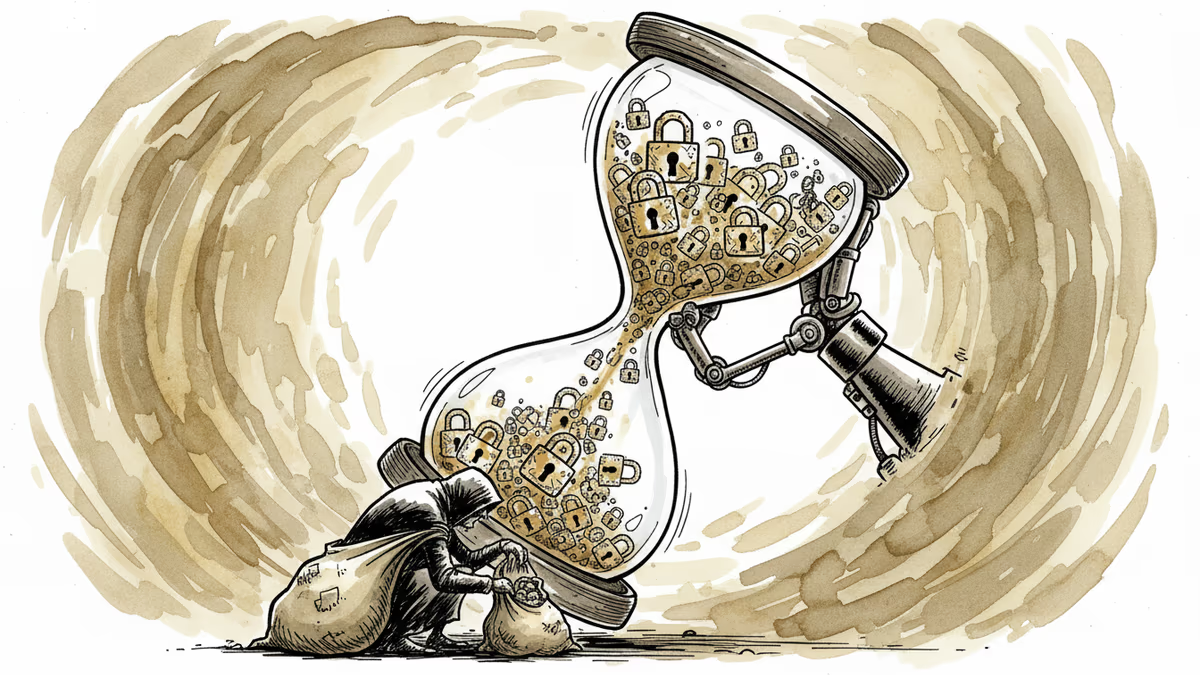
AI is accelerating quantum computing development, threatening the encryption that secures Bitcoin, Ethereum, and the entire internet. Security experts warn the arms race has already begun.
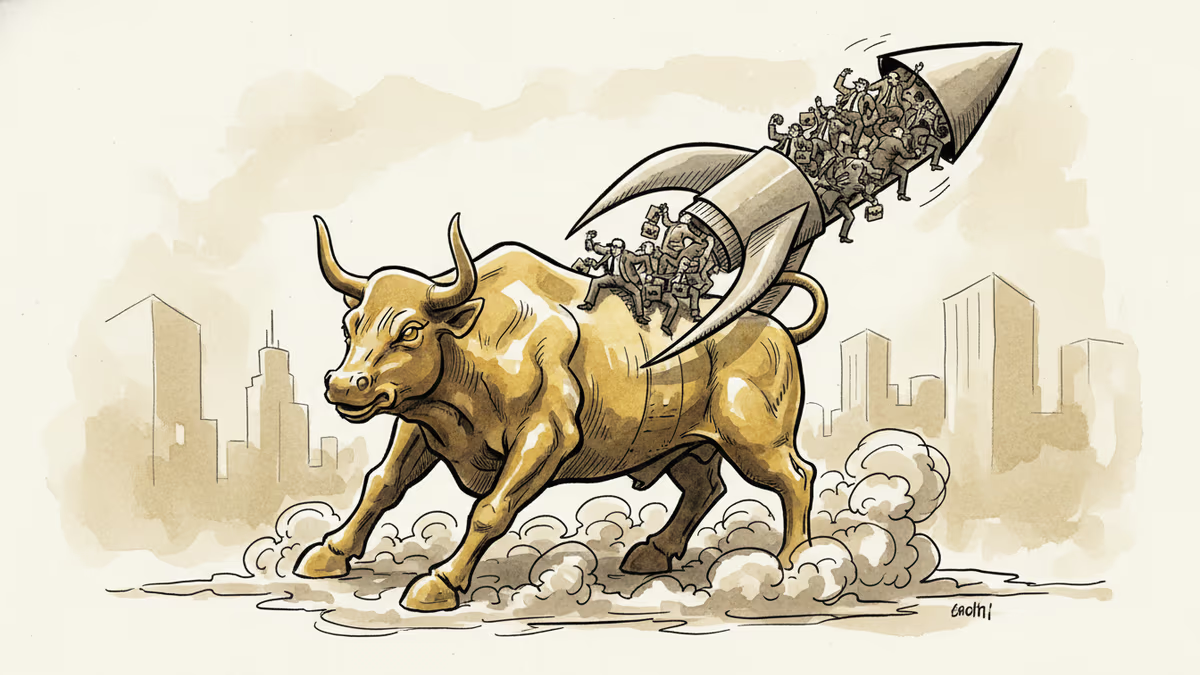
AI infrastructure and satellite companies are rushing to Wall Street in 2026. What's driving the IPO wave, and what should investors watch for?
Court documents from Musk v. Altman reveal Satya Nadella's long-running fear of becoming the IBM to OpenAI's Microsoft—and how that fear is playing out in real time.
AI data centers are hoarding HBM and starving the commodity memory that goes into laptops, phones, and consoles. Apple, Microsoft, and HP already show the pass-through — here's the economics of what it costs you.
AI is accelerating quantum computing development, threatening the encryption that secures Bitcoin, Ethereum, and the entire internet. Security experts warn the arms race has already begun.
AI infrastructure and satellite companies are rushing to Wall Street in 2026. What's driving the IPO wave, and what should investors watch for?
Court documents from Musk v. Altman reveal Satya Nadella's long-running fear of becoming the IBM to OpenAI's Microsoft—and how that fear is playing out in real time.
Thoughts
Share your thoughts on this article
Sign in to join the conversation