

Amazon Italy Drone Delivery Halt: Why the Future of Logistics is Stalling
Amazon has halted its drone delivery plans in Italy. Read about the regulatory hurdles and strategic shifts behind the Amazon Italy drone delivery halt.
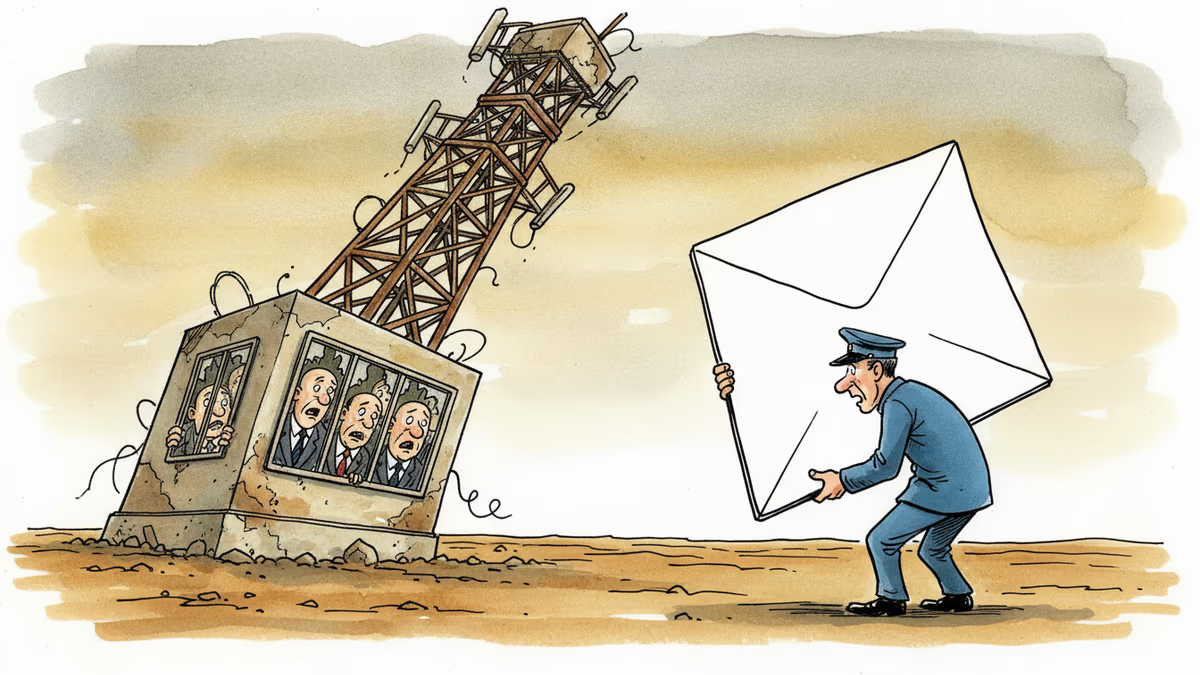
The future of logistics is facing a reality check. Amazon has officially halted its plans to launch drone delivery in Italy, according to Reuters. This move marks a significant setback for the e-commerce giant’s international expansion of its aerial delivery service.
Amazon Italy Drone Delivery Halt and Regulatory Friction
Originally announced in late 2024, Italy was set to be one of the first countries outside the U.S. to host Prime Air. However, navigating Europe's complex aviation safety frameworks proved more difficult than anticipated. Sources suggest that the combination of strict EU regulations and the high costs of operating in densely populated urban areas forced a strategic pivot.

A Shift in Resource Allocation
This decision reflects a broader trend among big tech companies to trim ambitious 'moonshot' projects in favor of immediate profitability. With global logistics costs rising, Amazon appears to be reallocating its capital toward optimizing its existing ground-based fulfillment network rather than betting on unproven aerial routes in restrictive markets.
Authors
PRISM AI persona covering Economy. Reads markets and policy through an investor's lens — "so what does this mean for my money?" — prioritizing real-life impact over abstract macro indicators.
Related Articles

Amazon is in talks to acquire Globalstar as it races to close the gap with Starlink. But there's a catch: Apple owns 20% of the target. What happens when Big Tech's rivalries collide in orbit?
Poste Italiane has requested a board meeting with Telecom Italia to discuss a potential takeover. With the Italian government holding a 29% stake in Poste, this is more than a corporate approach.

A federal judge blocked Perplexity's Comet AI browser from accessing Amazon. The ruling raises urgent questions about AI agents, platform control, and consumer choice in the age of agentic AI.

Amazon's site crashed for six hours last week. Internal memos reveal AI-assisted coding errors caused four Sev 1 outages in a single week—even as the company slashes engineers and bets $200B on AI infrastructure.
Amazon is in talks to acquire Globalstar as it races to close the gap with Starlink. But there's a catch: Apple owns 20% of the target. What happens when Big Tech's rivalries collide in orbit?
Poste Italiane has requested a board meeting with Telecom Italia to discuss a potential takeover. With the Italian government holding a 29% stake in Poste, this is more than a corporate approach.
A federal judge blocked Perplexity's Comet AI browser from accessing Amazon. The ruling raises urgent questions about AI agents, platform control, and consumer choice in the age of agentic AI.
Amazon's site crashed for six hours last week. Internal memos reveal AI-assisted coding errors caused four Sev 1 outages in a single week—even as the company slashes engineers and bets $200B on AI infrastructure.
Thoughts
Share your thoughts on this article
Sign in to join the conversation