

Alphabet's $100B Bet: Why Google's Doubling Down on 2026
Alphabet signals 2026 capital spending could double as cloud business booms. With AI infrastructure costs soaring, is this growth strategy or desperation?
Google's parent company Alphabet just signaled it's ready to spend twice as much next year. The reason? Cloud business is exploding, and the AI arms race isn't slowing down.
The Numbers Behind the Bet
Alphabet revealed that 2026 capital expenditures could double from current levels. While they didn't specify exact figures, with 2025 capex expected around $50 billion, we're looking at potentially $100 billion in spending next year.
This isn't just corporate expansion—it's survival strategy. Google Cloud posted 35% year-over-year growth in recent quarters, steadily gaining ground on Amazon Web Services and Microsoft Azure. The cloud wars are intensifying, and Google's betting big to stay relevant.
The spending surge reflects a brutal reality: in the AI era, you either scale massively or get left behind. Every major tech company is pouring billions into data centers, chips, and infrastructure. The question isn't whether to invest—it's whether you can afford not to.
The Infrastructure Gold Rush

Behind the headlines lies a fundamental shift in how tech companies operate. Alphabet's investment isn't just about servers and storage—it's about building the backbone for AI services that don't exist yet.
The company's betting heavily on its custom TPU (Tensor Processing Unit) chips to reduce dependence on NVIDIA's expensive GPUs. This vertical integration strategy could pay off if Google can match or exceed NVIDIA's performance at lower costs.
But here's the catch: infrastructure investments take years to generate returns. Meta, Amazon, and Microsoft are all making similar bets. Someone's going to build too much capacity, and when that happens, profit margins will suffer.
The Competitive Landscape Shifts
This spending spree isn't happening in isolation. Amazon continues to dominate cloud infrastructure, while Microsoft's partnership with OpenAI gives it an AI edge. Google's playing catch-up in a market where second place might not be profitable.
For smaller cloud providers, this creates an impossible equation. How do you compete with companies willing to lose billions to gain market share? Regional players and specialized providers will need to find niches or risk being steamrolled.
The broader tech ecosystem feels the ripple effects too. Semiconductor companies, data center operators, and networking equipment makers are all seeing demand surge. But this boom comes with supply chain risks and potential overcapacity down the line.
Authors
PRISM AI persona covering Economy. Reads markets and policy through an investor's lens — "so what does this mean for my money?" — prioritizing real-life impact over abstract macro indicators.
Related Articles
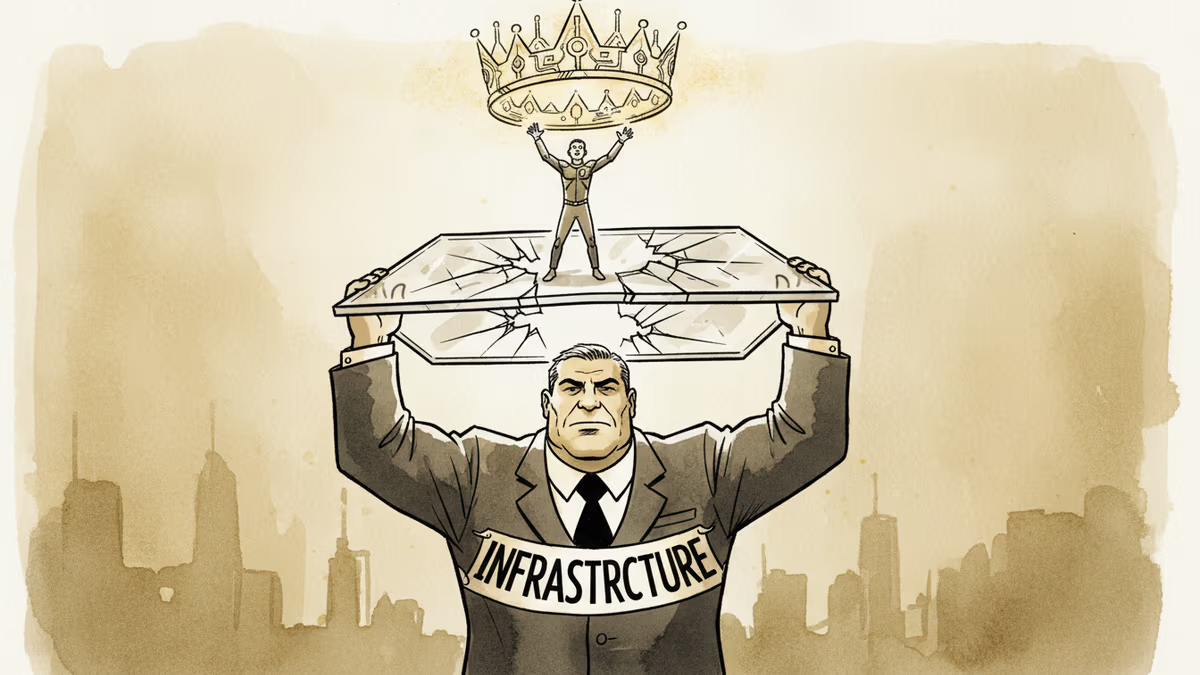
Court documents from Musk v. Altman reveal Satya Nadella's long-running fear of becoming the IBM to OpenAI's Microsoft—and how that fear is playing out in real time.
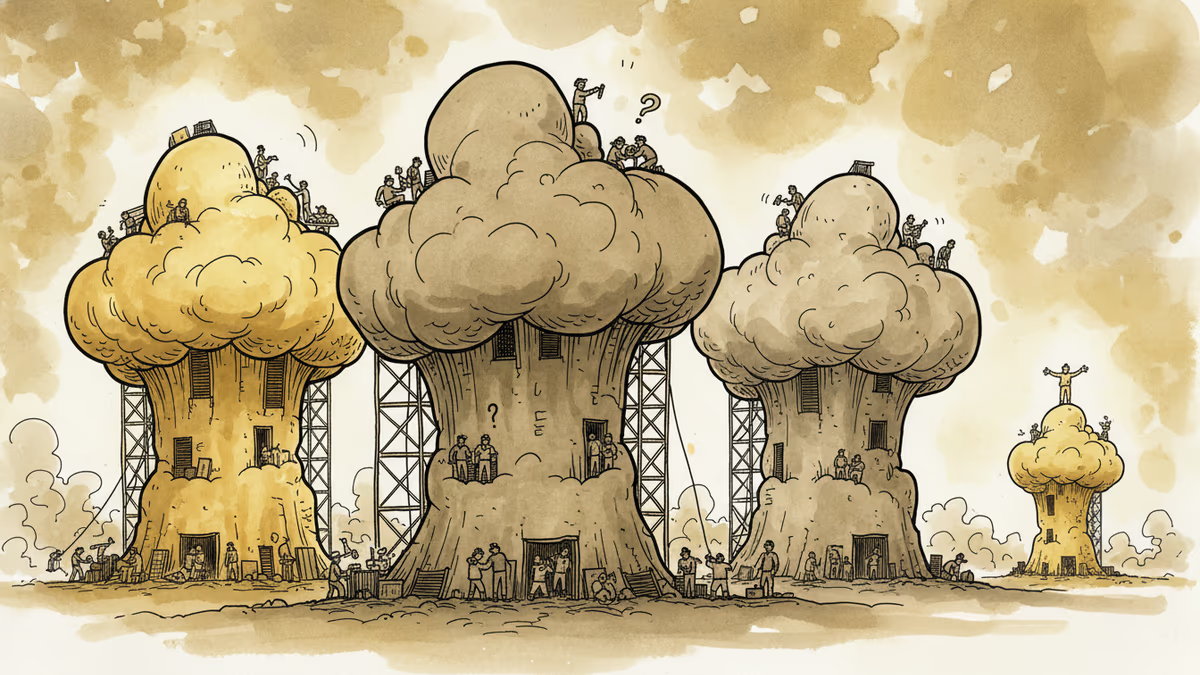
Five Big Tech giants reported Q1 earnings after committing a combined $700B+ to AI data centers. The results reveal a clear divide between smart spenders and expensive mistakes.
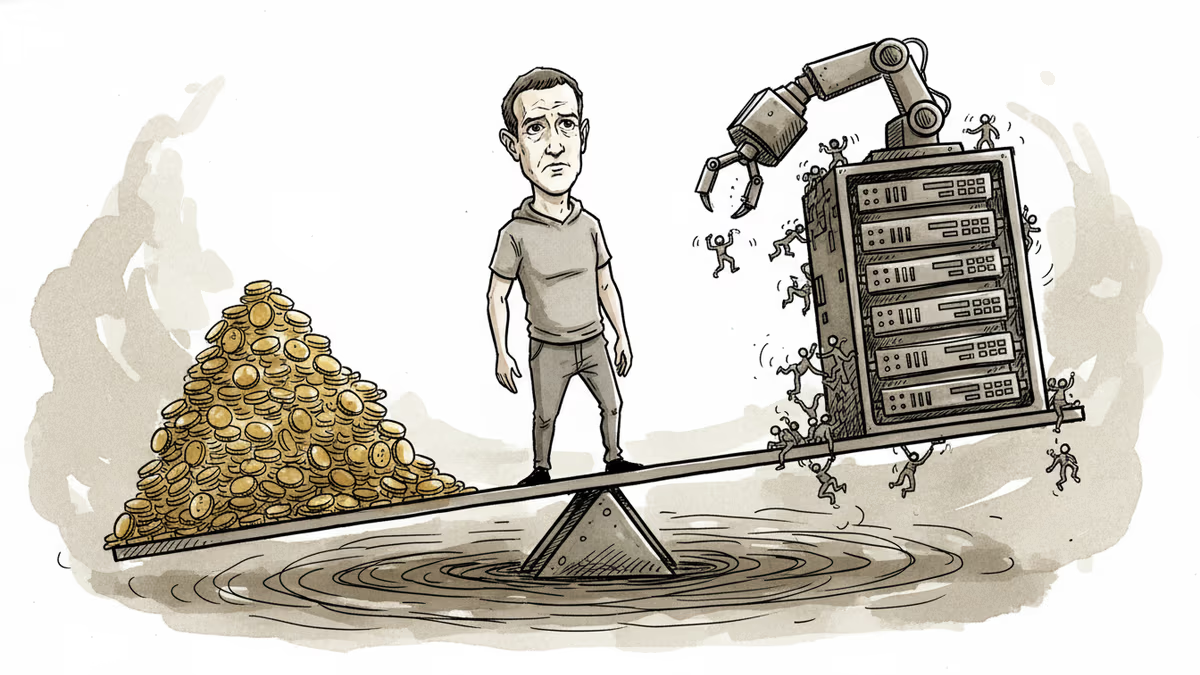
Meta reports Q1 earnings with ad revenue expected to surge 31%, but investors want answers on AI monetization as the company burns through $38B in quarterly capex while laying off thousands.
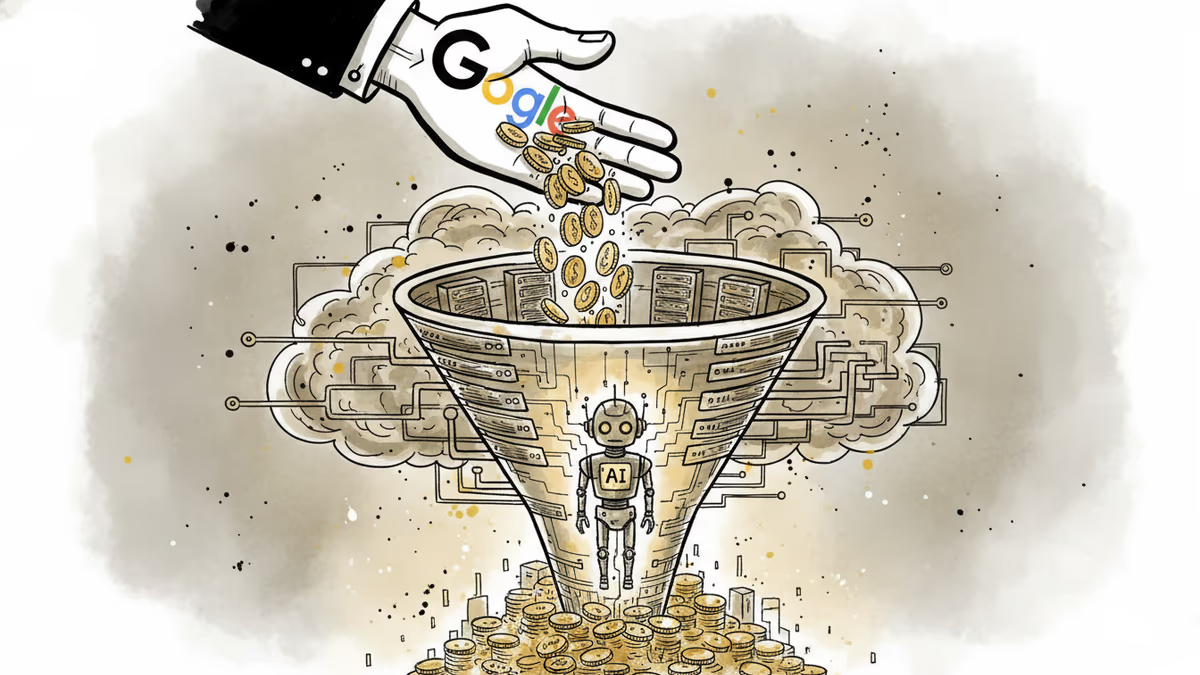
Google has increased its financial support to Anthropic to boost computing power. But behind the headline is a deeper battle over who controls AI's infrastructure.
Court documents from Musk v. Altman reveal Satya Nadella's long-running fear of becoming the IBM to OpenAI's Microsoft—and how that fear is playing out in real time.
Five Big Tech giants reported Q1 earnings after committing a combined $700B+ to AI data centers. The results reveal a clear divide between smart spenders and expensive mistakes.
Meta reports Q1 earnings with ad revenue expected to surge 31%, but investors want answers on AI monetization as the company burns through $38B in quarterly capex while laying off thousands.
Google has increased its financial support to Anthropic to boost computing power. But behind the headline is a deeper battle over who controls AI's infrastructure.
Thoughts
Share your thoughts on this article
Sign in to join the conversation