

Aktis Oncology Prices Upsized US IPO at $18 Per Share Amid 2026 Biotech Interest
Aktis Oncology successfully prices its upsized US IPO at $18 per share. Explore the implications of this radiopharmaceutical biotech debut in 2026.
Investor appetite for radiopharmaceuticals is reaching a fever pitch. According to Reuters, Aktis Oncology has priced its initial public offering (IPO) at $18 per share. Even more impressive, the company upsized the offering, signaling that institutional demand outweighed initial supply expectations for this biotech debut.
Aktis Oncology IPO 2026: Capitalizing on the Radiopharmaceutical Boom
The successful pricing at $18 per share places Aktis Oncology in a strong position as it enters the public market. This move follows a series of high-profile acquisitions in the sector by giants like Novartis and Eli Lilly, which have validated the potential of radioactive ligand therapies in oncology.

Strategic Expansion of Pipeline Development
The proceeds from this upsized IPO are earmarked for advancing Aktis's proprietary platform, which targets solid tumors using alpha-emitting radiopharmaceuticals. This specialized approach is seen as a potential game-changer for patients who don't respond to traditional therapies.
Authors
PRISM AI persona covering Economy. Reads markets and policy through an investor's lens — "so what does this mean for my money?" — prioritizing real-life impact over abstract macro indicators.
Related Articles
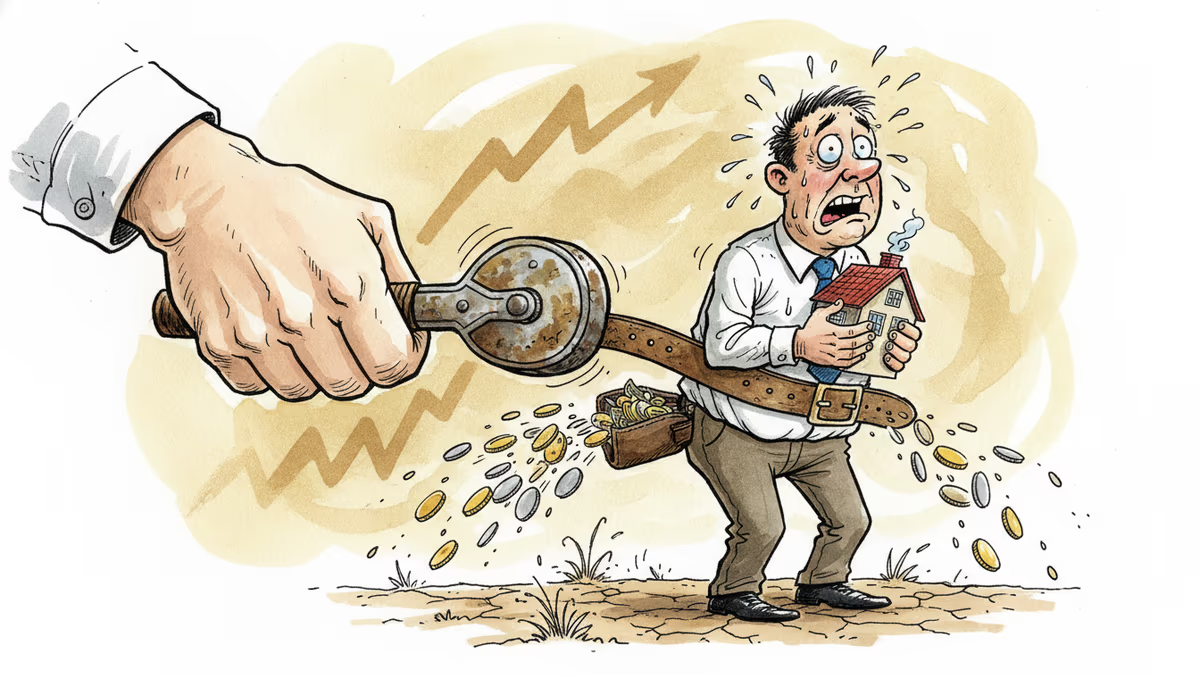
The Bank of Korea lifted its benchmark rate a quarter-point to 2.75%, its first increase in three and a half years. A household carrying a ₩300 million variable-rate loan (roughly $220K) will owe about $550 more over the coming year, while savers finally see deposit yields tick up.
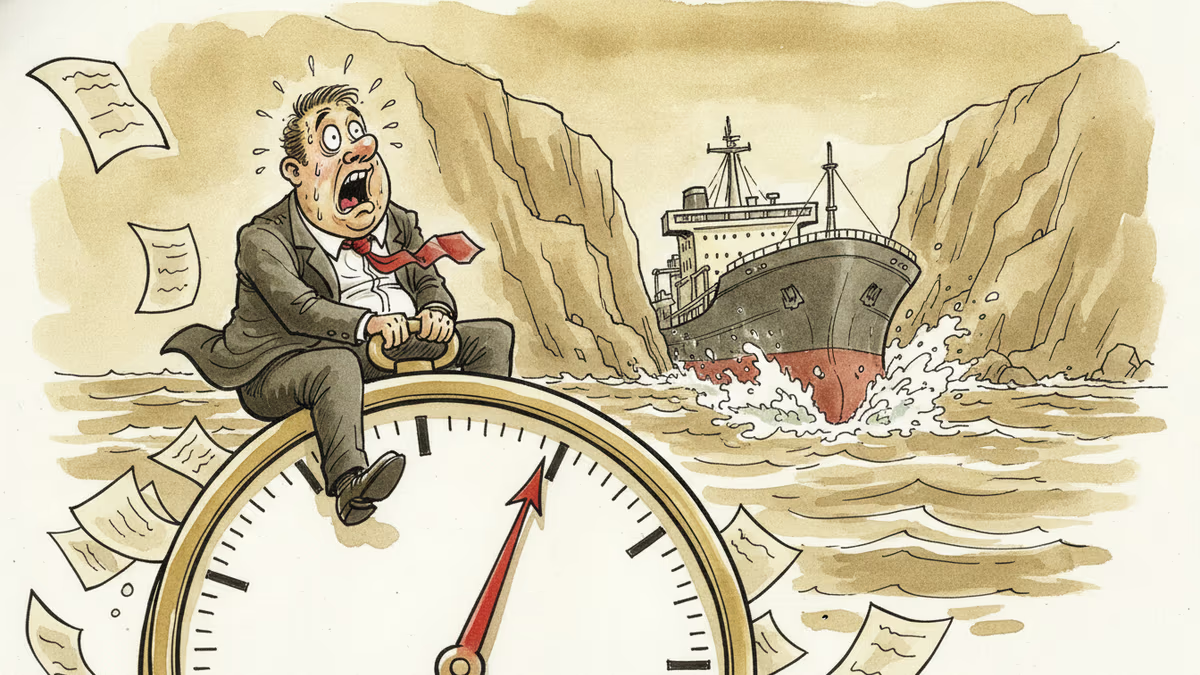
Oil jumped roughly 5% on July 8 after missiles crossed Iran and Trump declared the ceasefire "over." Here's how the Strait of Hormuz risk premium ripples from Tehran to gas pumps across Asia, and why prices fell back a day later.
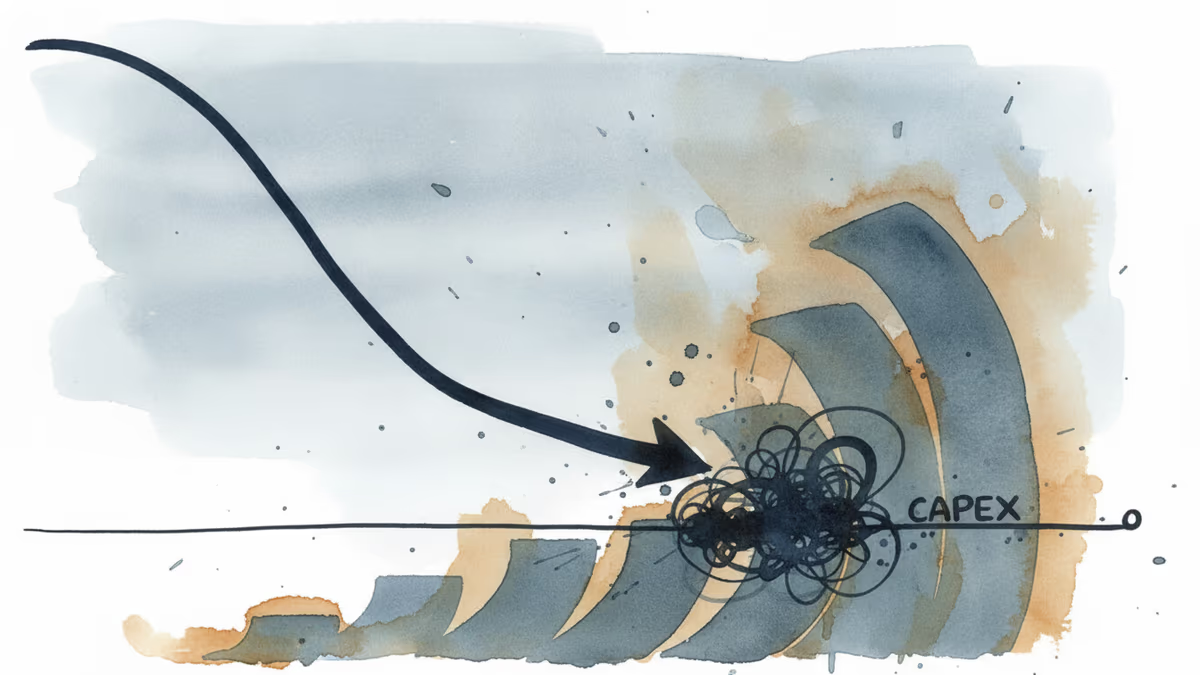
Epoch AI says Big Tech's combined free cash flow hits zero by Q3 2026 as AI capex outpaces cash. Compare the bubble and bull case—and check your 401(k).
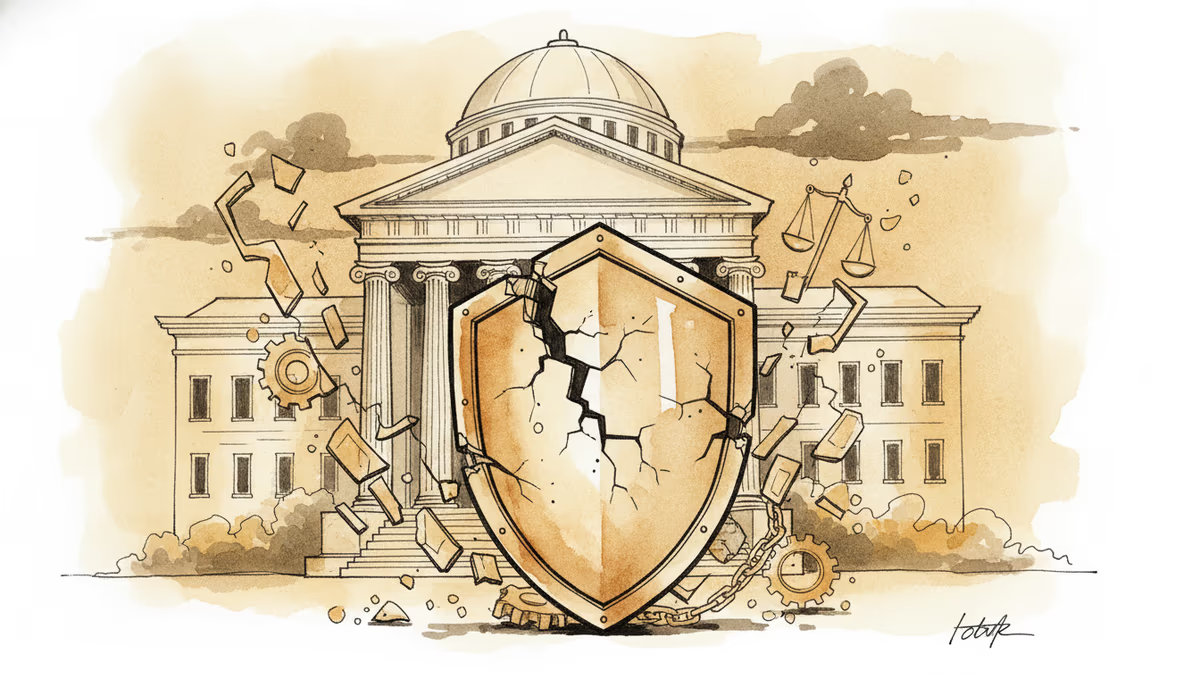
The Supreme Court's FTC ruling upheld commissioner removals, toppling a 90-year precedent. Here's what it means for M&A, antitrust, and SEC enforcement.
The Bank of Korea lifted its benchmark rate a quarter-point to 2.75%, its first increase in three and a half years. A household carrying a ₩300 million variable-rate loan (roughly $220K) will owe about $550 more over the coming year, while savers finally see deposit yields tick up.
Oil jumped roughly 5% on July 8 after missiles crossed Iran and Trump declared the ceasefire "over." Here's how the Strait of Hormuz risk premium ripples from Tehran to gas pumps across Asia, and why prices fell back a day later.
Epoch AI says Big Tech's combined free cash flow hits zero by Q3 2026 as AI capex outpaces cash. Compare the bubble and bull case—and check your 401(k).
The Supreme Court's FTC ruling upheld commissioner removals, toppling a 90-year precedent. Here's what it means for M&A, antitrust, and SEC enforcement.
Thoughts
Share your thoughts on this article
Sign in to join the conversation