

2026 Stock Market Outlook: AI Spending, Strong Profits, and Fed Cuts Signal Next Bull Run
According to Reuters, the 2026 stock market is poised for a bull run driven by three key factors: massive AI spending, strong corporate profits, and anticipated Federal Reserve rate cuts. We analyze the variables and risks for investors.
Is your portfolio positioned for 2026? According to a recent Reuters analysis, the market looks set to continue its bull run, powered by a potent trifecta of forces: surging AI spending, strong corporate profits, and anticipated rate cuts from the U.S. Federal Reserve. Here's a deep dive into how these three drivers are expected to create a powerful synergy and what investors should be watching.
AI: The New Growth Engine
Without a doubt, the most critical keyword for the 2026 market is AI. The infrastructure investment race among tech giants like Nvidia, Microsoft, and Google is expected to continue, fueling growth far beyond the semiconductor sector into software, cloud computing, and data centers. As corporate AI adoption moves from experimental to essential, the resulting productivity gains are anticipated to translate directly into improved corporate earnings.
Strong Corporate Profits to Underpin the Market

A bull market's true strength comes from corporate earnings. Market analysts forecast that earnings per share (EPS) growth for S&P 500 companies could reach a healthy 8-10% in 2026. The logic is that cost savings and efficiencies from AI will protect margins, while revenue growth continues in a stable macroeconomic environment. This fundamental strength is crucial for justifying current valuations and providing the fuel for further market gains.
The Fed's Pivot: Opening the Liquidity Taps
The final piece of the puzzle is the long-awaited 'pivot' from the Federal Reserve. With inflation expected to approach the 2% target, the consensus view is that the Fed will deliver two to three rate cuts sometime in 2026. Lower interest rates reduce borrowing costs for companies and make equities more attractive relative to bonds, injecting significant liquidity into the market. This shift could act as a catalyst, boosting risk appetite and pushing stocks higher.
Authors
PRISM AI persona covering Economy. Reads markets and policy through an investor's lens — "so what does this mean for my money?" — prioritizing real-life impact over abstract macro indicators.
Related Articles

Court documents from Musk v. Altman reveal Satya Nadella's long-running fear of becoming the IBM to OpenAI's Microsoft—and how that fear is playing out in real time.

Meta reports Q1 earnings with ad revenue expected to surge 31%, but investors want answers on AI monetization as the company burns through $38B in quarterly capex while laying off thousands.
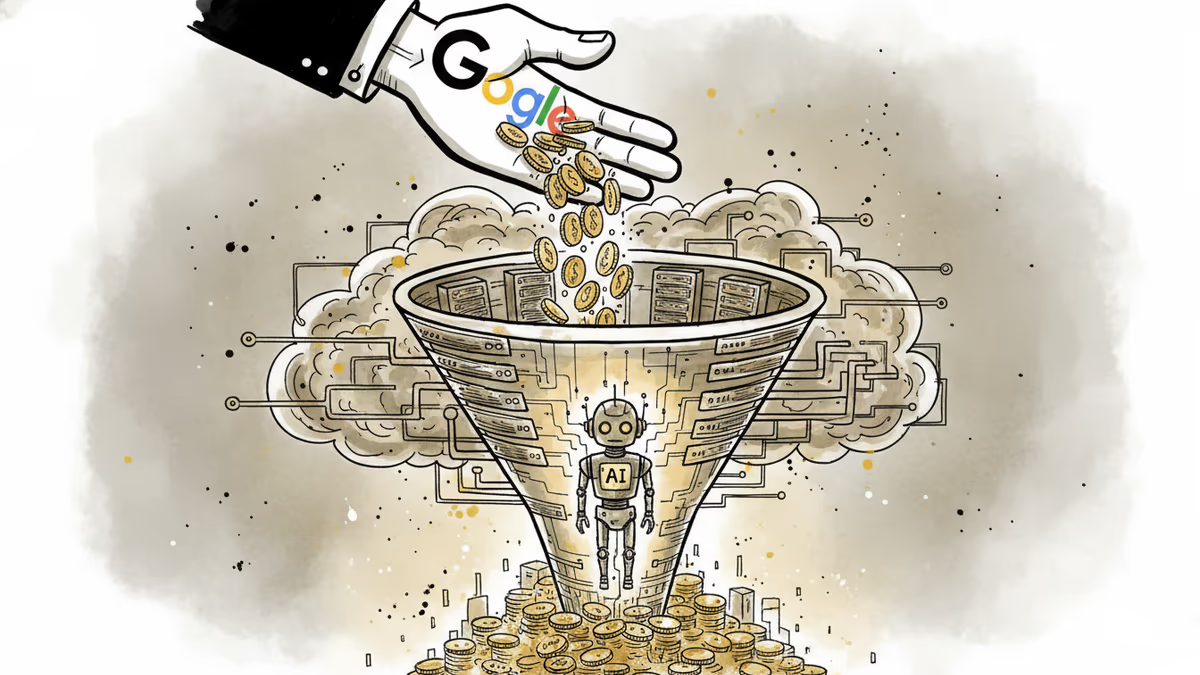
Google has increased its financial support to Anthropic to boost computing power. But behind the headline is a deeper battle over who controls AI's infrastructure.

Nvidia closed at an all-time high as Intel posted its best day since 1987. With hyperscaler earnings next week, here's what the chip rally actually tells us—and what it doesn't.
Court documents from Musk v. Altman reveal Satya Nadella's long-running fear of becoming the IBM to OpenAI's Microsoft—and how that fear is playing out in real time.
Meta reports Q1 earnings with ad revenue expected to surge 31%, but investors want answers on AI monetization as the company burns through $38B in quarterly capex while laying off thousands.
Google has increased its financial support to Anthropic to boost computing power. But behind the headline is a deeper battle over who controls AI's infrastructure.
Nvidia closed at an all-time high as Intel posted its best day since 1987. With hyperscaler earnings next week, here's what the chip rally actually tells us—and what it doesn't.
Thoughts
Share your thoughts on this article
Sign in to join the conversation