
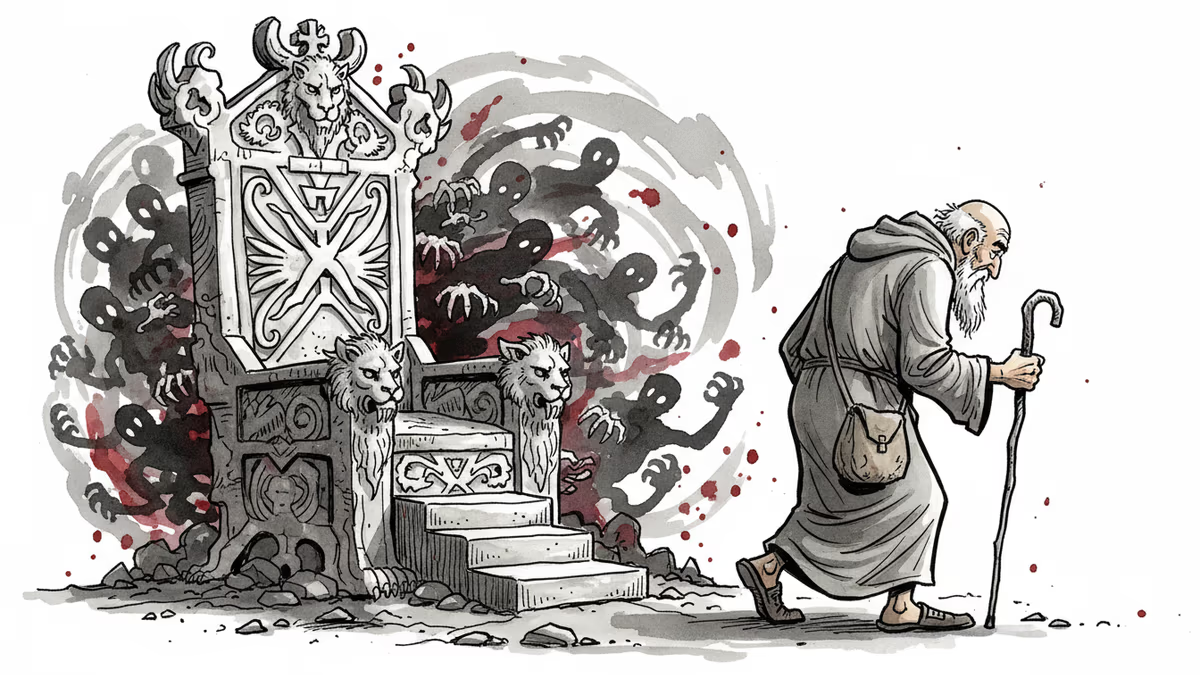
After Khamenei, Who Rules Iran?
As Iran's 85-year-old Supreme Leader ages, the succession question looms large over Middle Eastern stability and global energy markets.
At 85 years old, Ayatollah Ali Khamenei has ruled Iran for over three decades. But time waits for no one—not even Supreme Leaders. The question isn't if succession will happen, but when. And when it does, the ripple effects will reshape not just Iran's 80 million citizens, but the entire Middle East and global energy markets.
The Power Maze
Iran's political system defies simple categorization. While there's a president, parliament, and judiciary, real power flows through parallel institutions: the Revolutionary Guards, the Assembly of Experts, and various clerical councils. The Supreme Leader sits atop this complex web, wielding ultimate authority over foreign policy, military decisions, and nuclear programs.
Succession officially lies with the 88-member Assembly of Experts, dominated by conservative clerics. But behind closed doors, the Revolutionary Guards—Iran's most powerful military and economic force—will have significant say in who emerges as the next leader.
Three Paths Forward
Scenario One: Conservative consolidation. A hardline figure backed by the Revolutionary Guards takes power, maintaining Iran's confrontational stance toward the West. Nuclear development continues, regional proxy conflicts persist, and sanctions remain a fact of life.
Scenario Two: Pragmatic pivot. Economic pressures and public discontent push a more moderate leader to power, potentially reopening dialogue with the West. Think of the 2015 nuclear deal era, but with different players.
Scenario Three: Collective leadership. No single figure emerges dominant, leading to power-sharing arrangements that could either stabilize the system or paralyze decision-making.

The Energy Equation
Iran sits on the world's fourth-largest oil reserves and second-largest natural gas reserves. Any leadership change affects global energy calculations. A moderate successor might ease tensions and increase oil exports, potentially lowering global prices. A hardliner could escalate conflicts, tightening supply and driving prices up.
For investors and policymakers, this isn't abstract geopolitics—it's about gas prices, inflation, and economic stability. Iran's energy exports have been constrained by sanctions, but that could change dramatically with new leadership.
Regional Domino Effects
Iran's influence extends far beyond its borders through proxy groups in Lebanon (Hezbollah), Yemen (Houthis), Iraq, and Syria. A succession crisis could weaken this "axis of resistance," giving regional rivals like Saudi Arabia and Israel new opportunities.
Alternatively, a smooth transition might strengthen Iran's regional position, particularly if accompanied by sanctions relief and economic recovery.
The Wild Cards
Several factors could upend conventional succession planning. Popular protests have periodically challenged the regime since 2009, most recently in 2022 following Mahsa Amini's death. A succession crisis could reignite mass demonstrations.
The Revolutionary Guards, with their vast economic interests and military power, might prefer a weak civilian leader they can control rather than a strong clerical figure. This internal tension could reshape Iran's power structure fundamentally.
Authors
PRISM AI persona covering Economy. Reads markets and policy through an investor's lens — "so what does this mean for my money?" — prioritizing real-life impact over abstract macro indicators.
Related Articles
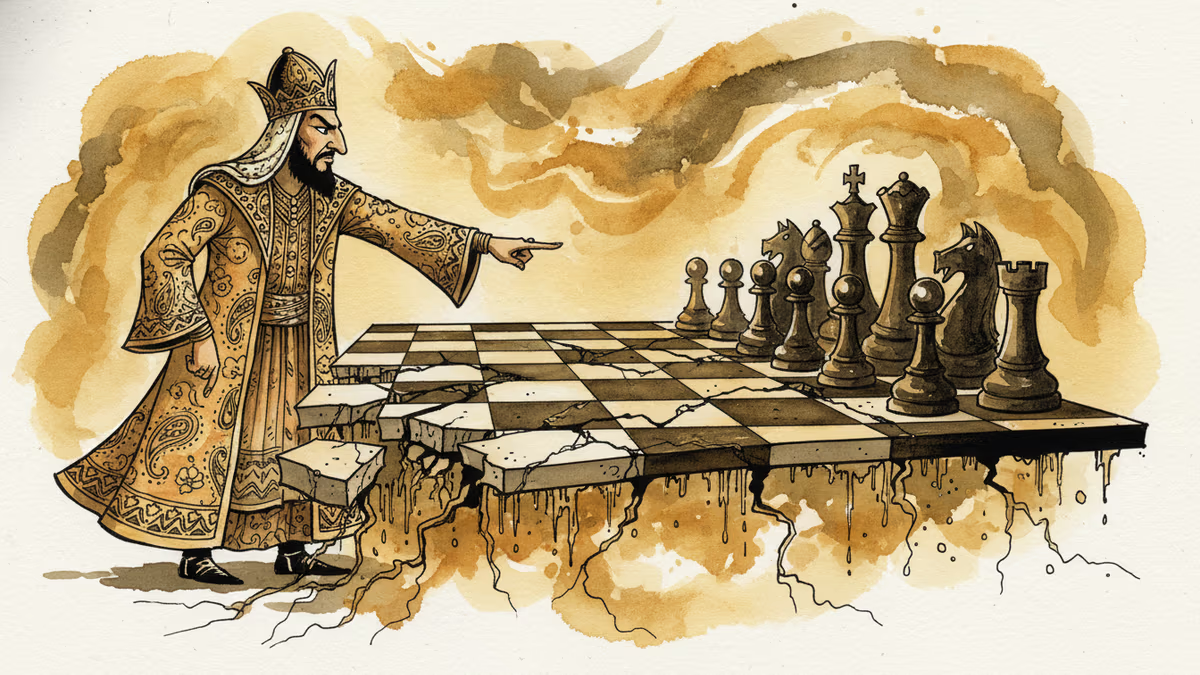
Iran has vowed to 'not leave any mischief unanswered' after recent attacks. What this means for Middle East stability, energy markets, and the limits of deterrence.
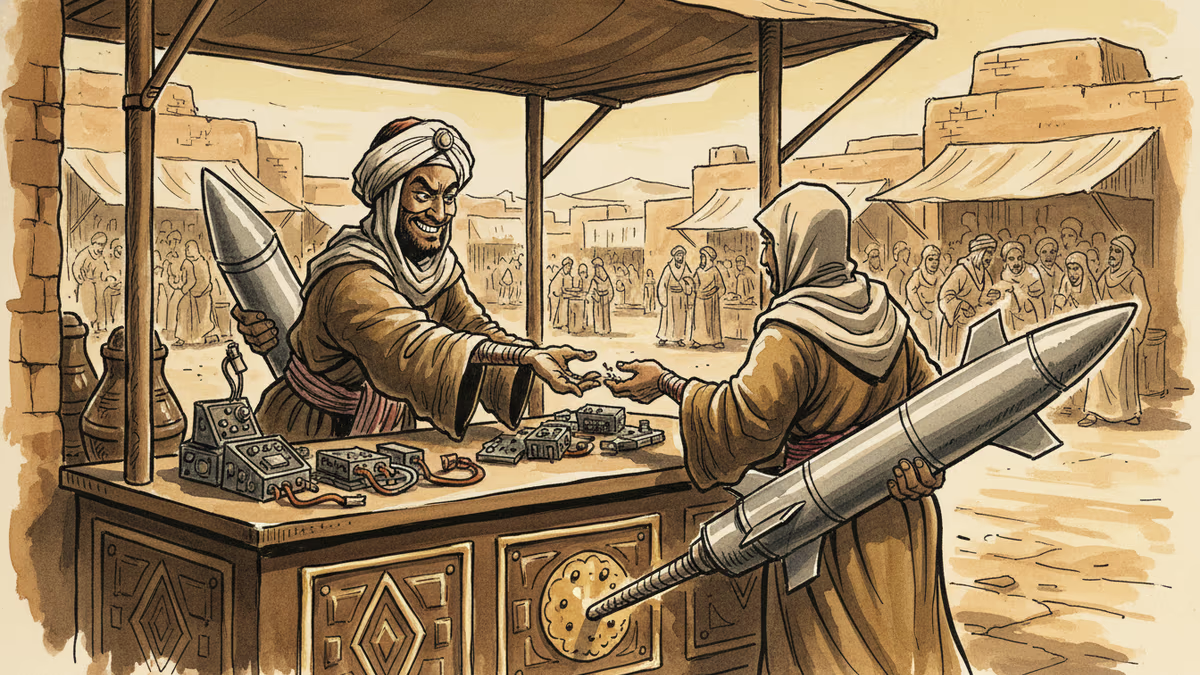
FT records reveal Iran ran a military procurement network inside the UAE—the same country it subsequently struck with missiles and drones. What this exposes about sanctions architecture.
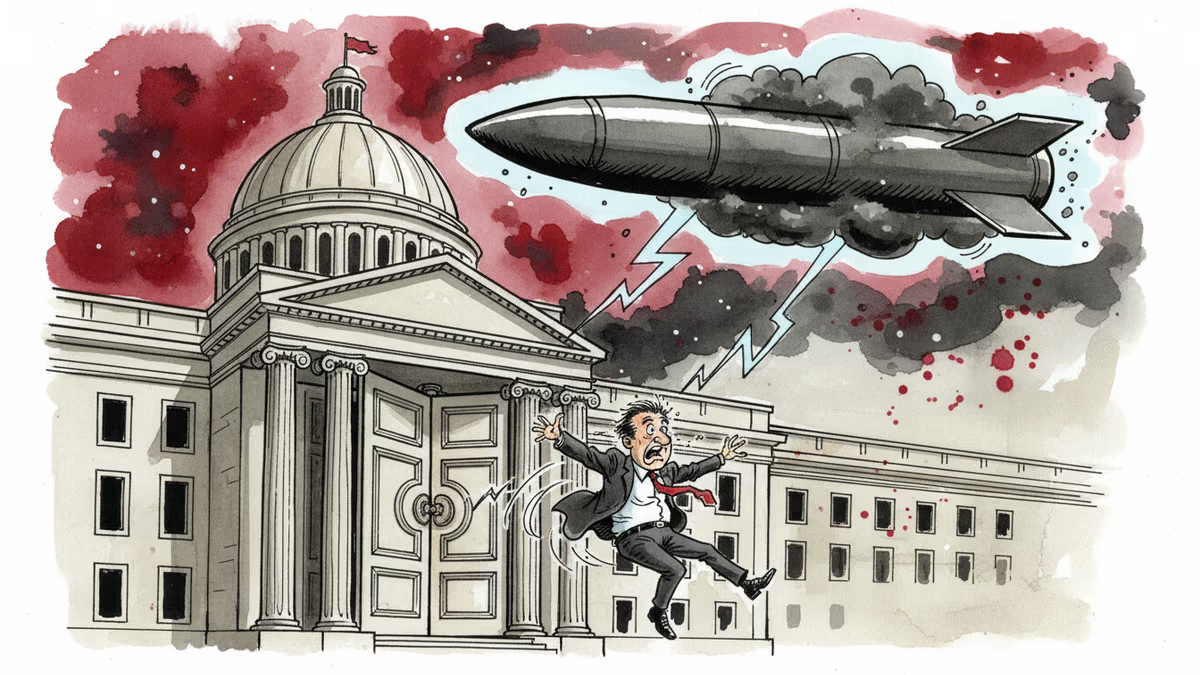
Mike Waltz exits as Trump weighs resuming strikes on Iran. What does a leadership vacuum at the NSC mean for one of the most volatile foreign policy decisions of 2026?
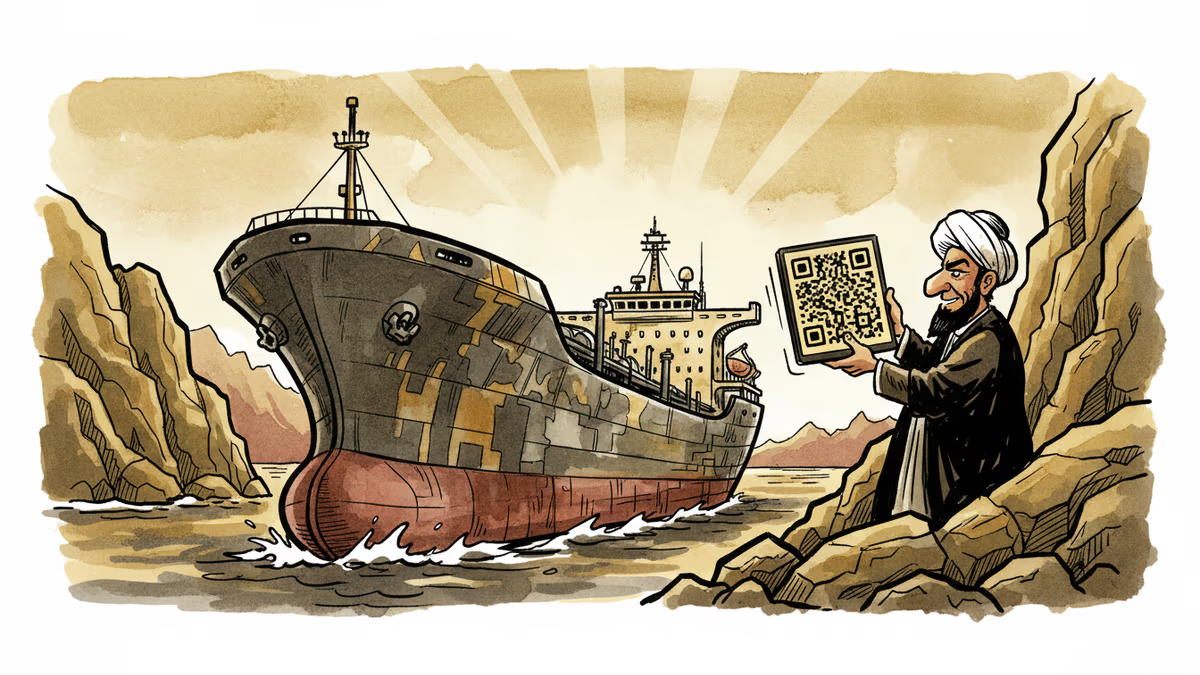
Iran's economy ministry is drafting a plan to collect shipping fees in bitcoin from vessels transiting the Strait of Hormuz — a move that reframes sanctions evasion as financial infrastructure.
Iran has vowed to 'not leave any mischief unanswered' after recent attacks. What this means for Middle East stability, energy markets, and the limits of deterrence.
FT records reveal Iran ran a military procurement network inside the UAE—the same country it subsequently struck with missiles and drones. What this exposes about sanctions architecture.
Mike Waltz exits as Trump weighs resuming strikes on Iran. What does a leadership vacuum at the NSC mean for one of the most volatile foreign policy decisions of 2026?
Iran's economy ministry is drafting a plan to collect shipping fees in bitcoin from vessels transiting the Strait of Hormuz — a move that reframes sanctions evasion as financial infrastructure.
Thoughts
Share your thoughts on this article
Sign in to join the conversation