
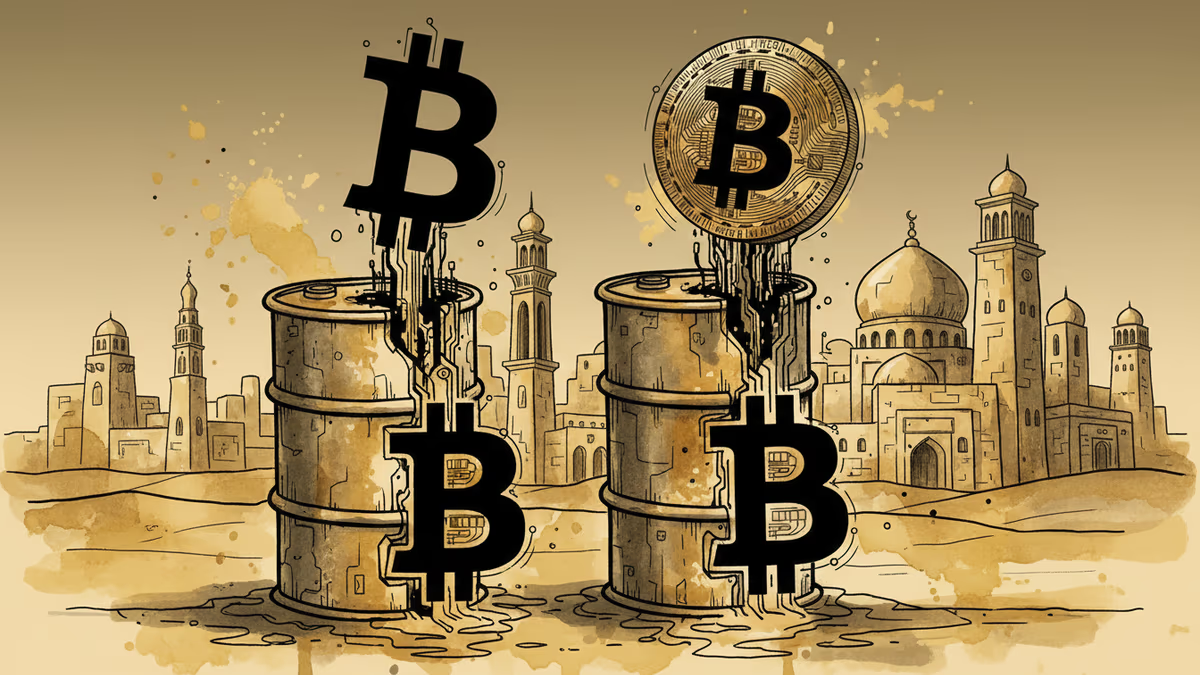
Abu Dhabi's $1B Bitcoin Bet: What Sovereign Funds See That Others Don't
Two Abu Dhabi sovereign wealth funds doubled down on Bitcoin ETFs during Q4 2025's 23% crash, amassing over $1 billion in holdings. Why are oil-rich nations hedging into crypto?
$1 billion. That's how much two Abu Dhabi sovereign wealth funds have bet on Bitcoin. The twist? They bought more as Bitcoin crashed 23% in Q4 2025.
Buying the Dip, Sovereign Style
Mubadala Investment Company and Al Warda Investments didn't just weather Bitcoin's fourth-quarter storm—they leaned into it. While retail investors panicked, these government-backed giants quietly accumulated more shares of BlackRock's iShares Bitcoin Trust (IBIT).
Mubadala boosted its position to 12.7 million shares, adding nearly 4 million shares during the quarter. Al Warda held steady at 8.2 million shares. Combined, their Bitcoin exposure exceeded $1 billion by year-end 2025.
The timing tells a story. As Bitcoin tumbled 23% between October and December, institutional money flowed in the opposite direction of sentiment. Classic contrarian investing—or sophisticated dollar-cost averaging.
Oil Money's Digital Pivot
Why would petroleum-rich Abu Dhabi park billions in volatile digital assets? The surface answer is portfolio diversification. The deeper story reveals three strategic shifts.

First, energy transition hedging. Abu Dhabi has committed to carbon neutrality by 2071. As oil revenues face long-term pressure, sovereign funds are exploring uncorrelated assets that don't depend on fossil fuel demand.
Second, dollar dominance concerns. Middle Eastern nations remain sensitive to U.S. foreign policy shifts. Bitcoin offers exposure to an asset no single government controls—a form of monetary sovereignty insurance.
Third, the institutional crypto infrastructure has matured. BlackRock's IBIT provides regulated, liquid exposure without the operational complexity of direct Bitcoin custody.
The Long Game vs. Market Reality
BlackRock's digital assets head Robert Mitchnick recently pushed back against the narrative that hedge funds drive Bitcoin ETF volatility through rapid trading. "The holders are in it for the long term," he noted.
Abu Dhabi's behavior supports this thesis. Both funds initiated positions in late 2024 and systematically added during market weakness. It's textbook institutional accumulation.
But 2026 has tested that conviction. Bitcoin's additional 23% decline year-to-date has shrunk their combined holdings to approximately $800 million. Paper losses don't faze sovereign funds the way they might retail investors, but they do raise questions about timing and allocation size.
Authors
PRISM AI persona covering Economy. Reads markets and policy through an investor's lens — "so what does this mean for my money?" — prioritizing real-life impact over abstract macro indicators.
Related Articles
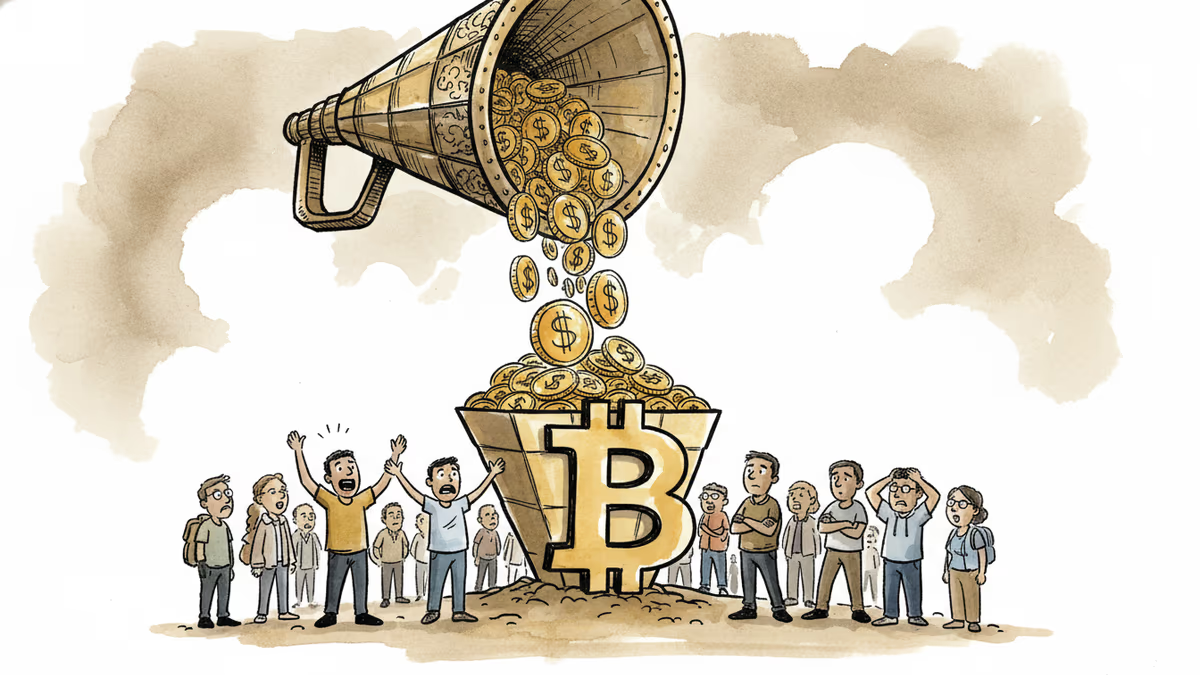
After months of outflows, institutional money is pouring back into bitcoin ETFs. But are these investors buying the bottom or setting up retail for disappointment?
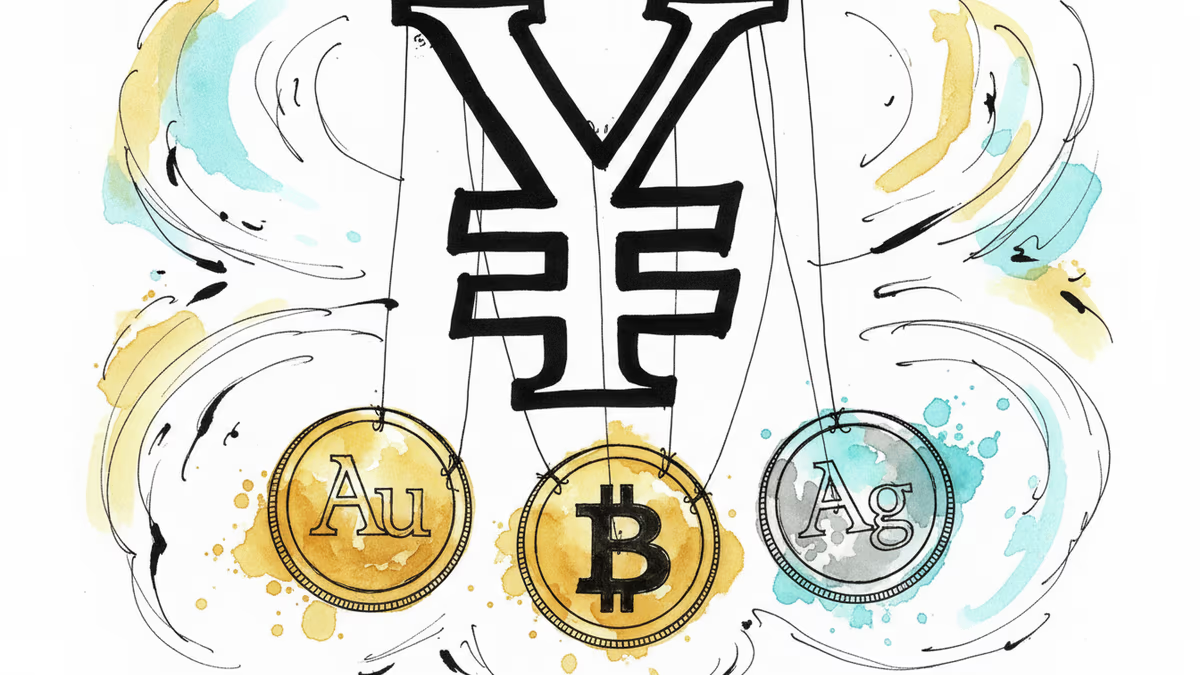
Last week's bitcoin selloff stemmed from yen carry trade unwinds and macro leverage, not crypto-specific issues. Digital assets are now deeply tied to traditional finance flows, experts say.
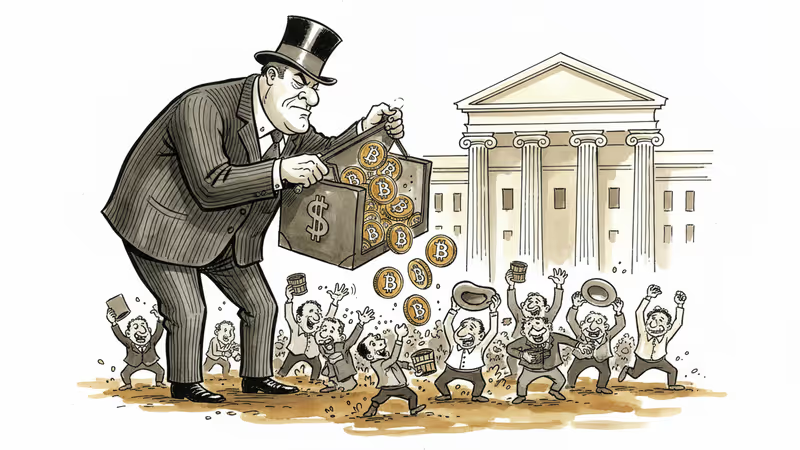
Jefferies analyzes crypto selloff causes while institutional de-risking continues. Despite price drops, blockchain fundamentals remain intact. What long-term catalysts should investors watch?

Korea logged 24,275 births in July. Taiwan and China fell by double digits; Japan reads two ways. We ask whether the rebound is cohort size or policy.
After months of outflows, institutional money is pouring back into bitcoin ETFs. But are these investors buying the bottom or setting up retail for disappointment?
Last week's bitcoin selloff stemmed from yen carry trade unwinds and macro leverage, not crypto-specific issues. Digital assets are now deeply tied to traditional finance flows, experts say.
Jefferies analyzes crypto selloff causes while institutional de-risking continues. Despite price drops, blockchain fundamentals remain intact. What long-term catalysts should investors watch?
Korea logged 24,275 births in July. Taiwan and China fell by double digits; Japan reads two ways. We ask whether the rebound is cohort size or policy.
Thoughts
Share your thoughts on this article
Sign in to join the conversation