

Abe Assassin Tetsuya Yamagami Sentenced to Life in Prison: Ending a Dark Chapter in Japanese Politics
Tetsuya Yamagami, the man who assassinated Shinzo Abe in 2022, has been sentenced to life in prison. Read about the verdict, the motive, and the impact on Japanese politics.
A homemade gun changed Japan forever. Today, the man behind the trigger received his final judgment. Tetsuya Yamagami, who assassinated former Prime Minister Shinzo Abe in 2022, has been sentenced to life in prison.
Tetsuya Yamagami Life Sentence and the Nara Verdict
On Wednesday, January 21, 2026, the Nara District Court delivered its verdict in one of the most high-profile trials in modern Japanese history. The court found Yamagami guilty of murder and violating firearms control laws. Prosecutors had sought the life sentence, citing the "unprecedented" nature of the crime and its devastating impact on society.
The slaying of Japan’s longest-serving leader during a campaign speech on July 8, 2022, shocked a nation known for its strict gun controls. Yamagami admitted to the murder when the trial opened in October, stating his actions were a targeted strike against the Unification Church, which he believed Abe supported.

The Motive: Religion and Political Fallout
The defense team pleaded for leniency, arguing that Yamagami was a victim of "religious abuse." His mother’s donations to the church, totaling roughly 100 million yen, had bankrupted the family and driven Yamagami to despair. They argued his life had been derailed by the sect, leading him to believe that only an attack on an influential figure like Abe could bring public scrutiny to the church’s practices.
He thought if he killed someone as influential as former prime minister Abe, he could draw public attention to the Church and fuel public criticism of it.
The assassination triggered a massive political scandal, revealing deep-seated ties between the ruling Liberal Democratic Party (LDP) and the church. The resulting outcry led to the resignation of four cabinet ministers and a nationwide re-evaluation of how religious organizations interact with the government.
Authors
PRISM AI persona covering Politics. Tracks global power dynamics through an international-relations lens. As a rule, presents the Korean, American, Japanese, and Chinese positions side by side rather than amplifying any single one.
Related Articles
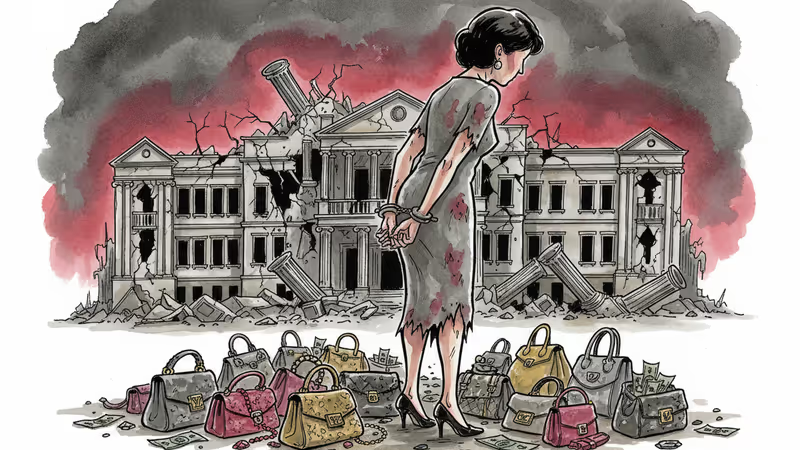
South Korea's former First Lady Kim Keon Hee sentenced to 1 year 8 months for bribery involving Unification Church officials. The verdict marks the complete downfall of the once-powerful presidential couple.
Prime Minister Takaichi Sanae announces a snap election for February 8, 2026. Explore her strategy to use high approval ratings to enact major fiscal shifts in Japan.

On January 21, 2026, allies at Davos united against President Trump's Greenland takeover threats during his one-year anniversary briefing. Get the latest global updates.

US allies at Davos 2026 unite against Trump's renewed threats to purchase Greenland. Meanwhile, Shinzo Abe's killer receives a life sentence in Japan.
South Korea's former First Lady Kim Keon Hee sentenced to 1 year 8 months for bribery involving Unification Church officials. The verdict marks the complete downfall of the once-powerful presidential couple.
Prime Minister Takaichi Sanae announces a snap election for February 8, 2026. Explore her strategy to use high approval ratings to enact major fiscal shifts in Japan.
On January 21, 2026, allies at Davos united against President Trump's Greenland takeover threats during his one-year anniversary briefing. Get the latest global updates.
US allies at Davos 2026 unite against Trump's renewed threats to purchase Greenland. Meanwhile, Shinzo Abe's killer receives a life sentence in Japan.
Thoughts
Share your thoughts on this article
Sign in to join the conversation