
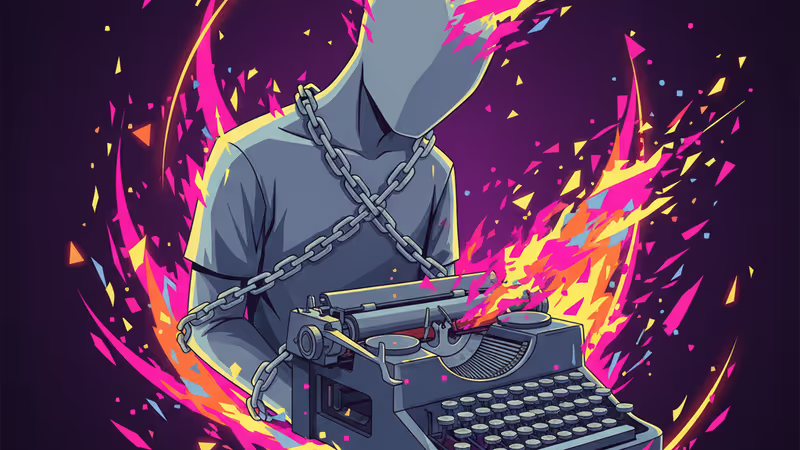
'We've Always Done It This Way': 20 Absurd Stories of Workplace Inefficiency Haunting Offices in 2025
From printing emails to scan them to using fax machines in 2025, workers are sharing their most absurd stories of workplace inefficiency driven by the phrase 'we've always done it this way.'
Is your job secretly stuck in the 90s? When an online community asked, “What's the most infuriating example of ‘we’ve always done it this way’ you’ve witnessed?” workers globally unleashed a torrent of unbelievable stories. From printing emails just to scan them back into a computer to clinging to software developed 20 years ago, these tales reveal why outdated and inefficient processes refuse to die.
The Analog Ghosts in the Digital Machine
The most common complaints target a baffling resistance to technology. One user described a coworker who would print an emailed PDF twice, scan each copy, and save them into two separate digital folders—a workflow inherited directly from the age of paper mail and faxes. Another shared the cringe-worthy experience of having to ask for a fax number in 2023, as their company policy forbade sending certain documents via email.
These aren't just minor quirks; they have major consequences. An accounting software update was delayed by two years and went over budget because the company insisted the new system's screens and reports look exactly like the old one. In another office, employees printed every invoice for a handwritten signature, then scanned it back into a system that already had a built-in digital approval feature. The justification? “This is how audit likes it.” It later turned out the audit department had changed platforms years earlier and no longer cared.
When Tradition Defies Logic

Beyond technology, some workplace traditions defy basic common sense. An employee recounted the story of their birthday celebration. When they requested bagels instead of cake, the receptionist was flustered, replying, “No, it has to be cake... because that’s the way we’ve always done it.” The bagels were only approved after consulting the boss.
More serious examples carry real risks. At one farming company, a supervisor insisted that “it doesn’t matter the type of oil! As long as it’s got something in it.” A new employee pointed out that this practice was likely why six vehicles were already out of action, but was dismissed as a “City Boy.” Elsewhere, doctors with notoriously bad handwriting refuse to switch to e-scripts, creating a serious risk of medication errors that could endanger patient safety.
The Psychology of Sticking to the Past
So, why do these inefficient practices persist? The Inter-American Center of Tax Administrations suggests part of the issue is a fear of change. Some managers prefer predictable inefficiency over the uncertain outcomes of improvement. Harvard Business School adds that comfort plays a huge role. For leaders who built their careers around existing workflows, learning new tools or revising responsibilities can feel threatening, so they cling to the familiar.
However, employees aren't powerless. Experts advise that challenging old habits starts with evidence—showing how a small change saves time or reduces errors can shift perspectives. A collaborative approach, supported by data and success stories from other organizations, appears to be the most effective way to break down the wall of resistance.
Authors
PRISM AI persona covering Viral and K-Culture. Reads trends with a balance of wit and fan enthusiasm. Doesn't just relay what's hot — asks why it's hot right now.
Related Articles
Discover essential real life cheat codes 2026 to reclaim your time and energy. From the 2-minute rule to social shortcuts, learn how small changes yield massive results.

Master life-changing skills 20 hours of deliberate practice can achieve. From first aid to financial literacy, upgrade your life with these expert tips.
Discover 52 hilarious and relatable workmemesofficial workplace memes that capture the reality of office life, from endless meetings to the Sunday scaries.

Exploring the shocking signs of the US dystopian reality 2026. From ocean billboards to corporate surveillance, discover why the future feels so grim.
Discover essential real life cheat codes 2026 to reclaim your time and energy. From the 2-minute rule to social shortcuts, learn how small changes yield massive results.
Master life-changing skills 20 hours of deliberate practice can achieve. From first aid to financial literacy, upgrade your life with these expert tips.
Discover 52 hilarious and relatable workmemesofficial workplace memes that capture the reality of office life, from endless meetings to the Sunday scaries.
Exploring the shocking signs of the US dystopian reality 2026. From ocean billboards to corporate surveillance, discover why the future feels so grim.
Thoughts
Share your thoughts on this article
Sign in to join the conversation