
Beyond the Wand: Hidden Details That Redefine the Harry Potter Films
Discover hidden details and clever foreshadowing in the Harry Potter films that you likely missed. From Snape's first words to Voldemort's fading robes, these symbols add new depth to the series.
Decades after its cinematic debut, the Harry Potter series continues to captivate audiences, with fans rewatching the films countless times. Yet, hidden within the frames are subtle details meticulously placed by the filmmakers that even the most dedicated viewers may have missed. These elements are more than just trivia; they amplify character arcs, foreshadow future events, and add profound new layers to the wizarding world.
Visual foreshadowing is one of the most powerful techniques used. According to the filmmakers, Voldemort's robes in the 'Deathly Hallows' films were designed to fade in color each time a Horcrux was destroyed. This detail visually signifies his power and soul slowly draining away. Similarly, in 'The Half-Blood Prince,' a quick shot of young Tom Riddle's childhood bedroom reveals seven rocks neatly stacked on his windowsill, a chilling nod to his future ambition to split his soul into seven pieces.
Details also provide a deeper look into the characters' emotional states. In 'Deathly Hallows: Part 2,' when Harry reveals he's alive, George Weasley instinctively turns to share his excitement with his twin Fred, who is tragically no longer beside him. This heartbreaking, split-second gesture conveys a grief more potent than any dialogue could. In a more subtle character tribute, actor Daniel Radcliffe suggested that Harry wear button-down sweaters in 'Order of the Phoenix,' emulating the style of his favorite Defense Against the Dark Arts teacher, Professor Lupin.
The filmmakers also cleverly wove in nods to the real world. In 'Deathly Hallows: Part 1,' a poster for the play 'Equus' can be seen in the background of a café scene—a direct reference to the real-life stage production that starred both Daniel Radcliffe (Harry) and Richard Griffiths (Uncle Vernon). In 'Prisoner of Azkaban,' director Alfonso Cuarón paid homage to his Mexican heritage by including a fountain in a Hogwarts courtyard with statues of an eagle devouring a snake, an image central to the Mexican flag.
Perhaps the most poetic detail lies in Snape's very first words to Harry. He asks, "What would I get if I added powdered root of asphodel to an infusion of wormwood?" In the Victorian language of flowers, asphodel is a type of lily meaning 'regret,' while wormwood symbolizes 'absence' and 'loss.' The question was not a random test of knowledge, but a coded message: "I bitterly regret Lily's death."
PRISM Insight: The enduring relevance of a mega-franchise like Harry Potter is driven by more than nostalgia; it's fueled by a continuous cycle of discovery. By embedding these intricate details, filmmakers transformed passive viewing into an interactive 'treasure hunt.' This strategy fosters a dedicated fan community that constantly generates new analysis and content, ensuring the intellectual property's longevity and cultural resonance in the digital age.
This content is AI-generated based on source articles. While we strive for accuracy, errors may occur. We recommend verifying with the original source.
Related Articles
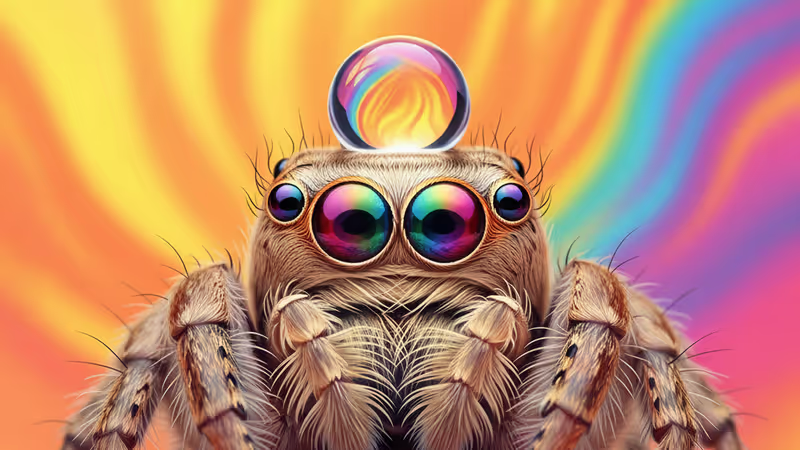
A viral video shows a tiny jumping spider wearing a droplet of water on its head like a hat. See why these creatures are becoming popular pets and what it says about changing trends.
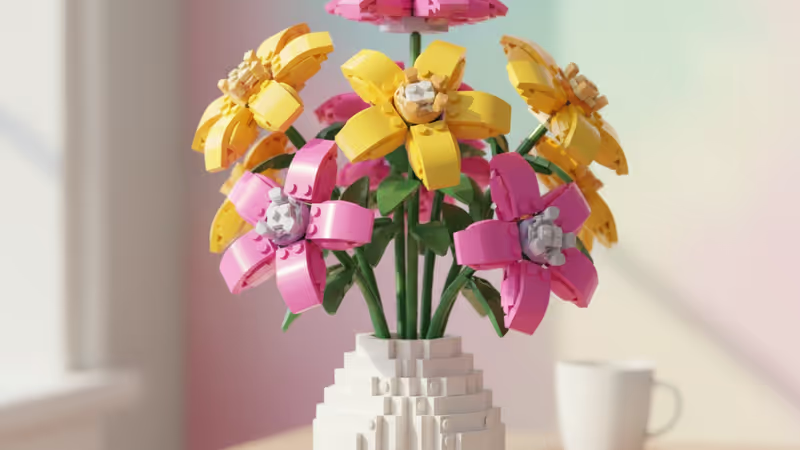
Grab the popular Lego Botanicals Flower Arrangement (10345) for just $65.99 at Amazon, a 40% discount. This 1,161-piece set is at its lowest price ever and makes a perfect post-holiday project.

As of Dec. 22, the Amazon Fire TV Stick 4K Select is on sale for just $9.99 with a coupon code. That's a 75% discount and its best price ever for a limited time.

From its surprising origin as a tool to quiet church-goers to its status as a multi-billion unit holiday staple, discover the fascinating history and surprising facts behind the iconic candy cane.