
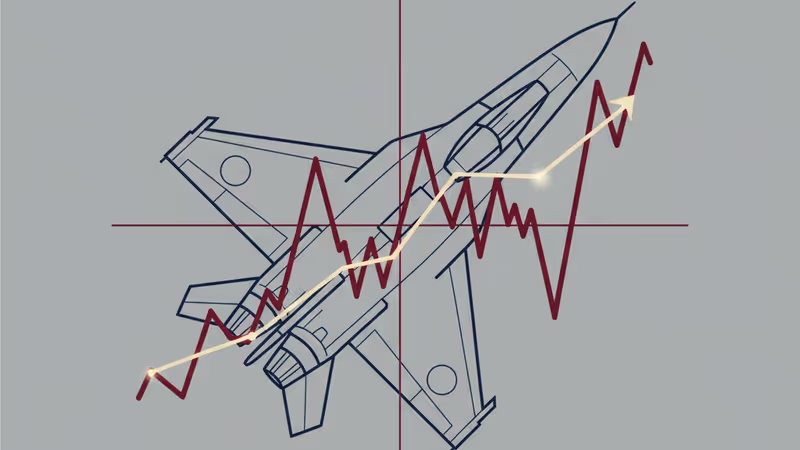
Japan Finalizes Record ¥9 Trillion Defense Budget Amid Domestic Squeeze
The Japanese government is finalizing a record defense budget of over ¥9 trillion for FY2026, raising concerns about its ability to simultaneously address domestic pressures like inflation, healthcare, and disaster response.
The Lead: Finalizing the FY2026 Budget
The Japanese government is in the final stages of approving a record-high defense budget for fiscal year 2026, expected to surpass ¥9 trillion (approx. $65 billion USD). While the move signals Tokyo's continued commitment to bolstering its military capabilities in a volatile region, it puts Prime Minister Kishida's administration in a tight spot as it juggles pressing domestic issues like inflation, healthcare funding, and national disaster preparedness.
The Core: A Duel of Priorities
According to government sources on December 17, the defense allocation is set to reach the unprecedented 9 trillion yen mark. This spending is driven by Japan's medium-term defense buildup plan, which includes acquiring long-range missiles for "counterstrike capabilities" and strengthening the domestic defense industry—a significant shift in the nation's post-war security posture.
This focus on national security was echoed in a budget framework agreement on December 20 between the ruling Liberal Democratic Party (LDP) and its partner, the Japan Innovation Party (Ishin). Their plan calls for promoting investment and developing a "secondary capital function" outside Tokyo to enhance both economic growth and crisis management.
Context: A New National Resilience Framework
Beyond defense, the government is launching a major overhaul of its disaster response system. On December 18, officials announced plans to establish a new "Disaster Prevention Agency" with a staff of around 350—a 1.6-fold increase from the current Cabinet Office division—and a new direct grant system for municipalities. The move is a direct response to persistent threats like a potential major earthquake in Tokyo.
The Pushback: 'Guns vs. Butter' Debate Intensifies
The massive outlay on defense and infrastructure is fueling concerns that everyday economic struggles are being sidelined. Harumi Yoshida, acting leader of the main opposition Constitutional Democratic Party (CDP), stated on December 21, "We must question the effectiveness of the upcoming budget in dealing with high inflation," criticizing the government's proposed measures as insufficient.
This sentiment is shared even within the ruling party. On the same day, LDP General Council Chairman Shunichi Suzuki stressed the "need for support to medical institutions," advocating for an increase in medical service fees to aid a healthcare system strained by an aging population and post-pandemic financial pressures. This signals future hikes in social security spending.
PRISM Insight
Japan's FY2026 budget process is a clear reflection of the nation's core dilemma: balancing external geopolitical pressures with internal structural decline. The record defense budget is a direct response to a changing Indo-Pacific security landscape, but it forces a classic "guns versus butter" trade-off onto a society grappling with demographic aging and stagnant wage growth. If the Kishida administration fails to prove it can secure both the nation and its citizens' livelihoods, it risks a significant political backlash.
Related Articles

The U.S. and Venezuela are locked in a tense standoff over Guyana's oil-rich Essequibo region. PRISM analyzes the risks of military escalation and the geopolitical stakes for South America.
The U.S. is pursuing a third oil tanker linked to Venezuela, a U.S. official says, escalating a tense maritime standoff after two recent seizures aimed at enforcing sanctions.

An expert analysis suggests 2026 is a critical 'make-or-break' year for Philippine President Ferdinand Marcos Jr. as he grapples with domestic scandals, economic pressure, and a potential Duterte comeback, while also taking the helm of ASEAN.

U.S. envoy Steve Witkoff calls recent Ukraine peace talks in Florida 'productive,' but a deal remains elusive as Russia refuses to cede occupied territories. The talks focus on a 20-point plan and security guarantees.