
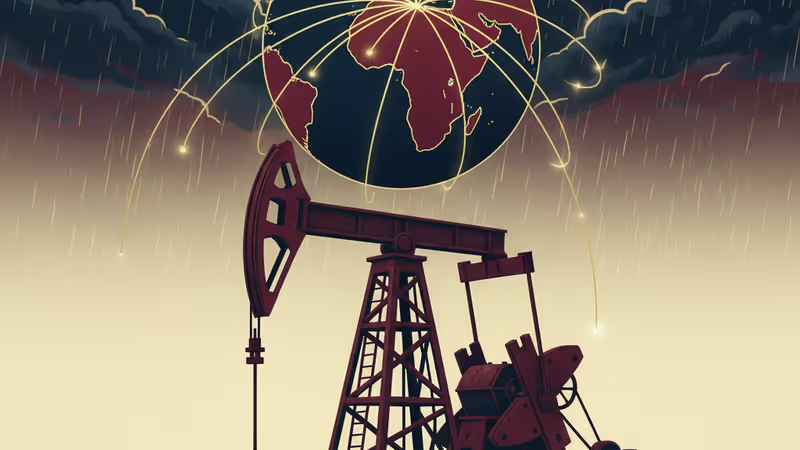
Venezuela Has the World's Largest Oil Reserves. Why Won't U.S. Companies Go Back?
Despite pressure from the Trump administration, U.S. oil giants are reluctant to return to Venezuela, home to the world's largest oil reserves. We analyze the reasons, from political risk to crumbling infrastructure.
Why would America's oil giants turn their backs on the world's largest crude reserves? Despite the Trump administration's intensifying pressure on Venezuela's President Nicolas Maduro and its calls for U.S. companies to return, the industry isn't interested. Currently, Chevron is the only major U.S. oil company still operating in the country.
According to Politico, some American oil companies have already told President Trump they have no plans to re-invest, even if a regime change occurs. This hesitation is rooted in a painful history where firms like ConocoPhillips and ExxonMobil saw their assets expropriated and were forced out.
A Mountain of Above-Ground Risk
The primary deterrent for these companies is profound unpredictability. Scott Modell, CEO of the energy consulting firm Rapidan, told NPR that stabilizing the 'above-ground political risk' in Venezuela will take years, and companies aren't going to rush back in. The analysis suggests that even if Maduro falls, the entire ecosystem—courts, regulators, and state-owned oil institutions—will need a lengthy overhaul to become reliable and predictable.
Crumbling Infrastructure and a Broken Economy
Beyond politics, the physical and economic barriers are immense. Venezuela's oil infrastructure is in a state of severe decay. Wells and pipelines are corroded, and blending facilities need urgent repairs. Frequent power grid failures regularly shut down oil operations. Modell notes that companies would have to worry about basics like reliable water and power.
The country's shattered economy further dampens any investment appeal. Hyperinflation, an exodus of the prime working-age population, and rampant government corruption make it nearly impossible for a company to rationally justify a multi-billion dollar investment in an environment where the basic rule of law is absent.
Better Bets, Like Guyana
Crucially, oil majors have safer, more attractive places to invest their capital. The massive offshore discoveries in neighboring Guyana present a prime example. No matter how much the Trump administration incentivizes a return, global energy giants are now pickier with their projects. By all current measures, Venezuela doesn't make the cut.
本内容由AI根据原文进行摘要和分析。我们力求准确,但可能存在错误,建议核实原文。
相关文章

奈及利亞東北部博爾諾州首府邁杜古利一處清真寺驚傳爆炸。攻擊發生於晚禱期間,據報已造成至少7人死亡。該地區為激進組織博科聖地的活動中心,安全情勢再度引發關注。
美國當局發現超過一百萬份與已故富豪艾普斯坦案相關的新文件。根據川普總統簽署的《艾普斯坦檔案透明法》,司法部律師正進行審查,保護受害者身份後,預計在未來數週內公布。

2025年成為巴基斯坦的轉捩點。透過與印度的軍事對峙,巴基斯坦重返國際舞台,改善與美國關係並擴大在中東的影響力。然而,國內經濟困境與政治僵局依然嚴峻。

中國對法國與日本的熊貓外交政策呈現明顯對比,反映出雙邊關係的溫度。本文深入剖析此現象,並揭示熊貓外交的起源可追溯至1941年的蔣介石,而非中共。
奈及利亞東北部博爾諾州首府邁杜古利一處清真寺驚傳爆炸。攻擊發生於晚禱期間,據報已造成至少7人死亡。該地區為激進組織博科聖地的活動中心,安全情勢再度引發關注。
美國當局發現超過一百萬份與已故富豪艾普斯坦案相關的新文件。根據川普總統簽署的《艾普斯坦檔案透明法》,司法部律師正進行審查,保護受害者身份後,預計在未來數週內公布。
2025年成為巴基斯坦的轉捩點。透過與印度的軍事對峙,巴基斯坦重返國際舞台,改善與美國關係並擴大在中東的影響力。然而,國內經濟困境與政治僵局依然嚴峻。
中國對法國與日本的熊貓外交政策呈現明顯對比,反映出雙邊關係的溫度。本文深入剖析此現象,並揭示熊貓外交的起源可追溯至1941年的蔣介石,而非中共。