

North Korea's Lifeline Cut? Kim Jong Un Moves to Nationalize Private 'Jangmadang' Markets by Year's End
North Korea is moving to absorb its famous 'jangmadang' private markets into the state economy by year-end. This article analyzes Kim Jong Un's strategy, the market's history, and whether this crackdown will truly end the country's resilient black market economy.
Is the engine of North Korea's grassroots economy about to be seized by the state? For decades, the informal economy has been a lifeline for ordinary citizens. Now, a recent report from sources inside the country suggests the Kim Jong Un regime is moving to incorporate private market businesses, known as the 'jangmadang', under state control by the end of this year. The move signals a decisive shift from the tacit acceptance that characterized the first nine years of Kim Jong Un's rule toward a broader reassertion of central authority.
From Famine's Offspring to Economic Pillar
The jangmadang's origins trace back to the devastating 'Arduous March' famine of the mid-1990s. As the state's Public Distribution System collapsed, North Koreans, facing starvation, began bartering and selling goods to survive. What started as small-scale trades—a haircut for some fish, excess vegetables for other necessities—grew into a sprawling network. This was fueled by smugglers bringing in goods from across the Chinese border, creating a de facto free market economy that became essential for survival and even offered a chance for social mobility.
COVID-19: The Perfect Pretext for a Crackdown
When Kim Jong Un took power in 2011, his government largely turned a blind eye to the jangmadang. Dismantling them was complicated; a deep-rooted system of bribery involved state officials, and the markets had created a new class of wealthy entrepreneurs known as the 'donju.' Furthermore, the markets had become too integral to daily life. However, for the regime, the jangmadang posed a threat, allowing contraband like USB drives and cell phones to enter the country and reducing the populace's reliance on the state.
The COVID-19 pandemic offered the perfect opportunity to change course. In January 2020, North Korea sealed its borders, deploying special forces with shoot-to-kill orders. While framed as a public health measure, this move effectively choked off the smuggling that fueled the jangmadang. The regime then began a gradual process of co-opting the markets, first by opening state-sanctioned facilities for trade and now, it appears, by mandating full integration.
本内容由AI根据原文进行摘要和分析。我们力求准确,但可能存在错误,建议核实原文。
相关文章
北韓傳出計畫在年底前將私營市場「Jangmadang」收歸國有。本文分析其從饑荒時期崛起的背景、金正恩政權的策略轉變,以及此舉對北韓非正式經濟的未來意涵。
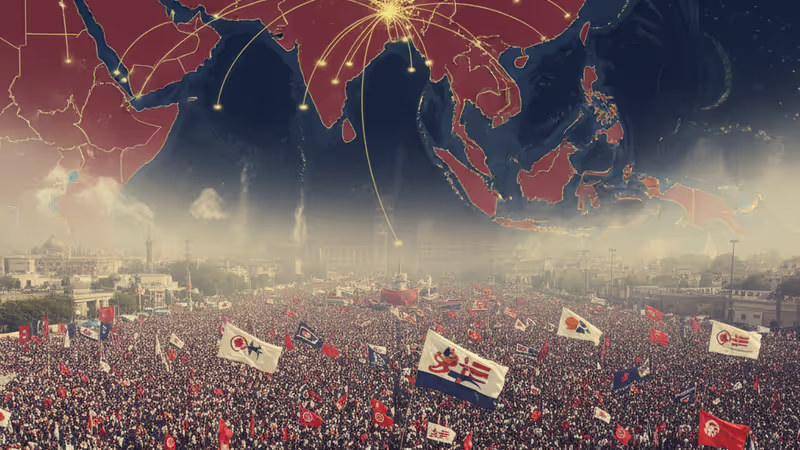
孟加拉最大反對黨領袖塔里克・拉赫曼在流亡17年後將返國,預計500萬支持者將集結首都。此舉為明年2月的國會大選投下變數,考驗該國脆弱的民主轉型。

尼泊爾前總理奧利在爭議聲中三度連任CPN-UML黨魁。他因鎮壓Z世代抗議致77死而受查,此番當選不僅違背民意,更可能引發尼泊爾政局的劇烈動盪。
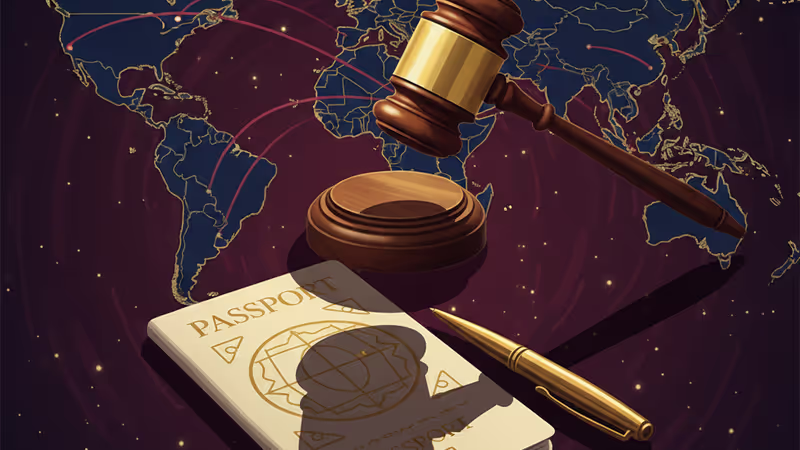
馬來西亞政府在泰國對澳洲記者韓特提起跨國誹謗訴訟。本文深入分析「惡意訴訟」(SLAPP)如何成為跨國鎮壓工具,及其對東南亞言論自由構成的嚴重威脅。
北韓傳出計畫在年底前將私營市場「Jangmadang」收歸國有。本文分析其從饑荒時期崛起的背景、金正恩政權的策略轉變,以及此舉對北韓非正式經濟的未來意涵。
孟加拉最大反對黨領袖塔里克・拉赫曼在流亡17年後將返國,預計500萬支持者將集結首都。此舉為明年2月的國會大選投下變數,考驗該國脆弱的民主轉型。
尼泊爾前總理奧利在爭議聲中三度連任CPN-UML黨魁。他因鎮壓Z世代抗議致77死而受查,此番當選不僅違背民意,更可能引發尼泊爾政局的劇烈動盪。
馬來西亞政府在泰國對澳洲記者韓特提起跨國誹謗訴訟。本文深入分析「惡意訴訟」(SLAPP)如何成為跨國鎮壓工具,及其對東南亞言論自由構成的嚴重威脅。