
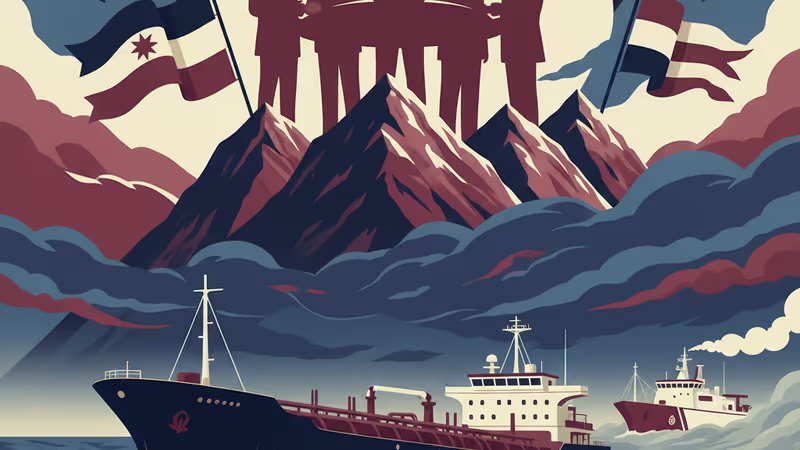
U.S. Pursues Third Tanker Off Venezuela, Escalating 'Shadow Fleet' Standoff
The U.S. Coast Guard is pursuing a third sanctioned oil tanker near Venezuela, escalating a pressure campaign that could impact global oil prices and heighten geopolitical tensions with the 'shadow fleet.'
The Lead: A High-Stakes Maritime Pursuit
The U.S. Coast Guard is pursuing a third oil tanker in international waters near Venezuela, officials told Reuters on Sunday, signaling a sharp escalation in Washington's campaign to choke off illicit oil revenues to sanctioned nations. If successful, it would be the third such interception in less than two weeks, underscoring the enforcement of a 'blockade' President Donald Trump announced last week.
Timeline of an Escalating Campaign
- Last Week: President Trump announces a "blockade" of all sanctioned oil tankers entering and leaving Venezuela.
- Ongoing Pressure: The U.S. has ramped up its military presence in the region, conducting over two dozen military strikes on vessels that have killed at least 100 people.
- This Weekend: After two tankers were seized, the U.S. Coast Guard began its active pursuit of a third vessel, identified as the Bella 1.
Target: The Sanctioned 'Bella 1'
"The United States Coast Guard is in active pursuit of a sanctioned dark fleet vessel that is part of Venezuela's illegal sanctions evasion," a U.S. official said, speaking on condition of anonymity. "It is flying a false flag and under a judicial seizure order." Another official clarified that the tanker has not yet been boarded and that interceptions can take various forms, including sailing or flying close to the vessel.
While U.S. officials didn't name the ship, British maritime risk group Vanguard and a U.S. maritime security source identified it as the Bella 1, a crude oil carrier already on the Treasury Department's sanctions list. According to TankerTrackers.com, the vessel was empty as it approached Venezuela on Sunday. It has a documented history of illicit trade, having transported Venezuelan oil to China in 2021 and previously carried Iranian crude, according to monitoring services and internal documents from Venezuela's state oil company, PDVSA.
"I don't think that people need to be worried here in the U.S. that the prices are going to go up because of these seizures... There's just a couple of them, and they were black market ships."
– Kevin Hassett, Director of the White House's National Economic Council
Market Jitters and Geopolitical Ripples
The White House sought to downplay the economic fallout. Kevin Hassett, director of the National Economic Council, told CBS's "Face the Nation" that the first two tankers seized were "black market ships" and he doesn't expect the operations to raise U.S. gas prices.
Market analysts, however, are less certain. One oil trader told Reuters the seizures could push prices slightly higher when Asian markets open. "We might see prices increasing modestly at the opening, considering market participants could see this as an escalation with more Venezuelan barrels at risk," said UBS analyst Giovanni Staunovo.
The implications may extend far beyond oil prices. The seizures raise geopolitical risks by increasing friction with the 'shadow fleet' of vessels that move oil for sanctioned countries like Venezuela, Russia, and Iran. Matias Togni, an oil shipping analyst at NextBarrel, warned that the U.S. actions could legitimize and encourage Ukraine to continue attacking Russian vessels and potentially embolden Europe to detain Moscow-linked dark fleet ships. The cat-and-mouse game on the high seas appears to be entering a more dangerous phase.
相关文章
韓國電力公司(KEPCO)宣布凍結2026年第一季電價,以應對高達206.2兆韓元的鉅額債務。本文深入分析在全球能源價格回落的背景下,韓國政府為何做出此一決策,以及其對能源政策的長遠影響。
澳洲邦代海灘在18個月內接連發生兩起大規模屠殺,國家安全神話破滅。本文深入探討悲劇如何撕裂社區、激化反猶太主義爭議,並迫使澳洲對其多元文化社會的未來進行深刻反思。
2025年末,全球面臨多重地緣政治危機。本文深入分析美國外交挑戰、南美右轉趨勢、歐盟南方共同市場協議延宕,以及阿富汗人道困境,為您解析當代複雜的國際格局。

奈及利亞政府宣布,11月遭綁架的130名學童已獲釋,並稱所有人質均已脫困。然而,被綁總人數與獲釋人數兜不攏,引發外界質疑。本文深入探討事件始末與奈國猖獗的「綁架產業」。