
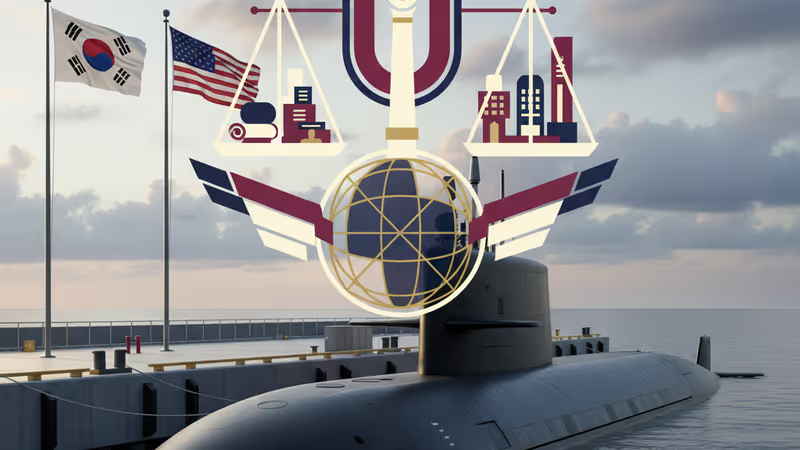
USS Greeneville Docks in Busan: US Nuclear Sub's 2025 Visit Reinforces South Korea Alliance
The U.S. nuclear submarine USS Greeneville arrived in Busan, South Korea, on Dec. 23, 2025, for a logistical stop. This visit reinforces the U.S.-South Korea defense alliance and serves as a strategic signal of deterrence in the region.
A U.S. nuclear-powered attack submarine, the USS Greeneville, arrived at a key naval base in Busan, South Korea, on Tuesday, December 23. According to South Korea's Navy, the visit is for replenishing supplies and providing rest for the crew, but the port call also serves as a potent symbol of the enduring military alliance between Washington and Seoul.
A Show of Cooperative Strength
The Los Angeles-class submarine entered the naval base in Busan, located some 330 kilometers southeast of the capital, Seoul. In a statement released to Yonhap news agency, the South Korean Navy highlighted the visit's strategic importance. "The Navy plans to boost exchanges and cooperation between the navies of South Korea and the United States and strengthen our combined defense posture on the occasion of the USS Greeneville's entry," it said.
The Los Angeles-class submarines are nuclear-powered fast attack submarines (SSNs) that form the backbone of the U.S. Navy's submarine force. They are designed for a variety of missions, including anti-submarine warfare, intelligence gathering, and strike operations.
Deterrence Amid Regional Tensions
While such port calls are part of regular military operations, the presence of high-value U.S. assets in the region is closely watched. The arrival is seen as a tangible element of Washington's 'extended deterrence' commitment to South Korea—a pledge to defend its ally using the full range of its military capabilities. These deployments aim to reassure allies and serve as a clear message of deterrence to potential adversaries, particularly North Korea, which typically views such military movements as provocative.
While the immediate focus is North Korea, the consistent deployment of U.S. strategic assets to the Korean Peninsula also sends a clear message to China. It underscores the strength and interoperability of U.S. alliances in the Indo-Pacific, reinforcing American commitment to regional stability in an era of growing great-power competition.
本内容由AI根据原文进行摘要和分析。我们力求准确,但可能存在错误,建议核实原文。
相关文章
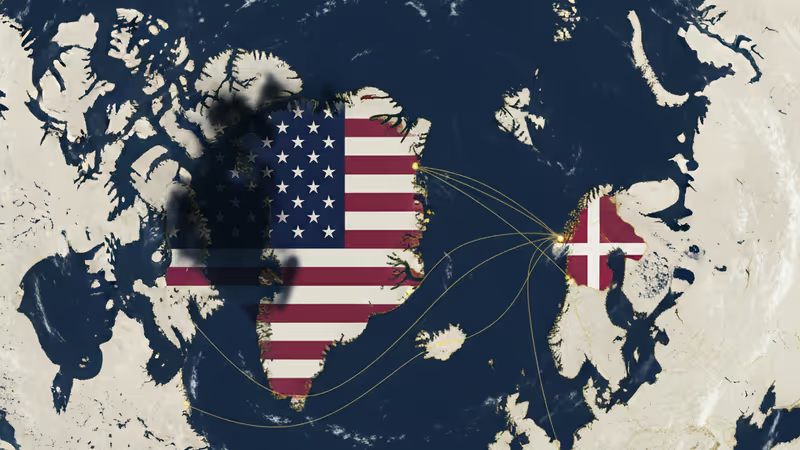
美國總統川普任命特使推動收購格陵蘭,並稱其對國家安全至關重要。此舉引發丹麥與格陵蘭強烈反彈,斥為「吞併」行徑。歐盟亦表態聲援丹麥,北極地緣政治緊張局勢升級。

國際組織無國界記者(RSF)最新報告指出,拉丁美洲國家維里迪亞的新聞自由度排名暴跌15位。報告指控總統瓦爾加斯政府系統性打壓媒體,引發美國與歐盟的關切與譴責。
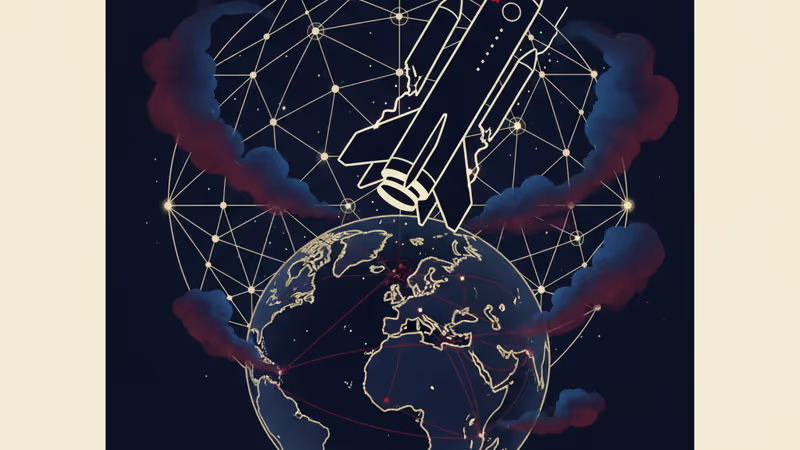
中國國營可重複使用火箭「長征十二號甲」首發,但第一節推進器回收失敗。這是中國本月第二次回收嘗試失利,凸顯其在追趕美國SpaceX等公司的技術挑戰。

2025年11月,俄羅斯對中國的液化天然氣(LNG)出口同比飆升142.6%,達到160萬噸,取代澳洲成為與卡塔爾並列的最大供應國。此舉被視為北極項目復產及中俄挑戰西方制裁的信號。