
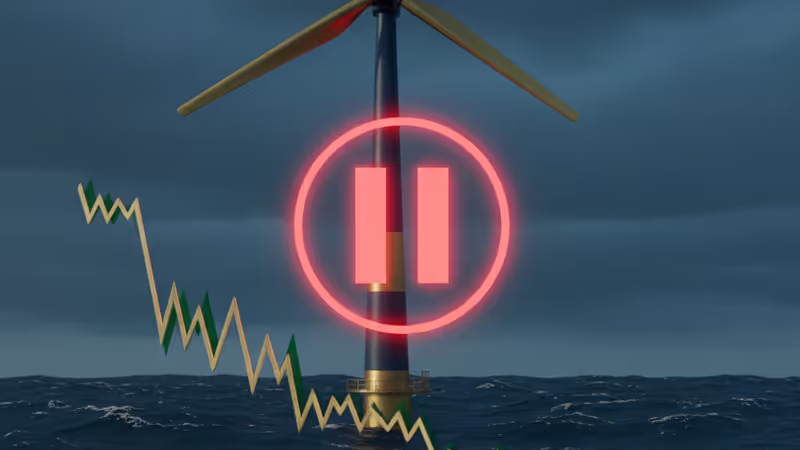
U.S. Freezes Five Major Offshore Wind Farms, Wiping Billions From Valuations
The U.S. government has frozen five major offshore wind projects, causing shares of Ørsted, Equinor, and BP to dive. An analysis of the market impact and what this means for investors.
The U.S. government has abruptly halted the permitting process for five major offshore wind projects, sending shockwaves through the global renewables sector and causing shares of top energy developers to plummet.
According to a Reuters report on Monday, the Department of the Interior cited a need for a “comprehensive review of cumulative environmental impacts” on marine ecosystems for the sudden freeze. The move effectively stalls gigawatts of planned clean energy capacity off the U.S. East Coast, jeopardizing the nation’s ambitious climate targets.
Market reaction was swift and brutal. Shares of Denmark's Ørsted A/S, the world's largest offshore wind developer, tumbled <span style='color: #E53935; font-weight: bold;'>as much as 18%</span> in Copenhagen. Other key players like Equinor ASA and BP Plc, partners on several of the affected projects, saw their stocks slide <span style='color: #E53935; font-weight: bold;'>over 10%</span>, wiping a combined total estimated at over $15 billion in market value.
While the official reason is environmental review, the industry has been buckling under a perfect storm of economic pressures. Soaring inflation has driven up the cost of steel and other raw materials, while high interest rates have made financing these capital-intensive projects exponentially more expensive. It's a harsh reality check for an industry that has struggled to make its economics work without heavy subsidies and favorable power contracts, many of which are now underwater.
This isn't just a temporary setback; it's a critical stress test for the entire U.S. renewable energy strategy. The Biden administration’s goal of deploying 30 gigawatts of offshore wind by 2030 now looks increasingly out of reach. For investors, this signals that political and regulatory risk in the U.S. renewables market is far higher than previously priced in. The financial viability of green projects can no longer be assumed, and future investments will demand a much higher premium for these policy uncertainties.
本内容由AI根据原文进行摘要和分析。我们力求准确,但可能存在错误,建议核实原文。
相关文章

印尼最大伊斯蘭銀行BSI總裁揭示新戰略,利用黃金交易服務的普及,吸引傳統銀行客戶,力圖為增長停滯的伊斯蘭金融市場注入新動能。

韓國零售龍頭大創(Daiso)為反擊中國電商Temu的低價競爭,正積極擴張大型實體店並投資物流。本文分析其如何利用線下體驗與高性價比商品鞏固市場。

受關稅影響,三得利旗下美國金賓威士忌因出口放緩、庫存積壓,宣布2026年將停產一年。本文分析貿易戰對全球消費品牌的實質衝擊與投資啟示。

受AI鉅額資本支出推動,2025年全球科技公司債券發行總額達到創紀錄的8,500億美元。本文剖析其背後動因、市場反應與潛在投資風險。