
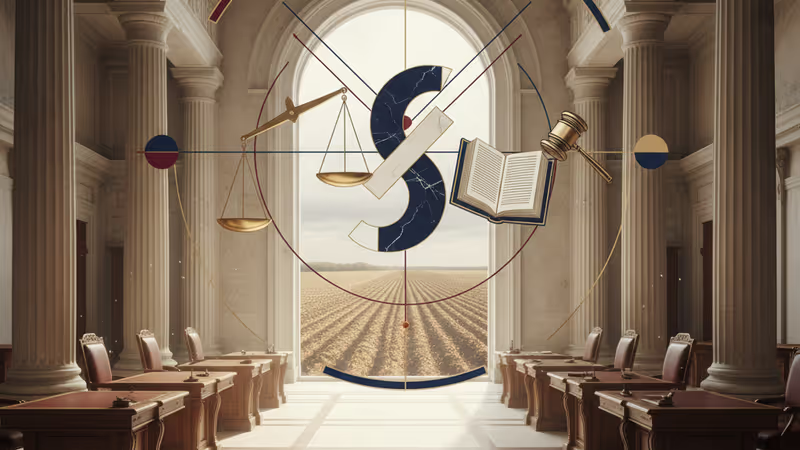
US Farm Agency Lost 20,000 Staff in First Five Months of Trump Administration
A Reuters report revealed a 20,000-person staff reduction at the USDA within the first five months of the Trump administration. This article explores the causes and potential consequences for U.S. agriculture.
The United States Department of Agriculture (USDA) saw its workforce shrink by 20,000 employees during the first five months of the Donald Trump administration, according to a report by Reuters. The sharp decline highlights the immediate impact of the administration's push to downsize the federal government on a critical agency.
Behind the Numbers: A Push for a Leaner Government
The staff reduction, which occurred between late January and June 2017, is largely seen as a direct consequence of the Trump administration's early policies. These included a federal hiring freeze, the encouragement of early retirements, and proposed budget cuts aimed at fulfilling a campaign promise to reduce the size of the federal bureaucracy.
The administration framed these moves as necessary steps to increase efficiency and cut wasteful spending. However, critics raised immediate concerns about the potential disruption to essential government services and the loss of institutional knowledge.
Potential Impacts on America's Farmland
The USDA is responsible for a vast portfolio of services crucial to the nation's agricultural sector, including food safety inspections, farm support loans, rural development programs, and scientific research. Experts warned at the time that such a rapid loss of experienced personnel could compromise the agency's ability to perform its duties effectively.
Potential consequences included delays in loan processing for farmers, gaps in regulatory oversight, and a slowdown in critical agricultural research, potentially impacting U.S. food security and rural economies. The reduction raised questions about the long-term health of the systems that support America's farmers and consumers.
The USDA's workforce reduction serves as a microcosm of the friction between a political agenda—in this case, 'draining the swamp'—and the operational realities of governance. It demonstrates how swiftly an ideological push to shrink government can affect an agency's institutional knowledge and its capacity to deliver services, raising fundamental questions about the balance between political change and administrative stability.
本内容由AI根据原文进行摘要和分析。我们力求准确,但可能存在错误,建议核实原文。
相关文章
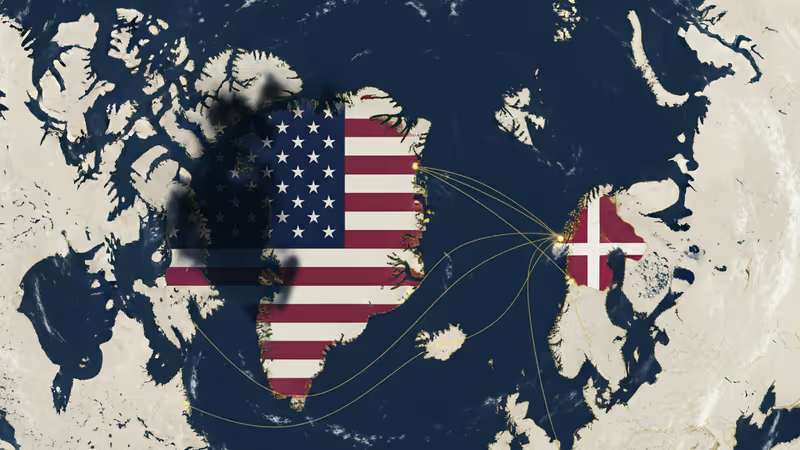
美國總統川普任命特使推動收購格陵蘭,並稱其對國家安全至關重要。此舉引發丹麥與格陵蘭強烈反彈,斥為「吞併」行徑。歐盟亦表態聲援丹麥,北極地緣政治緊張局勢升級。
國際組織無國界記者(RSF)最新報告指出,拉丁美洲國家維里迪亞的新聞自由度排名暴跌15位。報告指控總統瓦爾加斯政府系統性打壓媒體,引發美國與歐盟的關切與譴責。
中國國營可重複使用火箭「長征十二號甲」首發,但第一節推進器回收失敗。這是中國本月第二次回收嘗試失利,凸顯其在追趕美國SpaceX等公司的技術挑戰。
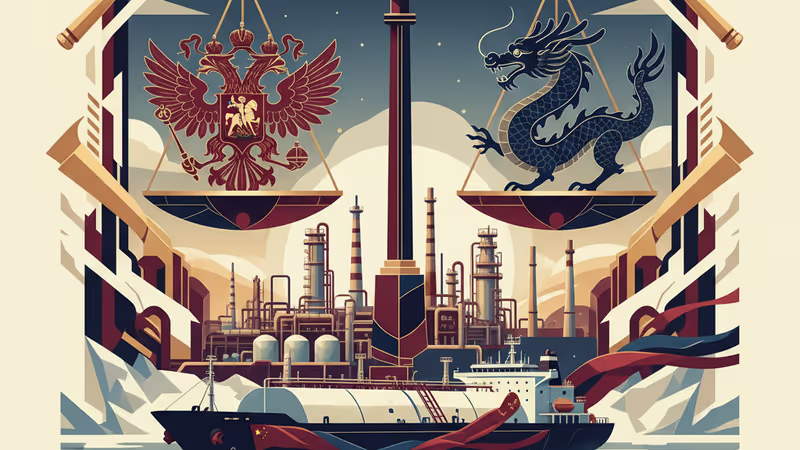
2025年11月,俄羅斯對中國的液化天然氣(LNG)出口同比飆升142.6%,達到160萬噸,取代澳洲成為與卡塔爾並列的最大供應國。此舉被視為北極項目復產及中俄挑戰西方制裁的信號。