
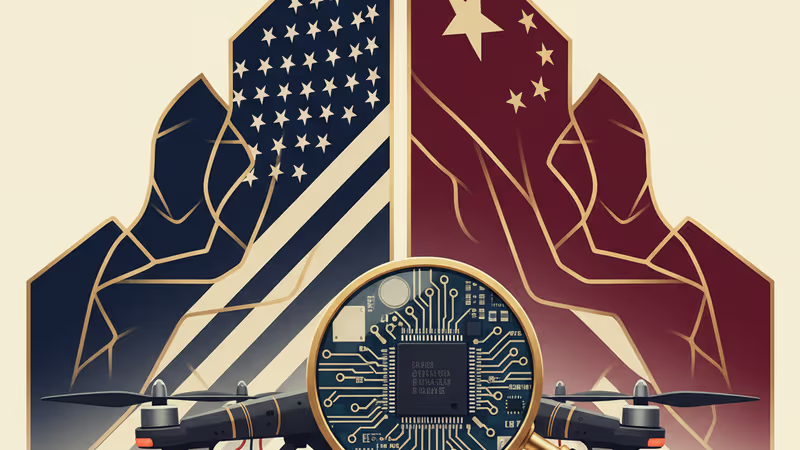
US Grounds Future Foreign Drones, Barring New Models from DJI in Major Tech Escalation
The US FCC has banned approvals for new drone models from China's DJI and all other foreign makers, citing national security risks. The move is a major escalation in US-China tech tensions but does not affect existing drones.
The U.S. Federal Communications Commission (FCC) has effectively barred future drone models from China's DJI and all other foreign manufacturers from its market, a significant escalation in Washington's campaign to mitigate national security risks posed by Chinese technology. The move doesn't affect existing models but creates a major hurdle for the world's largest drone maker in its most important market.
In a statement on Monday, the FCC announced it is adding foreign-made drones and their critical components to its “Covered List.” This designation, which now includes industry leaders like DJI and Autel, means these companies can no longer obtain the mandatory FCC equipment authorizations required to import or sell new products in the United States.
What this means: The restriction is forward-looking. The FCC clarified that the ban does not prohibit the sale or use of any previously authorized drone models. Consumers can continue to fly drones they've already purchased. However, for DJI, which commands more than half of the U.S. commercial drone market, the inability to introduce new technology could severely impact its competitive edge.
The decision follows an inter-agency review convened by the White House, the results of which were delivered to the FCC on Sunday. The review concluded that these imported devices pose a direct threat to U.S. security interests.
The review found that imported drones and components pose security risks “given the threats from unauthorized surveillance, sensitive data exfiltration, supply chain vulnerabilities, and other potential threats to the homeland.”
While the ban is sweeping, the directive includes a potential off-ramp. The Pentagon retains the authority to determine that specific drones or classes of drones do not pose a security risk, which could grant them an exemption from the restrictions. As of Monday, DJI had not issued an official response to the FCC's action.
The Bigger Picture: The FCC's move institutionalizes the 'tech decoupling' between the U.S. and China, extending it from core infrastructure like 5G to the rapidly growing market of unmanned aerial vehicles. This isn't just about DJI; it sets a precedent for how the U.S. will regulate a host of connected devices from foreign sources, from IoT sensors to smart city hardware. For global tech companies, this reinforces the reality of a bifurcated world where supply chains and product roadmaps must be designed for geopolitical resilience, not just market efficiency. The key question is no longer just 'is the tech good?' but 'where was the tech made?'
本内容由AI根据原文进行摘要和分析。我们力求准确,但可能存在错误,建议核实原文。
相关文章
美國聯邦通信委員會(FCC)以國家安全風險為由,將中國大疆(DJI)等外國無人機列入管制清單,禁止其新機型在美國獲得銷售批准。此舉為美中科技戰的重大升級,但現有機型不受影響。
畢馬威(KPMG)最新調查顯示,儘管華盛頓加強脫鉤力道,仍有高達75%在中國營運的跨國企業在2025年維持或增加投資,準備撤離市場者僅佔1%。

川普第二任期首年,分析人士指出其外交政策與首任截然不同,引發國際社會廣泛關注。本文深入剖析其政策轉變、各國反應及對全球地緣政治的長遠影響。
美國前總統川普宣告將打造「史上最強」戰艦的宏偉計畫。然而,美國海軍一個月前才因延誤與成本超支取消新艦計畫,凸顯了政治野心與國防現實之間的巨大鴻溝。