

The Ugly Sweater Economy: How Irony and Nostalgia Built a Billion-Dollar Holiday Niche
An analysis of the ugly Christmas sweater phenomenon, from its ironic origins to a case study in viral commerce, nostalgia marketing, and the meme-to-merch pipeline.
The Lede
The humble ugly Christmas sweater is more than a staple of holiday parties; it's a powerful case study in the modern viral-to-retail pipeline. For executives and strategists, its journey from sincere kitsch to ironic cultural touchstone offers a critical lesson in how nostalgia, social media, and the 'irony economy' create predictable, multi-million dollar market opportunities from seemingly frivolous trends.
Why It Matters
The rise of the ugly sweater is a blueprint for understanding modern consumer behavior. It didn't just create a new product category; it spawned an entire economic ecosystem. The implications are significant:
- The Seasonal Gold Rush: What began as a niche trend is now a predictable, annual revenue driver for retailers from Amazon and Target to fast-fashion giants like H&M. It transforms a slow retail period into a targeted micro-season.
- Ecosystem Creation: The trend's impact extends far beyond apparel. It fuels corporate parties, themed 5K runs, DIY kits, and a cottage industry for creators on platforms like Etsy. It has become a reliable platform for social gathering and experience-based commerce.
- The Virality Engine: The ugly sweater is inherently visual and shareable, making it a perfect engine for social media engagement. The hashtag #UglyChristmasSweater functions as a free, user-generated marketing campaign for the entire category each year, demonstrating the power of creating products that are also content.
The Analysis
While a 2002 party in Vancouver is often cited as the tipping point, the ugly sweater’s cultural power comes from a fundamental shift in how we engage with the past. Its history can be broken into two distinct eras that mirror a broader societal change.
Phase 1: The Age of Sincerity (1950s-1980s)
Post-war commercialization of Christmas led to increasingly garish, but entirely earnest, holiday apparel. These sweaters, decorated with reindeer and jingle bells, were a genuine, un-ironic expression of festive spirit. They were the product of a monoculture, designed for a wholesome, idealized version of the holidays. There was no 'ugly'—only 'festive'.
Phase 2: The Ironic Turn (2000s-Present)
Enter Gen X and Millennials. Raised on pop culture and skepticism, they began re-contextualizing the sincere artifacts of their parents' generation. The Vancouver party wasn't about celebrating the sweaters; it was about celebrating the shared memory and absurdity of them. The 'ugliness' became the entire point. This ironic detachment allowed people to participate in a traditional holiday ritual without subscribing to its sometimes-forced sentimentality. This ironic adoption was then captured, scaled, and re-commercialized by mass-market retailers, who now produce intentionally 'ugly' designs infused with pop culture licenses—from Star Wars to The Office—creating a new layer of commercial sincerity over the initial irony.
PRISM Insight
The ugly sweater phenomenon is an early, highly successful example of what we call Nostalgia-as-a-Service (NaaS). This is a model where cultural memories are packaged and sold back to the generations that experienced them, often with an ironic twist. This isn't just about products; it's about providing a tangible connection to a perceived simpler time. We see this pattern repeated with the vinyl record resurgence, retro video game consoles, and 90s fashion comebacks.
Furthermore, it showcases the acceleration of the 'Meme-to-Merch' pipeline. Technology, particularly social media and on-demand manufacturing, now allows brands to spot a nascent cultural moment and translate it into a physical product in weeks, not years. The ugly sweater was an analog precursor to this digital reality. The key for investors and brands is to identify the next authentic, niche behavior that's ripe for mass-market re-interpretation.
PRISM's Take
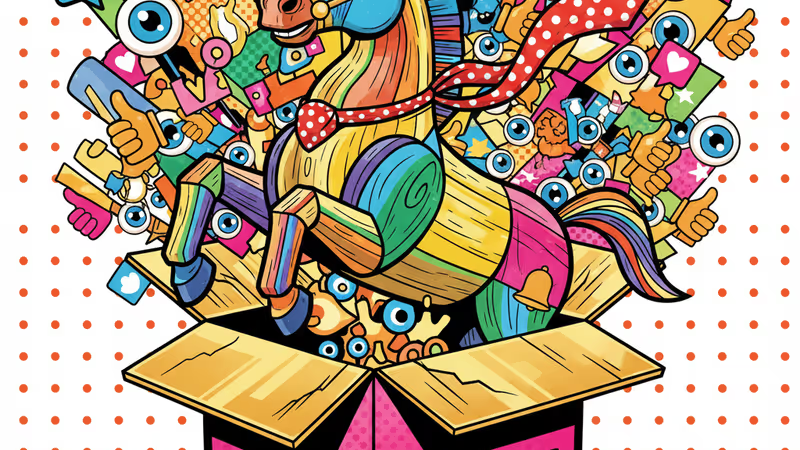
The ugly Christmas sweater is a Trojan horse. On the surface, it's a piece of harmless holiday fun. But underneath, it reveals the powerful mechanics of modern culture and commerce. It proves that the most potent consumer trends often emerge from the ironic re-purposing of forgotten sincerity. For leaders, the lesson is clear: your next major product opportunity might not come from a focus group or a data model, but from observing how the next generation lovingly mocks the past. The challenge isn't just spotting the trend, but understanding the underlying cultural need it fulfills—in this case, a desire for communal joy and a gentle rebellion against the curated perfection of the Instagram age.
相关文章

深入分析獨裁者的飲食習慣,揭示食物如何成為權力、偏執與控制的工具。從歷史教訓看見現代「零信任」資安架構的未來。
在愛潑斯坦家中發現的川普保險套不只是一則花邊新聞。它揭示了政治品牌IP化、迷因戰爭以及實體物件在數位時代的全新風險。
一部關於綿羊偵破謀殺案的電影為何值得關注?PRISM深度解析其背後的好萊塢IP戰略、影視技術革新與下一波內容趨勢。

一項追蹤2800萬人的法國研究顯示,新冠疫苗不僅能預防病毒,更能將總體死亡率降低25%。這對未來公共衛生與mRNA技術意味著什麼?