

The TikTok Deal Is Back: A Geopolitical Blueprint for the Splinternet
A revived TikTok deal offers a blueprint for US-China tech rivalry, separating US data from the core Chinese algorithm. What does this mean for global business?
The Lede: Beyond the Dance Videos
A revived deal to restructure TikTok’s US operations is far more than a corporate maneuver; it’s a crucial blueprint for navigating the fractured landscape of global technology. For executives and investors, this is not about a social media app—it’s a live test case for how to operate, invest, and compete in an era of escalating US-China tech rivalry. The arrangement, which gives US and allied investors majority ownership while allowing parent company ByteDance to retain its core algorithm, sets a precarious precedent for every global company caught in the geopolitical crossfire.
Why It Matters: The New Rules of Tech Sovereignty
This deal creates a potential playbook for a world cleaving into separate technological spheres. Its implications ripple across the entire tech ecosystem:
- The Data Localization Model: By having Oracle host US user data, the deal addresses Washington's primary national security concern—that the Chinese government could access American data. This strengthens the trend of "data sovereignty," where nations demand that their citizens' data be stored and processed within their borders.
- Protecting the Crown Jewels: For Beijing, the algorithm is a national treasure and a core piece of intellectual property. A forced sale would have been a significant political and economic loss. This licensing model allows China to protect its most valuable tech asset while permitting the business to continue operating abroad.
- A New Geopolitical Middleman: The reported inclusion of Abu Dhabi’s MGX is significant. It signals the rising role of capital-rich Gulf states as neutral intermediaries, capable of bridging the trust gap between Washington and Beijing.
The Analysis: A Détente of Distrust
This development isn't new; it's the resurrection of a deal structure first proposed under the Trump administration in 2020. What’s changed is the urgency. A US law passed earlier this year gave ByteDance a clear deadline: divest its US operations or face a nationwide ban. This forced both sides back to the negotiating table.
The core conflict has always been the algorithm. US officials fear it could be manipulated by Beijing for propaganda or influence campaigns, while ByteDance insists its recommendation engine is key to its commercial success. The proposed solution—a US-led entity licensing the algorithm—is an attempt to solve an unsolvable problem. It separates the data (the input) from the code (the processor), creating a firewalled system. However, it relies on trust that the licensed algorithm cannot be a backdoor for foreign influence, a point that will undoubtedly face intense scrutiny from security agencies and lawmakers in Washington.
This is a stark contrast to the approach taken by other nations. India, for example, opted for an outright ban on TikTok in 2020 amid its own border disputes with China. The US is attempting a more complex, commercially-driven solution, reflecting the deep integration of TikTok into the American economy and culture.
PRISM Insight: The Rise of Geopolitical Arbitrage
For investors, the key takeaway is the emergence of a new investment thesis: geopolitical arbitrage. The involvement of firms like Oracle, Silver Lake, and now MGX is a bet on a politically palatable corporate structure, not just on TikTok’s user growth. The value lies in creating a company that can legally and securely operate across geopolitical fault lines. This model—local data hosting, powerful domestic partners, and complex IP licensing—will become the new standard for high-stakes, cross-border technology investments. Expect to see more private equity and sovereign wealth funds structuring deals specifically designed to mitigate nation-state risk.
PRISM's Take: A Fragile Blueprint for a Divided World
This deal should not be viewed as a resolution, but as a carefully constructed, high-stakes truce. It is a pragmatic compromise born of necessity, allowing all parties to claim a partial victory. Washington can assert it has secured American data, Beijing can show it protected its top tech IP, and ByteDance can continue accessing its most lucrative market.
However, this is a blueprint built on managed mistrust. The fundamental tension between US national security imperatives and China's technological ambitions remains. The agreement to simply "license" the algorithm is a gray area that will be a persistent source of political and regulatory friction. While it may avert an immediate ban, it institutionalizes the very concept of the "splinternet," creating a framework where technology companies must contort their ownership and operations to satisfy competing world powers. This is the future of global tech: less about seamless connection and more about negotiated, compartmentalized access.
相关文章

TikTok將多數美國業務出售給甲骨文、銀湖資本等投資者。這不只是一筆交易,更是美中科技脫鉤、數據主權與演算法地緣政治的新里程碑。
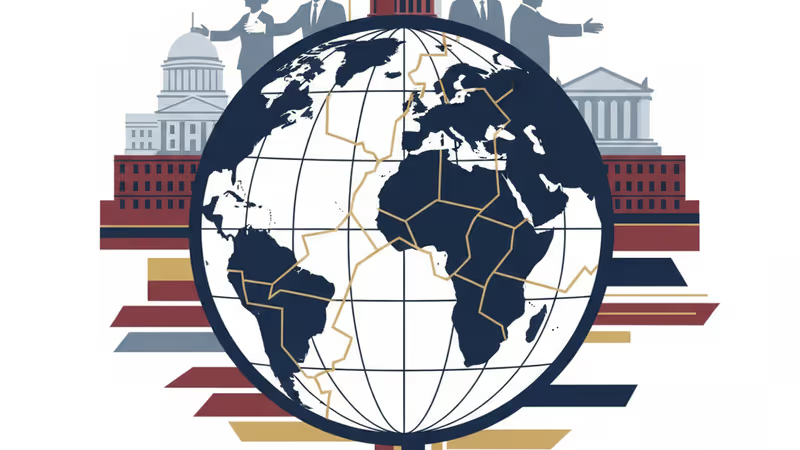
TikTok美國業務出售案深度解析。這不僅是商業交易,更是美中科技戰的關鍵轉折點,預示著全球科技地緣政治的新格局。

深度分析歐盟對烏克蘭的巨額援助與加薩危機的對比,揭示地緣政治如何重塑全球資金流動、大國競爭與科技投資的未來。
在川普政府推動下,俄烏戰爭和平談判進入關鍵階段。本文深度分析領土爭議的核心僵局、全球安全與經濟的連鎖效應,以及潛在的未來走向。