

The Ghost Economy: How BuzzFeed and Amazon Built a Retail Empire on Affiliate Links
BuzzFeed's viral product listicles aren't just content; they reveal a powerful 'Affiliate-First' economy reshaping retail. PRISM analyzes the impact.
The Lede
While you were scrolling, media outlets like BuzzFeed quietly built a multi-billion dollar retail empire. The viral listicle, seemingly a piece of low-stakes entertainment, is in fact the storefront for a powerful, data-driven 'ghost economy.' This isn't about product discovery; it's a fundamental rewiring of the consumer path-to-purchase, where content is no longer a marketing tool but the primary point of sale. For any executive in CPG, retail, or media, understanding this 'Affiliate-First' model is no longer optional—it's critical for survival.
Why It Matters
The success of content-driven commerce, exemplified by BuzzFeed's affiliate strategy, represents a systemic shift with profound second-order effects:
- The End of the Shelf: For emerging direct-to-consumer (DTC) and Amazon-native brands, the new 'shelf space' isn't in Target or Walmart; it's a recommendation link embedded in trusted editorial. This bypasses traditional gatekeepers—buyers, distributors, and ad agencies—creating a direct, high-velocity channel to millions of consumers.
- Media's New Monetization Engine: The decades-old model of selling banner ads (eyeballs) is being eclipsed by a model that sells outcomes (transactions). This transforms media companies from content creators into full-funnel performance marketers, where the ROI of an article is measured in sales, not just pageviews.
- The Amazon Symbiosis: This ecosystem is deeply symbiotic with Amazon. Media outlets drive high-intent traffic, and Amazon's frictionless checkout and logistics infrastructure converts it. This creates a powerful moat, making Amazon the de facto operating system for this new wave of retail.
The Analysis
This isn't just a digital version of a magazine's holiday gift guide. The difference is data, speed, and scale. Legacy gift guides were planned months in advance based on historical trends and PR pitches. Today's model is a real-time arbitrage machine.
Platforms like BuzzFeed don't just guess what's popular; they leverage a torrent of data signals—on-site search trends, social media sentiment, affiliate conversion rates, and Amazon's own 'movers and shakers' lists. They identify products on the precipice of virality (like a '$5 marshmallow lip balm'), engineer content to amplify the trend, and capture the resulting sales velocity. It’s a self-reinforcing loop: the article drives sales, the increased sales boost the product's Amazon ranking, and the higher ranking creates more organic visibility, validating the initial editorial pick.
This creates a new competitive landscape where established brands like Carmex or Summer Fridays (mentioned in the source) can be outmaneuvered not by a better product, but by a challenger brand with a better affiliate-driven distribution strategy.
PRISM Insight
We are witnessing the rise of 'Programmatic Commerce.' Just as programmatic advertising automated the buying and selling of ad space, a similar shift is happening for product placement. The key investment and innovation opportunities lie not in the products themselves, but in the infrastructure layer that powers this ghost economy.
Watch for the consolidation and growth of platforms in:
- Affiliate Network Tech: The APIs and tracking systems that are the plumbing of this economy.
- Trend Identification AI: Tools that can analyze social and search data to predict the 'next big thing' before it blows up.
- Creator Economy Platforms: Services that connect micro-brands with armies of influencers and content creators at scale.
PRISM's Take
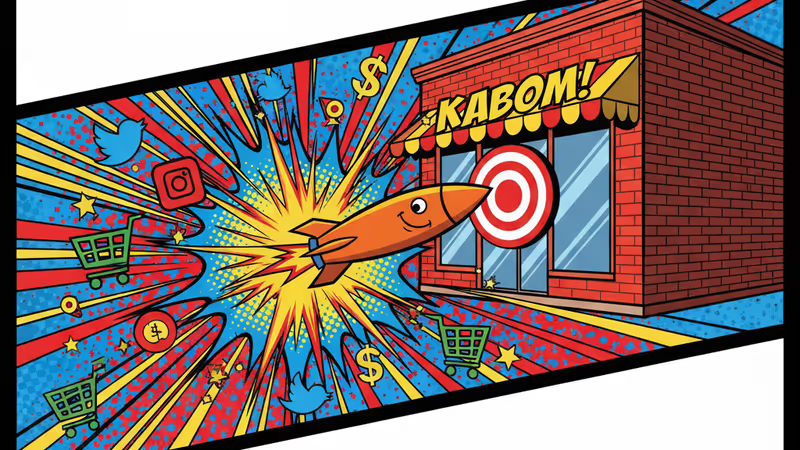
The line between media and commerce has been irrevocably erased. Every article, every post, every video is now a potential checkout counter. Companies that continue to view content as a marketing cost center are strategically vulnerable to those who treat it as a primary revenue and distribution channel. The BuzzFeed listicle isn't fluff; it is a precision-guided munition in the battle for the modern consumer's wallet. The true product isn't the lip balm; it's the highly efficient, scalable system that can make any lip balm a viral sensation overnight.
相关文章

伊莉莎白歐森與克莉絲汀米利歐蒂主演FX新劇《七姊妹》。這不只是一部影集,更是Hulu在串流戰爭中對抗HBO的「聲望武器」。深度分析其產業策略。

Netflix為何對《艾蜜莉在巴黎》愛不釋手?本篇深度分析揭示其作為全球內容戰略資產、用戶留存引擎,以及可規模化IP的真正價值。
亞馬遜首次推出「超級星期六」特賣,不僅是最後一刻的折扣。PRISM深度分析其如何利用物流優勢與數據選品,打擊實體零售,並創造新的消費節日。

PEOPLE雜誌公布2025年度最佳電影,揭示好萊塢從IP依賴轉向「明星+導演」權力組合的趨勢。深度分析產業變革與未來投資方向。