
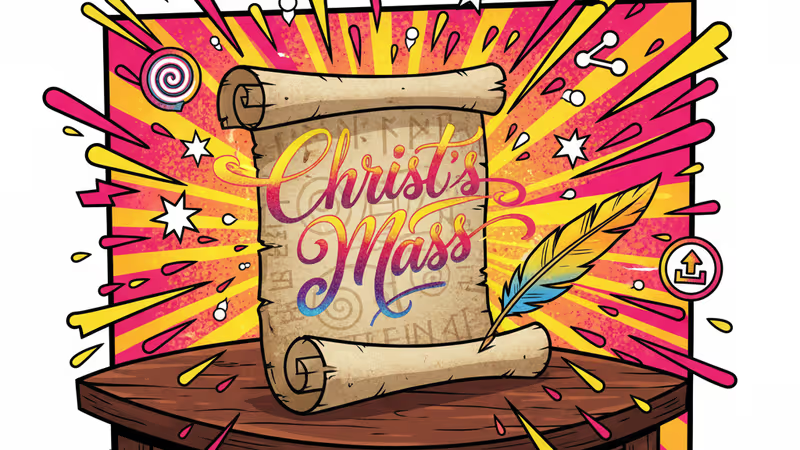
The Real Reason We Call It 'Christmas'
The word 'Christmas' literally means 'Christ's Mass.' Discover the surprising origin of the word 'Mass' and why this name replaced the much older term 'Yule' for the winter holiday.
We say the word "Christmas" all the time, but have you ever stopped to think about what it actually means? It turns out the name is a compressed history lesson, telling a story of how an ancient pagan festival was rebranded into the holiday we know today.
The first part is easy: "Christ" refers to Jesus Christ. The second part, "-mas," is where the real story lies. It's a shortened form of "mass," the church service celebrated in the Catholic church. Etymologically, "mass" traces back to the Latin word missa, which surprisingly means "dismissal."
This comes from the traditional closing words of the Latin Mass: "Ite, missa est," which translates to "Go, you are dismissed." So, in essence, Christmas is literally "Christ's Mass"—the specific church service held on the day associated with Christ's birth, December 25.
Over time, just as "St. Martin's Mass" was slurred into "Martinmas," the frequently spoken phrase "Christ's Mass" naturally fused into the single word "Christmas."
But here’s the twist: "Christmas" wasn't the original name for this time of year. Long before Christianity took root in medieval England, the winter solstice festival was known as "Yule" or "Yuletide," derived from the Old English pagan term geol. The name "Yule" is actually centuries older in this context. According to historical sources, the first known mention of "Christmas" dates to a text from the 11th century, while St. Bede referenced "Yule" in relation to the Christian holiday way back in the mid-700s.
So why did "Christmas" win out? As Christianity became the dominant cultural force in Europe, a name that overtly celebrated Jesus Christ was understandably seen as more fitting for the holiday. The older, pagan-influenced name "Yule" was gradually consigned to history, leaving us with the name and festivities we celebrate today.
PRISM Insight: The shift from "Yule" to "Christmas" is a classic example of cultural rebranding. It shows how a dominant ideology can absorb a pre-existing tradition and rename it to align with a new narrative. This historical process mirrors modern strategies in business and politics, where language and branding are powerful tools used to shape perception, claim ownership of ideas, and steer cultural conversations.
相关文章

加拿大育空地區每年舉辦奇特的「頭髮結冰大賽」,參賽者在零下20度的嚴寒中,用溫泉水讓頭髮凍結成藝術品。今年的冠軍作品揭曉,一探這項活動從何開始,又如何風靡全球。

準備CISSP認證考試?這套涵蓋八大領域的培訓課程組合包,限時特價24.97美元,從原價424美元大幅折扣。把握最後機會,提升您的專業價值。

經典影集《草原上的小木屋》中飾演母親的卡倫·格拉斯爾在50週年活動上透露,當年僅39歲的她,曾因一段「更年期」劇情而深感恐懼,擔心自己的演藝事業會因此被徹底摧毀。

《週六夜現場》2025 耶誕特輯上演驚人一幕!主播科林・喬斯特遭搭檔麥可・切設局,被迫唸出關於妻子史嘉蕾・喬韓森與《星期三》珍娜・奧特嘉的辛辣笑話,現場反應真實又尷尬。