
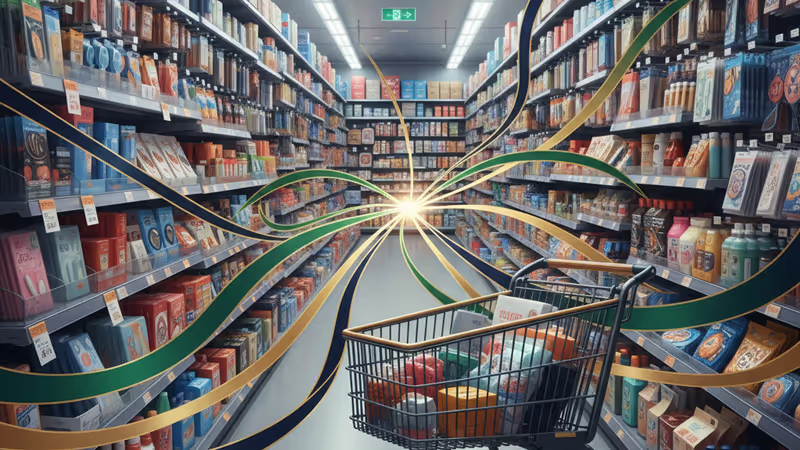
Daiso's Big-Box Bet: How a Korean Retailer Is Fighting Temu With Bricks, Not Clicks
South Korea's Asung Daiso is countering the rise of Chinese e-commerce giants like Temu and AliExpress by investing in large-format physical stores, betting on in-store experience to win over price-sensitive consumers.
South Korean discount chain Asung Daiso is doubling down on a decidedly old-school strategy to fight new-age competition. As Chinese e-commerce giants AliExpress and Temu rapidly expand their online footprint, Daiso is betting big on massive physical stores and logistics, hoping to lure inflation-hit consumers with an in-person shopping experience that digital rivals can't replicate.
The company is actively expanding its network of large-format stores and investing heavily in its logistics infrastructure, according to a December 23 report from Nikkei. The strategy hinges on creating a superior store experience, turning shopping from a transaction into a 'treasure hunt.' This is fueled by a constant stream of affordable, buzz-worthy products, like collaborative fleece jackets that have gained attention for their rock-bottom price of just $3 to $4.
This physical-first approach is a direct counterpunch to the asset-light, digital-only model of Temu and AliExpress. These platforms have disrupted global retail with ultra-low prices and aggressive marketing, appealing directly to consumers feeling the pinch from persistent inflation. Daiso aims to prove that even in a tough economy, price isn't everything.
Daiso's strategy is a high-stakes test of a 'phygital' (physical + digital) retail model against pure-play e-commerce. For investors and retail executives, this is a key battleground to watch. If Daiso succeeds, it could provide a blueprint for legacy retailers globally on how to leverage physical assets not as a liability, but as a competitive moat. It's a bet that tangible experience and instant gratification can build a more loyal customer base than an endless scroll of algorithm-driven deals.
The central question is whether the allure of an in-store discovery can consistently win against the sheer convenience and aggressive pricing of its Chinese competitors. As Daiso invests in its physical presence, it's not just selling household goods; it's selling an experience. Whether that experience is valuable enough to protect its market share remains to be seen.
本内容由AI根据原文进行摘要和分析。我们力求准确,但可能存在错误,建议核实原文。
相关文章
韓國零售龍頭大創(Daiso)為反擊中國電商Temu的低價競爭,正積極擴張大型實體店並投資物流。本文分析其如何利用線下體驗與高性價比商品鞏固市場。

美國國鐵(Amtrak)新一代高速列車因規劃不周與軌道系統老舊而面臨延誤。本報告深入分析其對投資、基建現代化及乘客體驗的影響。

運動博弈龍頭FanDuel與金融交易所巨擘芝商所(CME Group)合作,在美國五州推出「預測市場」。本文分析其商業模式、對金融科技與博弈產業的衝擊,以及潛在的監管挑戰。
根據美國設備租賃與金融協會(ELFA)數據,11月企業設備借貸同比下降4%,顯示企業投資態度轉趨謹慎,或為經濟放緩的前兆。