
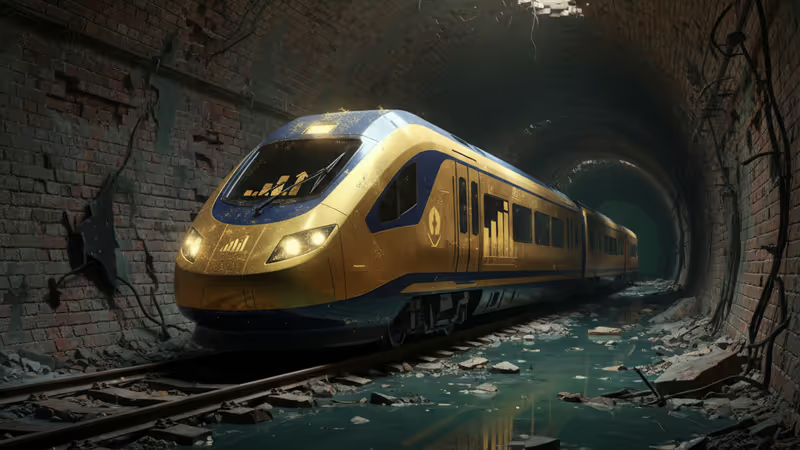
Amtrak's High-Speed Rail Dream Derailed by Flawed Trains and Aging Tracks, Watchdog Says
Amtrak's new Acela high-speed trains are years behind schedule due to flawed train models from Alstom and unprepared, aging tracks, according to a report from Amtrak's Inspector General.
A Multi-Billion Dollar Project Years Behind Schedule
Amtrak's multi-billion dollar bet on next-generation Acela trains for its profitable Northeast Corridor is years behind schedule, plagued by a toxic mix of flawed train models and track defects. A new report from the railroad’s Office of Inspector General (OIG), cited by Reuters, reveals that the long-awaited upgrade, initially promised for , now faces an uncertain future, threatening a key revenue stream and setting back U.S. high-speed rail ambitions.
The project was supposed to be a showcase for modern American infrastructure, promising faster journeys between Washington D.C., New York, and Boston. Instead, it has become a case study in project mismanagement, highlighting the immense difficulty of bolting new technology onto century-old infrastructure.
Who's to Blame? A Failure of Planning and Execution
The OIG report doesn't point to a single culprit, but rather a cascade of failures from both the train manufacturer and itself.
Alstom's Faulty Models
The French manufacturer, , is faulted for providing computer models of the trains that didn't match their real-world performance. According to the report, these modeling failures led to compatibility issues when the actual trains were tested on 's tracks. In short, the trains that worked on paper couldn't handle the physical realities of the old rail lines.
Amtrak's Lack of Preparation
At the same time, the OIG report criticizes for its own poor planning and failure to adequately prepare the Northeast Corridor's tracks for the new, higher-speed fleet. The agency knew about long-standing defects in its legacy infrastructure but failed to address them as a prerequisite for the new train rollout. This suggests a systemic failure in project management from the very beginning.
This isn't just about a delayed train; it's a classic case of new technology colliding with legacy systems. The Amtrak Acela fiasco underscores a critical challenge for any large-scale modernization: the shiniest new hardware is useless if the foundational infrastructure—in this case, century-old tracks and tunnels—can't support it.
本内容由AI根据原文进行摘要和分析。我们力求准确,但可能存在错误,建议核实原文。
相关文章

韓國銀行報告揭示,60歲以上自營業者的房地產相關貸款急劇增加,對金融穩定構成潛在威脅。本文深入分析數據背後的結構性風險與市場影響。

外資12月大舉回補韓股,淨買超1.9兆韓元,一掃11月賣超陰霾。資金重點佈局SK海力士等AI半導體股及現代汽車,分析師看好「聖誕行情」延續。

美國威力球25億美元頭獎得主選擇一次性領取獎金,將面臨高達37%的聯邦稅。本文深入分析其稅務負擔、理財挑戰及兩種領取方式的利弊。

受北京旅遊警告影響,日本專營中國遊客的「一條龍」商業模式面臨危機。航班削減逾900架次,酒店預訂量腰斬,中日關係惡化正衝擊實體經濟。