

Trump Administration Seizes Venezuela-Linked Oil Tankers, Drawing Fire from Congress
The Trump administration's seizure of Venezuela-linked oil tankers has been criticized by Rep. Adam Smith as a 'dangerous provocation.' We analyze the context, risks, and global implications.
The Trump administration has seized several oil tankers linked to Venezuela, a move that immediately drew sharp criticism from the Democratic leader of the House Armed Services Committee. In a December 22nd interview with NPR, Rep. Adam Smith (D-Wash.) called the action a 'dangerous provocation' that risks military escalation and may violate international law.
According to initial reports, the U.S. Navy and Coast Guard intercepted three tankers in the Caribbean Sea over the weekend. The White House defended the operation as a legitimate enforcement of existing sanctions designed to cut off revenue to the government of Nicolás Maduro, which the U.S. considers illegitimate.
For years, the United States has maintained a comprehensive sanctions regime against Venezuela, targeting its state-run oil company, PDVSA, to punish the Maduro government for what Washington calls anti-democratic actions and human rights abuses. These sanctions aim to cripple the country's primary source of income: its oil exports.
This kind of unilateral military action sets an incredibly dangerous precedent. We need clarity on the legal basis for these seizures under maritime law. Instead of pursuing diplomatic solutions, the administration is raising the risk of a military conflict.
Rep. Smith's comments highlight a growing concern within Congress over the administration's assertive foreign policy. Critics argue the seizures could alienate allies, destabilize global oil prices, and fuel anti-American sentiment in Latin America. Conversely, supporters of the administration's hardline stance have praised the move as a decisive step to weaken the Maduro regime.
The seizure of these tankers is a clear signal of the Trump administration's renewed commitment to a 'maximum pressure' campaign. It's a strategic shift from purely economic sanctions to direct physical interdiction. The key question now is whether this escalation will compel a change in behavior from the Maduro regime or simply backfire, triggering a regional conflict or a spike in energy prices. This incident will serve as a crucial test case for the future of U.S. sanctions policy and freedom of navigation.
本内容由AI根据原文进行摘要和分析。我们力求准确,但可能存在错误,建议核实原文。
相关文章
前總統川普的著名批評者、保守派律師喬治・康威,正式登記以民主黨員身份競選國會議員。這位「林肯計畫」共同創辦人的參選,為紐約的激烈初選投下變數,也象徵「永不川普」運動的重大轉向。
美國內政部以未明的「國家安全風險」為由,宣布限制離岸風電項目發展。此舉引發業界強烈反彈,批評政府意在打壓綠色能源,為化石燃料鋪路。

報導指控沙烏地阿拉伯可能購買了由俄羅斯從烏克蘭佔領區竊取的穀物。本文深入分析此事件對全球糧食安全、地緣政治及供應鏈倫理帶來的複雜影響。
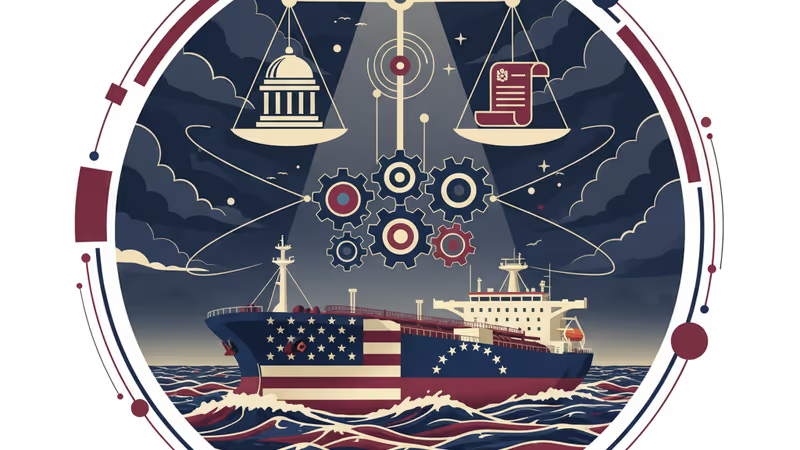
美國扣押委內瑞拉油輪,引發「制裁執法」與「海盜行為」的激烈爭論。本文深入剖析美委雙方理據、國際法的模糊地帶,以及此舉對全球能源安全與地緣政治格局的深遠影響。