
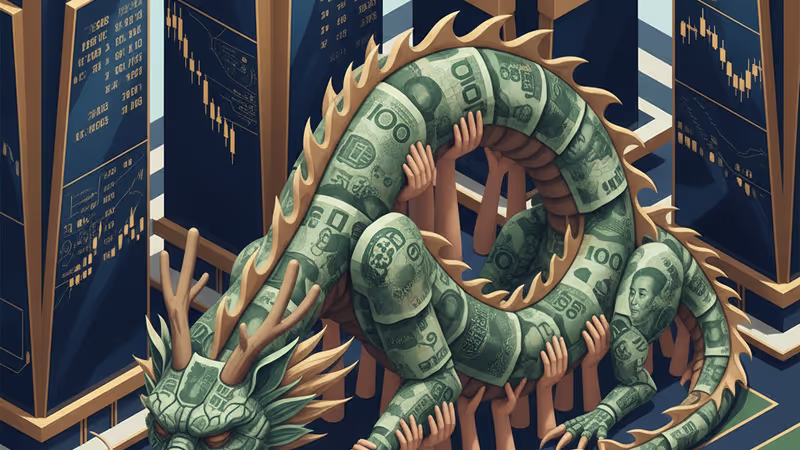
China Enters 'Japan-Style' Era of Frequent, Small-Scale Stimulus, ANZ Warns
China has entered a 'Japan-style' phase of frequent, smaller stimulus packages instead of large-scale bailouts, warns ANZ's Chief Economist. This changes the investment calculus for Chinese assets.
China's economic playbook has fundamentally shifted, moving away from massive 'bazooka' stimulus to a new phase of frequent, smaller interventions—a strategy that mirrors Japan's prolonged battle with stagnation, according to a new analysis from ANZ Banking Group.
Richard Yetsenga, Chief Economist at ANZ, argued in a December 23rd note that China's future growth now depends less on fundamentals and more on the "frequency and vigor" of government stimulus. The shift comes as Beijing grapples with faltering domestic demand and severe overproduction in key industries. As evidence, Yetsenga points to the solar sector: `Only two of the country's 10 largest solar panel manufacturers reported a profit in the first half of 2025.`
This new approach signals that the days of expecting a single, powerful policy move to reignite broad-based growth are over. Instead, Beijing appears to be entering a "Japan-style frequent-stimulus phase," applying targeted support whenever the economy shows signs of faltering. This 'Japanification' suggests a potential future of slower growth and a persistent reliance on state intervention to avoid a hard landing.
For investors, the game has changed. A strategy based on waiting for a single, massive stimulus to fuel a market-wide rally is likely to fail. Success in this new era will depend on tactically positioning ahead of smaller, targeted policy announcements. The key metric to watch is no longer just GDP, but the *rhythm* of Beijing's support. The winners will be those who can anticipate which sectors will receive a targeted injection of capital, turning Chinese market investing into a game of reading policy tea leaves rather than betting on a macro recovery.
本内容由AI根据原文进行摘要和分析。我们力求准确,但可能存在错误,建议核实原文。
相关文章

澳洲退休基金Aware Super斥資8.75億澳元,從Dexus手中收購雪梨地標商場Westfield Sydney部分股權,凸顯頂級商業地產對機構投資者的吸引力。

全球最大比特幣持倉上市公司微策略(MicroStrategy)增持現金儲備至22億美元,足以支付超過兩年半的股息,並為2027年到期的10億美元可轉債提供緩衝,強化抵禦市場波動的財務實力。

黃金價格為何在2025年持續走強?本文深入剖析地緣政治、通膨預期與央行購金三大驅動力,並全面解析實體黃金、黃金ETF、礦業股等四大投資管道的優劣,助您掌握投資先機。

歐洲央行(ECB)宣佈降息25個基點至3.75%,為近五年來首次。本文深入分析降息背後的原因、總裁拉加德的鷹派警告,以及對全球投資者的潛在影響。