
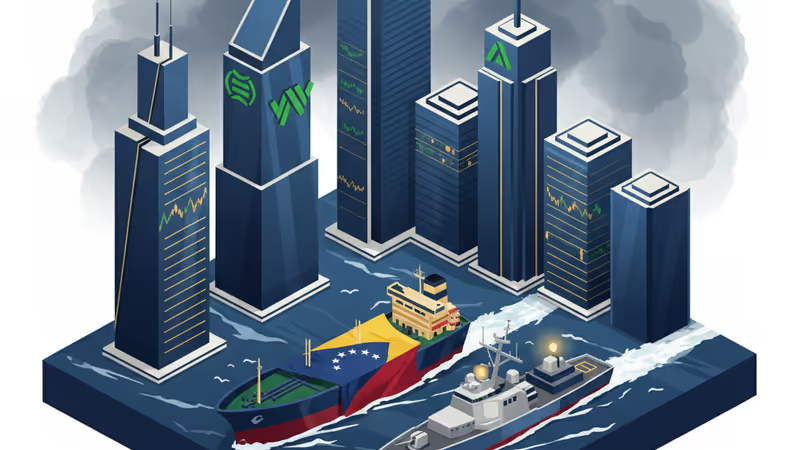
Oil Prices Jump After U.S. Intercepts Venezuelan Tanker, Igniting Supply Fears
Oil prices climbed over 2% after the US seized a Venezuelan oil tanker, fueling fears of supply disruptions and escalating geopolitical tensions. WTI and Brent benchmarks rose.
Oil prices surged in early trading on Monday after the U.S. intercepted a Venezuelan oil tanker over the weekend, escalating geopolitical tensions and raising concerns over potential supply disruptions from the OPEC nation. West Texas Intermediate (WTI) futures jumped over 2.5%, reflecting a renewed risk premium in the market.
According to a report from Reuters, the incident occurred in the Caribbean Sea on Saturday, December 21. A U.S. Coast Guard vessel, enforcing sanctions against Venezuela's state-run oil company PDVSA, seized the tanker, which was reportedly en route to buyers in Asia.
The news sent immediate ripples through energy markets. WTI crude for February delivery climbed 2.5% to $85.30 a barrel, while Brent crude, the global benchmark, rose 2.2% to $90.15. "This isn't about the volume of one tanker; it's about the signal it sends," said a senior energy analyst. "The U.S. is tightening the screws, and that adds a layer of uncertainty the market hates."
Official reactions were swift and polarized. The U.S. State Department confirmed the operation, stating it was "committed to the robust enforcement of sanctions designed to prevent the illicit sale of Venezuelan oil." In Caracas, Venezuela's foreign ministry condemned the act as "an illegal act of piracy" and a "flagrant violation of international law."
PRISM Insight: The Geopolitical Risk Premium Is Back
The weekend's events are more than a one-off skirmish; they may signal a significant hardening of U.S. policy toward Venezuela. For investors and businesses, this reintroduces a tangible geopolitical risk premium to oil prices that had faded in recent months. While a single tanker seizure won't derail global supply, the risk of further confrontations will now be priced in. This heightened volatility in energy markets could complicate central banks' fight against inflation and should be a key variable to watch heading into the new year.
相关文章

美國週末在委內瑞拉外海攔截油輪,引發供應鏈擔憂,國際油價週一應聲上漲。布蘭特與WTI期貨雙雙走高,本文剖析事件對能源市場的即時影響。

日本鐵道商京急與旅行社JTB聯手,在東京羽田機場附近推出醫療旅遊試點計畫。此舉旨在結合日本先進醫療與觀光資源,目標於2026財年全面啟動。

中國11月經濟數據揭示「K型復甦」:工業生產年增4.2%優於預期,但零售銷售僅增2.5%且房地產投資持續下滑,新屋價格創十年最大跌幅,經濟前景充滿挑戰。

蘋果公司市值跌破3兆美元,股價重挫近3.6%。主因為巴克萊銀行以iPhone 16需求疲軟為由下調評級。本文分析蘋果面臨的專利訴訟、反壟斷調查等多重挑戰。