
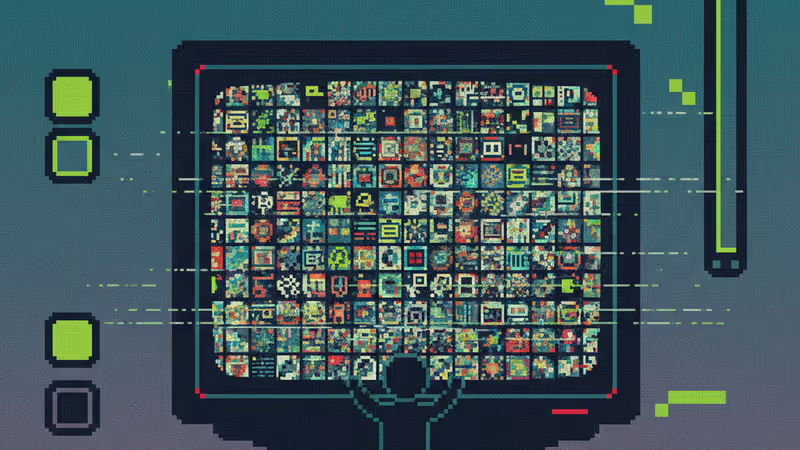
Netflix's Content Paradox: When 'Too Much' Becomes the Ultimate Challenge
Netflix's 'too much choice' dilemma: PRISM analyzes how streaming overload impacts user experience, content strategy, and the future of AI-driven discovery in a competitive market.
The Double-Edged Sword of Streaming Abundance
For years, Netflix's competitive edge was its seemingly endless library. Yet, as the streaming giant's catalog swells to hundreds of thousands of titles, the once-heralded abundance has transmuted into a significant challenge: choice paralysis. The average subscriber now spends precious minutes scrolling, not watching, embodying the 'paradox of choice' in real-time. This isn't merely a user frustration; it's a critical strategic hurdle impacting engagement, retention, and the perceived value of an ever-growing subscription.
Why Decision Fatigue Matters More Than Ever
The issue extends far beyond the casual viewer's evening dilemma. For Netflix, and indeed all streaming platforms, the friction introduced by content overload directly correlates to subscriber churn. In a crowded streaming market, every minute spent searching is a minute not spent engaging with the platform, potentially pushing a subscriber closer to a competitor or even 'cutting the cord' on a service they perceive as too difficult to navigate. The implicit promise of streaming – instant gratification and effortless entertainment – is being undermined by its own success in content acquisition. This erosion of user experience (UX) is a silent threat to profitability and market dominance.
Netflix's Evolving Playbook: Curation, IP, and the Algorithmic Tightrope
Netflix's response is multifaceted, hinting at an evolution in its content strategy. The prominence given to high-profile franchises like Rian Johnson's Knives Out series (with Wake Up Dead Man on the horizon) signifies a strategic shift. Investing heavily in established, popular intellectual property (IP) is a clear move to create 'appointment viewing' and reduce discovery friction. These tentpole releases act as anchors, drawing viewers directly to known quantities and leveraging existing fan bases.
Simultaneously, the platform champions critically acclaimed, often niche, originals like the BAFTA-winning animated film Klaus. These aren't just about awards; they serve as critical darlings that burnish the brand's reputation for quality, attracting specific demographics and demonstrating artistic ambition. However, the challenge remains: how do these gems surface amidst the deluge?
The underlying mechanism for discovery is, of course, Netflix's vaunted algorithm. Yet, even the most sophisticated AI struggles with the nuances of human desire and the subjective nature of 'the perfect watch.' While algorithms excel at identifying patterns, they can sometimes create echo chambers, limiting serendipitous discovery and contributing to the feeling that 'there's nothing new' despite the vast library. The struggle here is balancing hyper-personalization with the need for broad appeal and novel recommendations.
PRISM Insight: The Future of Curated Entertainment and AI's Next Frontier
The 'too much choice' problem is driving a new wave of innovation in content discovery. Beyond traditional algorithms, expect to see an increased emphasis on human-curated playlists, interactive storytelling tools that guide viewers, and even AI-powered narrative assistants that understand emotional states and context, not just viewing history. Investment in advanced AI that can anticipate trends, identify emerging micro-genres, and even generate personalized trailers or synopses will be paramount. We're moving towards a future where platforms don't just recommend what you *might* like, but intuitively understand what you *need* to watch, creating an almost conversational discovery experience. This could involve partnerships with AI companies specializing in emotional intelligence or narrative generation, transforming passive browsing into active, guided entertainment journeys.
PRISM's Take: Quality Over Quantity, and the Rise of the 'Curator-Algorithm Hybrid'
Netflix's next decade will be defined by its ability to transition from a content aggregator to a master curator. The days of simply 'more content' as the primary growth driver are waning. The future belongs to platforms that can deliver not just quantity, but *context*. This means refining the algorithmic engine with a stronger human touch, creating a 'curator-algorithm hybrid' that blends data-driven personalization with editorial expertise. The success of tentpole IPs like Knives Out highlights the enduring power of strong storytelling and recognizable talent. For Netflix to sustain its lead, it must leverage these high-value assets effectively while simultaneously cracking the code on intelligent, frictionless discovery that makes its vast library a treasure, not a burden. The ultimate competitive advantage will no longer be how many movies you have, but how easily your subscribers find their next obsession.
相关文章
深入分析Netflix面對內容過載挑戰,如何利用專業策展與推薦機制,有效引導用戶,提升觀影滿意度與平台競爭力,解鎖串流娛樂新價值。
Netflix為何對《艾蜜莉在巴黎》愛不釋手?本篇深度分析揭示其作為全球內容戰略資產、用戶留存引擎,以及可規模化IP的真正價值。
《怪奇物語》演員驚喜現身舞台劇,揭示Netflix超越串流的IP帝國野心。PRISM深度解析其跨媒體策略與粉絲經濟的未來商機。
《怪奇物語》Vecna演員驚喜現身百老匯,不僅是行銷噱頭。PRISM深度分析這背後Netflix效仿迪士尼的IP宇宙化戰略,以及「體驗經濟」如何成為串流戰爭的新戰場。