
Sanctioned Russian LNG Plant Makes First Shipment, Testing U.S. Resolve
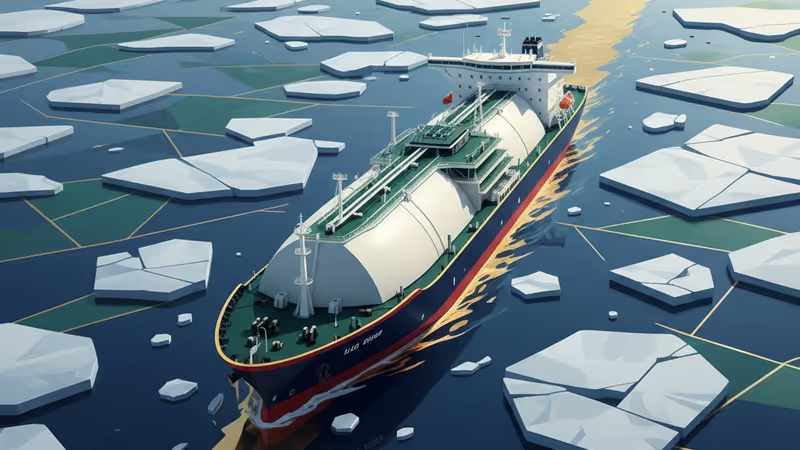
A Chinese-owned tanker, the Kunpeng, has loaded the first LNG cargo from Russia's sanctioned Arctic LNG 2 plant, testing the effectiveness of U.S. sanctions and potentially impacting global energy markets.
A Chinese-owned tanker has loaded the first-ever cargo from Russia's sanctioned Arctic LNG 2 project, a direct challenge to U.S. restrictions designed to halt the massive facility. According to a Reuters report citing LSEG shipping data, the ice-class tanker Kunpeng began loading at the Siberian terminal on December 22nd, signaling that Moscow may have found a workaround to get its gas to market.
Why this matters: The Arctic LNG 2 project, led by Russian energy giant Novatek, is a beast. With a potential output of <mark>19.8 million metric tons per year</mark>, its full-scale operation could significantly weigh on global LNG prices. The U.S. sanctioned the project and specific vessels to choke off Russia's energy revenue following the invasion of Ukraine. This shipment is the first major test of whether those sanctions have teeth.
This isn't just a gas deal; it's a geopolitical probe. The shipment represents a concerted effort by Russia and China to build a parallel logistics and insurance ecosystem, operating outside the sphere of Western financial influence.
Still, it's far from a clear victory for the Kremlin. A single tanker can't handle the project's massive planned output. Novatek's original plan to build its own fleet of specialized ice-breaking LNG carriers has been severely hampered by sanctions blocking access to key technology. To succeed, Russia will need a steady stream of non-Western ships, financing, and insurance—and the Kunpeng's voyage is a critical proof of concept.
For investors, this muddies the waters. If Russia successfully establishes a sanctions-proof shipping route, the resulting increase in global supply could pressure long-term LNG prices, affecting the profitability of U.S. and Qatari producers. However, the risk for any entity involved in this trade is immense. The U.S. could impose secondary sanctions on shippers, insurers, or buyers, creating extreme volatility. The key variable for the energy market moving forward will be this high-stakes cat-and-mouse game between U.S. sanctions and Russian circumvention.
本内容由AI根据原文进行摘要和分析。我们力求准确,但可能存在错误,建议核实原文。
相关文章
瑞穗旗下Asset Management One將於2026年1月推出日本首批主動型政府公債ETF,提供5檔不同年期選擇。在利率走升的環境下,此舉為投資人開創了新局。
在聯準會(Fed)降息預期的推動下,美國標普500指數盤中創下歷史新高。本文深入分析市場樂觀情緒背後的驅動力,並警示投資人應注意的潛在風險。

日本貿易巨頭伊藤忠商事計畫與台灣跨境電商平台Bibian合作,協助推廣以往被忽視的小眾動漫IP周邊商品,開拓全新的海外利基市場。

面對美國關稅衝擊,日本速霸陸(Subaru)透過降稅及漲價成功減輕影響,並堅持120萬輛的全球銷售目標。本文分析其在產業逆風中的突圍策略。
瑞穗旗下Asset Management One將於2026年1月推出日本首批主動型政府公債ETF,提供5檔不同年期選擇。在利率走升的環境下,此舉為投資人開創了新局。
在聯準會(Fed)降息預期的推動下,美國標普500指數盤中創下歷史新高。本文深入分析市場樂觀情緒背後的驅動力,並警示投資人應注意的潛在風險。
日本貿易巨頭伊藤忠商事計畫與台灣跨境電商平台Bibian合作,協助推廣以往被忽視的小眾動漫IP周邊商品,開拓全新的海外利基市場。
面對美國關稅衝擊,日本速霸陸(Subaru)透過降稅及漲價成功減輕影響,並堅持120萬輛的全球銷售目標。本文分析其在產業逆風中的突圍策略。