
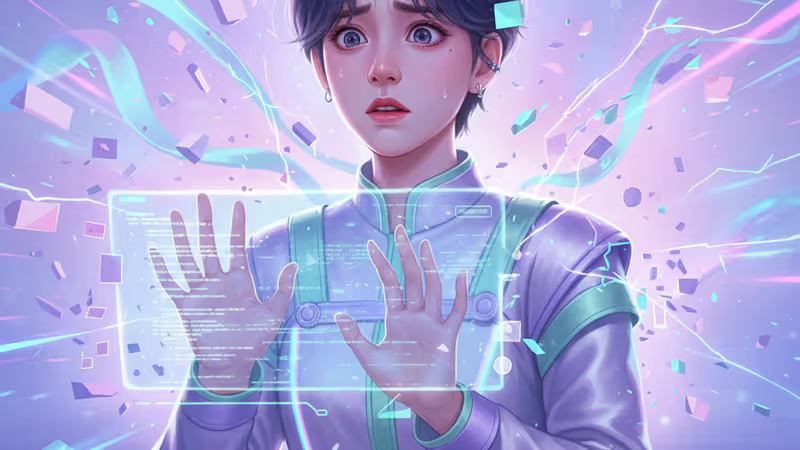
K-Pop’s AI Crisis: How One Mistranslation Exposed a Billion-Dollar Vulnerability
A K-Pop idol's translation error reveals a critical flaw in the tech powering global fan platforms, creating a new market for high-context AI.
The Lede: Beyond the Meme
When SF9 member Inseong’s friendly message to fans was auto-translated into an expletive, the internet saw a fleeting, comical gaffe. Executives in tech and media, however, should see a critical system failure. This isn't about a celebrity's awkward moment; it's a glaring stress test of the entire tech stack underpinning K-Pop's multi-billion dollar direct-to-fan (D2F) economy, revealing a core vulnerability at the intersection of AI, global culture, and high-margin revenue streams.
Why It Matters: The High Cost of a Bad Translation
The incident exposes foundational risks in the K-Pop industry's global business model, which is increasingly reliant on paid, 'intimate' digital interactions:
- Erosion of the D2F Value Proposition: Platforms like Weverse and Bubble sell proximity and authenticity. When the technology mediating that connection fails so spectacularly, it shatters the illusion. The product isn't just content; it's a feeling. A clumsy AI breaks the product and jeopardizes high-margin subscription revenue.
- Uncontrolled Reputation Risk: K-Pop idols are meticulously managed brands. An outsourced, generic translation API introduces an uncontrolled, unpredictable variable that can inflict immediate reputational damage, requiring costly PR interventions and eroding fan trust that is painstakingly built over years.
- Violating the Parasocial Contract: Fans pay for a seamless, emotionally resonant experience. A mistranslation of this nature is a jarring reminder of the technological and cultural gulf between idol and fan, cheapening the perceived value of the interaction and risking subscriber churn.
The Analysis: From Fan Cafes to Flawed AI
Two decades ago, international fan engagement was a high-friction process, filtered through fan-run forums and delayed subtitles. The evolution to platforms like V-Live introduced human-vetted subtitles, creating a gold standard for quality. Today, we are in the era of real-time, AI-driven D2F apps—a strategic shift by entertainment giants like HYBE, SM, and JYP to own the entire fan relationship and its data.
The Platform Wars' Weakest Link
These companies are in a technology arms race, where real-time translation is a key feature for global market capture. However, most are plugging into generic, mass-market translation APIs (like Papago or Google Translate services) that are not trained on the unique lexicon and nuance of idol-fan communication. This reliance on a one-size-fits-all solution is a strategic blunder. It treats language as a simple transcoding problem, ignoring the complex layers of honorifics, slang, and cultural context that define K-Culture. Inseong's case is merely the first major public symptom of this systemic weakness.
PRISM Insight: The Race to Build High-Context AI
This 'failure' signals a massive, untapped market opportunity: High-Context AI Translation-as-a-Service (TaaS) for the creator economy. The future doesn't belong to the platform with the most users, but the one with the most nuanced and reliable communication engine.
The investment thesis is clear: specialized AI models, trained exclusively on the vast datasets of fan-artist interactions, will become mission-critical infrastructure. These models won't just translate words; they will interpret intent, understand cultural sensitivities, and flag potential 'lost in translation' errors before they happen. Companies developing this niche AI will become prime acquisition targets for entertainment conglomerates seeking to de-risk their global operations and build a defensible technological moat.
PRISM's Take: From Translation to Acculturation
The SF9 incident should serve as a final wake-up call to the K-Pop industry and the wider creator economy. Treating translation as a low-cost, automated feature is a critical miscalculation. It is a core competency. The winners of the next decade of global fan engagement will not be those who simply offer real-time translation, but those who invest in real-time acculturation—using sophisticated, specialized AI to build genuine cultural bridges, not just fragile linguistic ones. What happened to Inseong wasn't just a bug; it was a preview of the next frontier in global technology competition.
相关文章

HYBE創辦人房時爀遭金融監管機構突擊搜查,揭示了K-Pop巨頭背後的關鍵人物風險與公司治理危機。此事件對投資者與產業發出警訊。

SHINee Key因一則遲來的悼念文引發爭議。本文深度分析事件背後的粉絲文化、公關危機,以及偶像在數位時代面臨的真實性挑戰。
P.O.出演《HEARTMAN》揭示了韓娛的「偶像演員」成功公式。這不只是選角,而是結合粉絲經濟與IP價值的票房策略。
前SNH48成員揭露經紀公司合約黑幕,引爆中國娛樂圈。本文深度分析偶像產業的系統性剝削,及其對K-Pop和全球粉絲的啟示。