
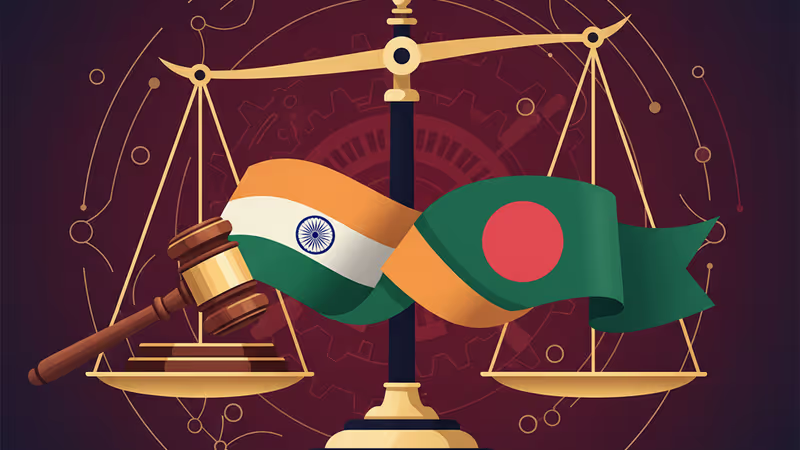
India's Hasina Headache: Why Extraditing a Former Ally is a Diplomatic Minefield
India faces a diplomatic and legal test after Bangladesh requests the extradition of former PM Sheikh Hasina, who was sentenced to death. This article analyzes the serious legal hurdles and geopolitical stakes.
New Delhi is navigating a complex legal and geopolitical dilemma after Bangladesh's interim government formally requested the extradition of former Prime Minister Sheikh Hasina, who was sentenced to death in November. India's decision on the fate of its erstwhile ally will test its strategic interests, legal obligations, and humanitarian principles, with significant consequences for the South Asian landscape.
The request, filed by the Muhammad Yunus-led interim government, invokes a 2013 extradition treaty between the two nations. Dhaka insists the treaty obligates India to return any person convicted of serious crimes. India's response has been cautious, with its External Affairs Ministry stating only that the request is "under examination."
The path to extradition, however, is fraught with legal hurdles. Under India's 1962 Extradition Act, a magistrate must first determine if a 'prima facie' case exists. But two major obstacles loom larger: the nature of the charges and the penalty.
A key provision in extradition law allows a state to refuse a request if it determines the offense is 'of a political character.' Given the swift judicial process following a change in government, India could argue the charges against Hasina are politically motivated, providing a legal basis for refusal.
The most significant barrier is the death sentence. Both Indian law and international human rights norms strongly discourage extraditing individuals to countries where they face capital punishment, unless ironclad assurances are given that the sentence won't be carried out. India has a history of denying extradition on these humanitarian grounds.
本内容由AI根据原文进行摘要和分析。我们力求准确,但可能存在错误,建议核实原文。
相关文章

美國重要保守派智庫「傳統基金會」爆發員工離職潮,超過十數名員工出走。事件核心是圍繞右翼網紅所引發的路線之爭,凸顯美國保守主義運動面臨的深刻內部分裂。
南韓執政黨共同民主黨突然同意啟動「統一教」特檢調查,結束了朝野長期的政治對峙。在強大民意支持下,一場可能動搖政壇的全面調查即將展開,揭露宗教組織與政界間的複雜關係。

擁有近兩千年歷史的加薩大奧馬里清真寺在衝突中化為廢墟。本文探討此一文化遺產的歷史價值,並分析武裝衝突中破壞文化古蹟的深遠影響與國際爭議。
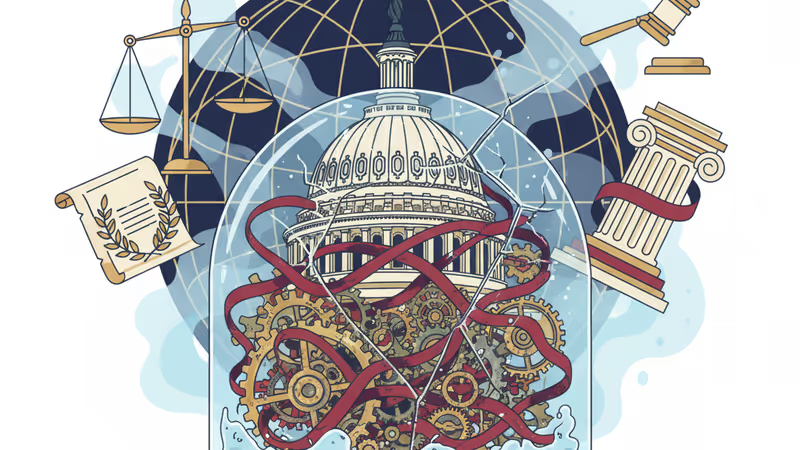
2025年即將結束,美國國會立法成果乏善可陳,議員退休潮卻日益加劇。多位前國會議員對此發出警告,直指國會運作已陷入「昏迷狀態」,並認為這些根深蒂固的問題已醞釀多年。