
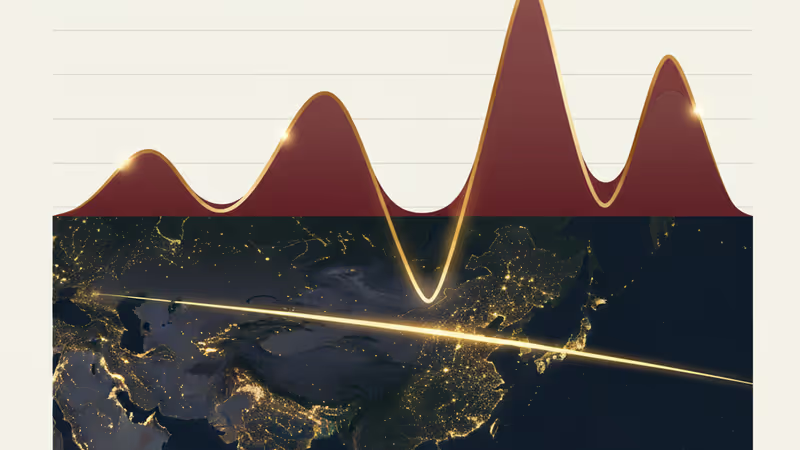
75% of Multinationals Maintain or Boost China Investment, Defying Decoupling Pressure: KPMG Report
A new KPMG report finds three in four multinational corporations in China maintained or increased investment in 2025, despite mounting political pressure from Washington to decouple.
Three in four multinational corporations (MNCs) operating in mainland China have either maintained or increased their investments in 2025, a stark contrast to the intensifying decoupling efforts led by Washington and its allies. According to a new survey from KPMG, the data suggests that despite geopolitical headwinds, global firms remain committed to the world's second-largest economy.
The Data Behind the Strategy
The report, published on Monday, polled 137 senior executives from global companies between June and September. It revealed that 75% of respondents maintained or increased their investments for 2025. Conversely, only 1% reported that they were preparing to exit the China market. While about 20% of companies did reduce their investment, this appears to be a strategic adjustment rather than a full-scale retreat.
Geopolitical Rhetoric vs. Economic Reality
These findings present a challenge to the political narrative pushed by Washington, which has been urging allies to reduce their economic reliance on Beijing through supply chain diversification and technology controls. It's clear that for many corporations, the sheer scale of the Chinese consumer market and its integrated supply chains present an economic reality that's hard to ignore.
The decisions reflect a calculated risk assessment by corporate leaders. Rather than full decoupling, many firms seem to be pursuing a 'China Plus One' strategy—maintaining their core operations in China while diversifying parts of their production to other countries to mitigate risk. This indicates a more nuanced, pragmatic approach than the binary choice often presented in political discourse.
The KPMG data highlights a significant divergence between geopolitical directives and on-the-ground business strategy. While governments talk of decoupling, corporations are making calculated bets on the resilience and scale of the Chinese market. This suggests that economic interdependence is proving more durable than anticipated, creating a complex challenge for policymakers.
本内容由AI根据原文进行摘要和分析。我们力求准确,但可能存在错误,建议核实原文。
相关文章
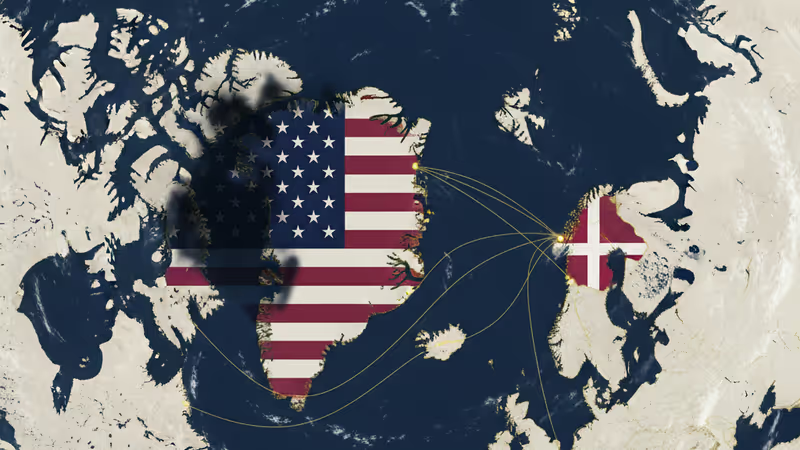
美國總統川普任命特使推動收購格陵蘭,並稱其對國家安全至關重要。此舉引發丹麥與格陵蘭強烈反彈,斥為「吞併」行徑。歐盟亦表態聲援丹麥,北極地緣政治緊張局勢升級。
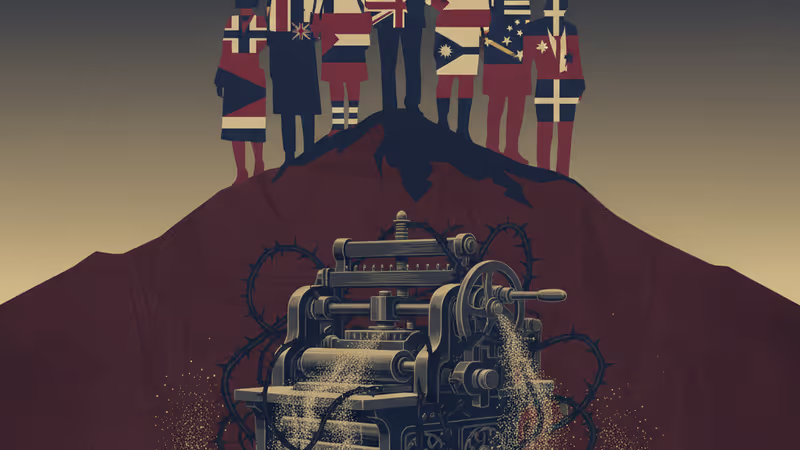
國際組織無國界記者(RSF)最新報告指出,拉丁美洲國家維里迪亞的新聞自由度排名暴跌15位。報告指控總統瓦爾加斯政府系統性打壓媒體,引發美國與歐盟的關切與譴責。
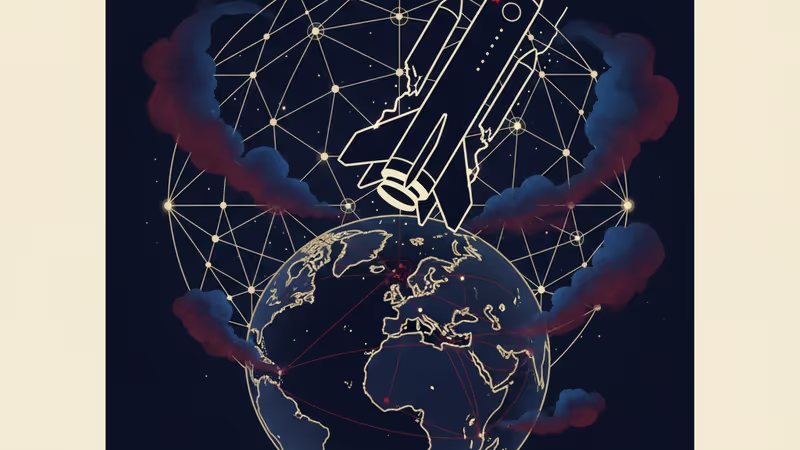
中國國營可重複使用火箭「長征十二號甲」首發,但第一節推進器回收失敗。這是中國本月第二次回收嘗試失利,凸顯其在追趕美國SpaceX等公司的技術挑戰。
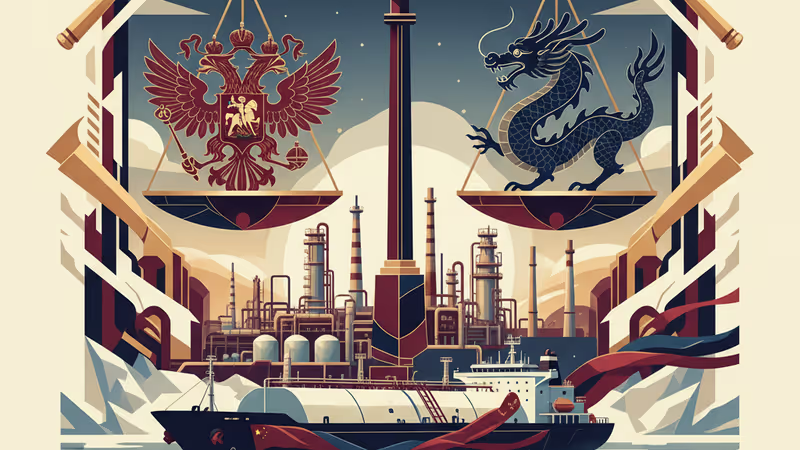
2025年11月,俄羅斯對中國的液化天然氣(LNG)出口同比飆升142.6%,達到160萬噸,取代澳洲成為與卡塔爾並列的最大供應國。此舉被視為北極項目復產及中俄挑戰西方制裁的信號。