
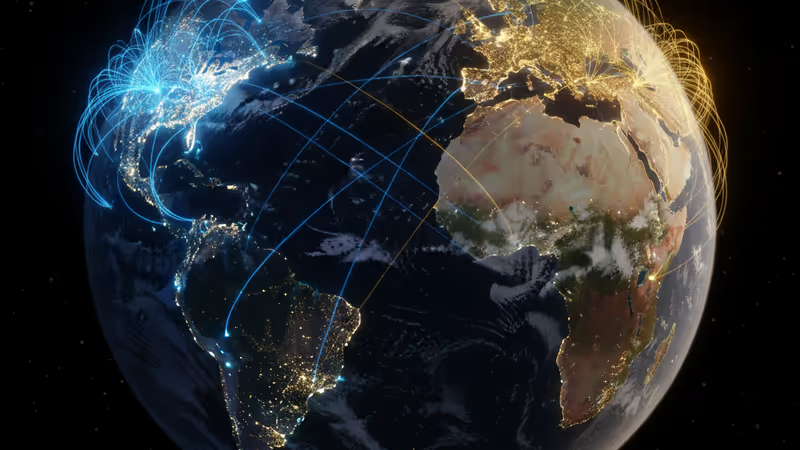
Beyond the Dollar: Why Energy and Water Are the New Currencies of Power
As the US dollar's dominance wanes and the world splits into US- and China-led blocs, a new analysis suggests that energy and water resources, crucial for the AI economy, will become the new arbiters of global power.
As 2025 draws to a close, the era of the a_US dollar's unchallenged global dominance is visibly fading. According to a recent analysis in the South China Morning Post, the 21st century's macroeconomic landscape won't be defined by a single currency, but by access to energy and water. In an economy increasingly driven by artificial intelligence, these resources are becoming the ultimate arbiters of national power.
From Globalization to Geopolitical Blocs
The logic behind this shift is rooted in the world's reorganization into two competing spheres of influence. A recent International Monetary Fund study, “Playing with Blocs: Quantifying Decoupling,” suggests global trade is fracturing around two centers of gravity: the a_United States and a_China. This trend indicates that the global economy isn't returning to the open globalization of the past, but is instead hardening into self-sufficient macro-regions.
This aligns perfectly with the latest a_US national security strategy, which emphasizes building a resilient, a_US-led bloc while implicitly ceding greater influence in Asia to a_China. As the dollar is increasingly bypassed in international settlements, the critical question becomes: what financial instrument or resource will prove most effective in this new world?
The Energy Imperative of the AI Economy
The analysis argues that energy is the most natural answer. A high-tech economy based on knowledge and information simply can't function without access to affordable resources. AI development, in particular, is incredibly energy-intensive, requiring vast amounts of electricity to train models and run data centers, plus significant water resources for cooling.
Only a handful of countries possess both a strong resource base and a long-term commitment to science and education. a_China stands out, having developed its own large language models while accelerating AI deployment, closing the gap with the a_US. Other nations, like a_Russia, have also recognized this trend and are positioning themselves accordingly.
The global AI race is fundamentally a race to build and power data centers. These facilities are the new factories of the 21st century, but their voracious appetite for electricity and water creates a critical bottleneck. Nations that can secure cheap, stable energy and water resources will gain a decisive, long-term strategic advantage over those focused solely on technology.
本内容由AI根据原文进行摘要和分析。我们力求准确,但可能存在错误,建议核实原文。
相关文章
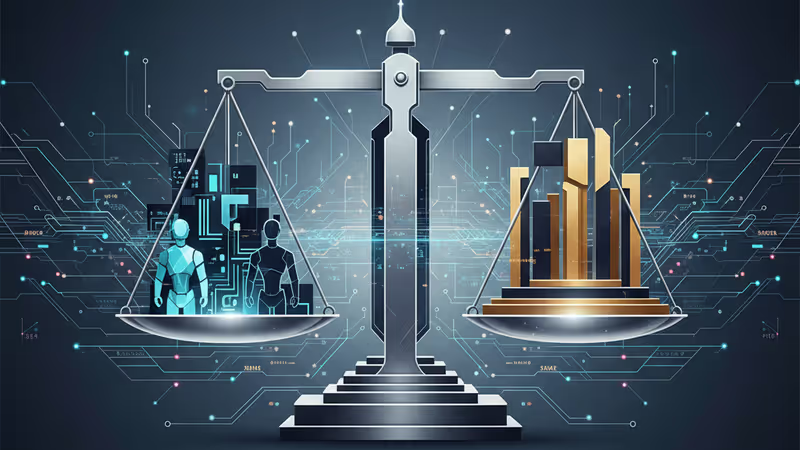
中國在人形機器人專利數量上大幅領先,揭示其在全球科技競賽中的崛起。PRISM深度解析此趨勢對供應鏈、地緣政治及未來AI發展的影響。
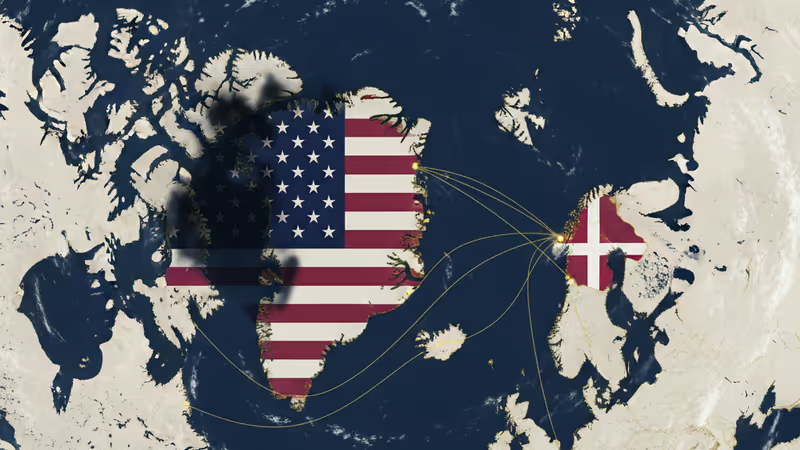
美國總統川普任命特使推動收購格陵蘭,並稱其對國家安全至關重要。此舉引發丹麥與格陵蘭強烈反彈,斥為「吞併」行徑。歐盟亦表態聲援丹麥,北極地緣政治緊張局勢升級。
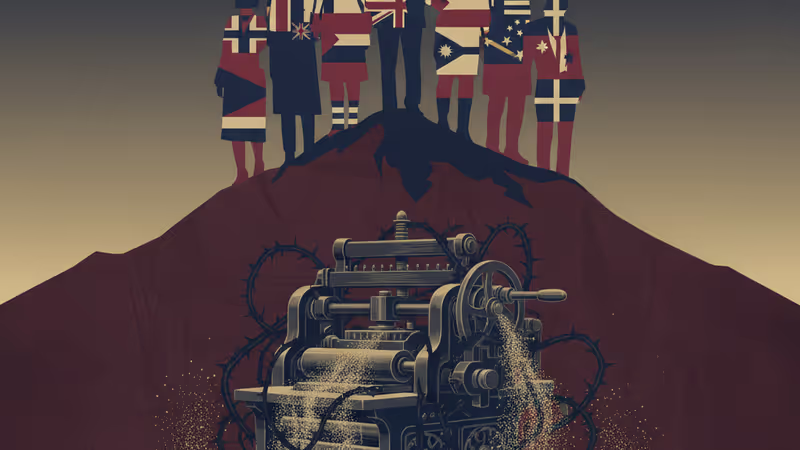
國際組織無國界記者(RSF)最新報告指出,拉丁美洲國家維里迪亞的新聞自由度排名暴跌15位。報告指控總統瓦爾加斯政府系統性打壓媒體,引發美國與歐盟的關切與譴責。
中國國營可重複使用火箭「長征十二號甲」首發,但第一節推進器回收失敗。這是中國本月第二次回收嘗試失利,凸顯其在追趕美國SpaceX等公司的技術挑戰。