
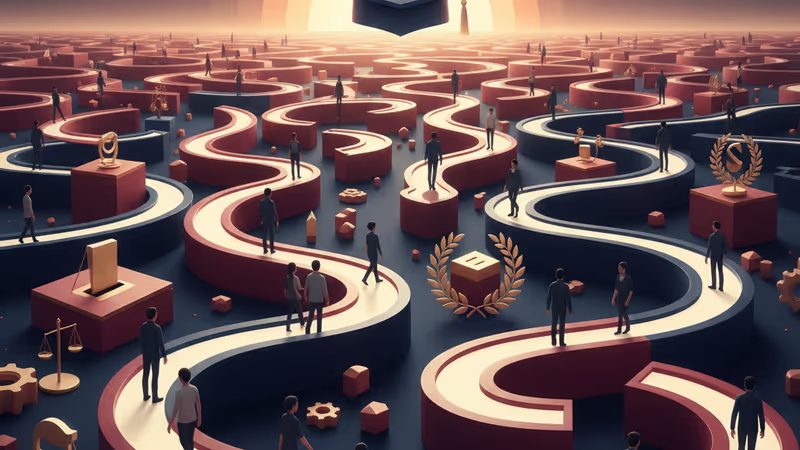
America's Student Loan System Faces a Reckoning in 2026 as Trump-Era Overhaul Ends Biden's SAVE Plan
In 2026, the US student loan system is set for a massive overhaul. The Biden-era SAVE plan is ending, replaced by Trump administration-backed plans with new rules and borrowing limits. Here's what it means for millions of borrowers.
As 2026 approaches, the U.S. federal student loan system is undergoing a seismic shift. The popular SAVE plan-era 2026 repayment plan is being dismantled following legal challenges, making way for a sweeping overhaul spearheaded by the Trump administration and Congress. Starting July 2026, millions of borrowers will face new repayment rules and stricter borrowing limits, a change expected to create significant financial uncertainty.
The Fall of the SAVE Plan
In early Biden administration, the U.S. Department of Education announced a proposed settlement to end the SAVE plan. Hailed by advocates like Persis Yu of Protect Borrowers as the "most affordable, generous and flexible plan," it offered some low-income borrowers monthly payments as low as $0 and a faster track to loan forgiveness.
The plan's generosity, however, prompted Republican state attorneys general to sue the Biden administration for exceeding its authority. The resulting legal battle has now culminated in the plan's termination. "The law is clear: if you take out a loan, you must pay it back," said Under Secretary of Education Nicholas Kent. Now, the 7 million borrowers enrolled in SAVE must transition to other repayment plans, which will likely mean higher monthly payments. "People that made other financial decisions based on what they thought their payment was gonna be... they're in trouble," warned Betsy Mayotte of The Institute of Student Loan Advisors (TISLA).
A New Repayment Landscape and PSLF Hurdles
Beyond SAVE, other popular income-driven plans like PAYE and ICR are being phased out by mid-2028. Under the Trump, two new plans will become the primary options for new borrowers from July 2026:
The rules for PSLF are also tightening. The Trump administration has introduced a rule allowing the department to deny forgiveness to employees of public or nonprofit entities that engage in activities with a "substantial illegal purpose." Critics argue this vague language could be politicized to punish governments that defy federal policies, such as those on immigration.
New Caps on Graduate Borrowing and a Looming "Default Cliff"
The changes aren't just about repayment; they also affect how much students can borrow. The Grad PLUS program, which allowed graduate students to borrow up to the full cost of attendance, will be eliminated after July 2026. New annual borrowing limits will be capped at $20,500 for most graduate students and $50,000 for professional degrees. While supporters hope this will pressure schools to lower costs, critics fear it will push students toward the private loan market.
Amid these policy shifts, borrower distress is at a crisis level. An analysis by the American Enterprise Institute (AEI) shows that ICR people—more than one in four federal student loan borrowers—are delinquent or in default. This has led experts like Persis Yu to warn that America is at "the precipice of a default cliff."
The pendulum swing in student loan policy between the Biden and Trump administrations highlights a deeper instability in American governance. This policy whiplash creates profound uncertainty for individuals making long-term financial plans and erodes trust in federal programs. The shift away from broad forgiveness to stricter repayment marks a significant ideological pivot, likely to reshape the landscape of higher education access and affordability for years to come.
本内容由AI根据原文进行摘要和分析。我们力求准确,但可能存在错误,建议核实原文。
相关文章
全球地緣政治緊張局勢加劇。本文報導俄羅斯對烏克蘭的致命導彈襲擊、以色列防長對加薩的強硬表態,以及敘利亞、委內瑞拉等地的最新動態。
美國CBS新聞網王牌節目《60分鐘》臨時撤下一則關於薩爾瓦多爭議監獄的報導,引發軒然大波。內部人士指控母公司為討好川普政府而進行政治審查,正值其競購華納兄弟探索之際,新聞自由面臨嚴峻考驗。
美國貿易代表署(USTR)認定中國半導體產業政策具歧視性,對美國商業構成威脅,因此宣布將實施新關稅。初始稅率為0%,預計於2027年6月起調升。
加薩衛生官員警告,由於以色列封鎖,當地醫療系統瀕臨崩潰。近四分之三的藥品短缺,兩萬名患者等待轉診治療,已有上千人在等待中死亡。本文深入剖析這場人道危機。