

US Court: Trump's Use of 1798 Law to Deport Venezuelans Violated Due Process
A U.S. federal court has ruled that the Trump administration's use of the 1798 Alien Enemies Act to deport Venezuelan men to a prison in El Salvador violated their due process rights.
A U.S. federal judge has ruled that the government denied due process to a group of Venezuelan men by deporting them to a prison in El Salvador. The ruling, delivered by Judge James Boasberg, directly challenges the Trump administration's use of a centuries-old statute, the Alien Enemies Act of 1798, as the legal basis for the removal.
The Heart of the Ruling: Due Process Denied
According to Judge Boasberg's finding, the core issue was the failure of the U.S. government to provide the men with the fundamental legal protections guaranteed under the Constitution. By deporting them directly to a third-country prison system—not their country of origin—without a proper hearing or legal recourse, the government's action was deemed a violation of their due process rights. This judicial check scrutinizes not just the outcome but the controversial method used to achieve it.
A Law from Another Century
The invocation of the Alien Enemies Act is central to the case. This statute grants the president broad authority during a declared war or invasion to detain and deport non-citizens from a hostile nation. The Trump administration's decision to apply this law to Venezuelan nationals, with whom the U.S. is not at war, represents a legally contentious expansion of executive power that the court has now pushed back against.
Historical Context: The Alien Enemies Act of 1798 was passed during the 'Quasi-War' with France, alongside the Sedition Act, out of fear of foreign influence. Its revival in the 21st century for immigration enforcement is highly unusual and raises significant constitutional questions.
The Geopolitical Angle: Why El Salvador?
The decision to deport Venezuelan nationals to El Salvador—a country known for its notoriously harsh prison conditions under President Nayib Bukele—rather than their home country, adds a complex layer to the case. This practice, sometimes referred to as 'third-country deportation', signals a departure from standard international protocol and raises questions about bilateral agreements that may have facilitated such a transfer, bypassing both domestic legal safeguards and international asylum norms.
本内容由AI根据原文进行摘要和分析。我们力求准确,但可能存在错误,建议核实原文。
相关文章

在多次延遲交付後,台灣訂購的新型F-16V戰機終於在美國展開地面測試。照片顯示,此計畫在地緣政治壓力下已進入實質測試階段,為台灣空防現代化帶來新進展。
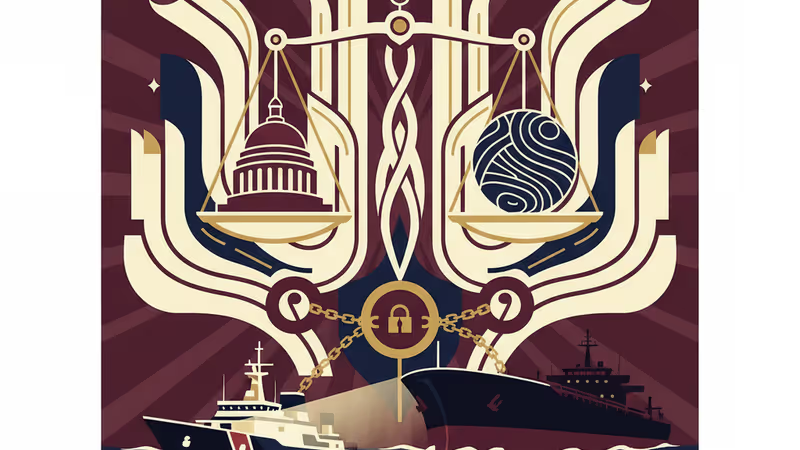
美國總統川普向委內瑞拉總統馬杜羅發出警告,敦促其下台,同時美方扣押委國油輪,升級施壓。俄羅斯與中國齊聲譴責美國行動,稱其違反國際法,地緣政治緊張局勢急劇升高。
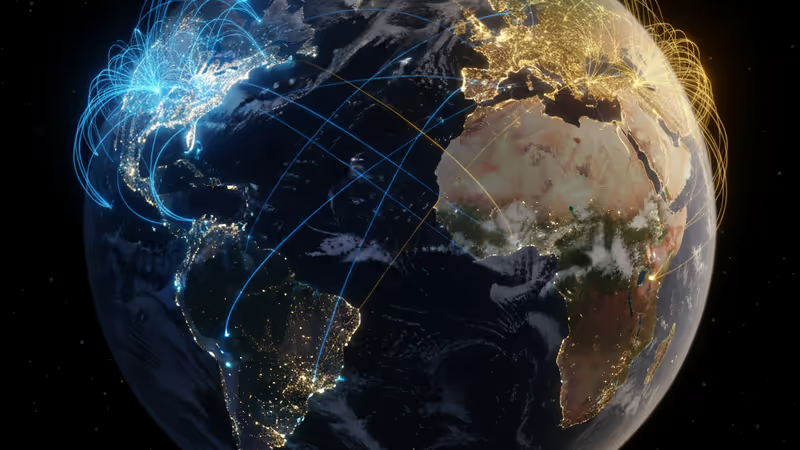
2025年,全球經濟體系面臨轉捩點。專家分析,隨著美中集團化成形,AI時代的決勝關鍵已非美元,而是能源與水資源。本文深入剖析此一趨勢對全球權力格局的影響。
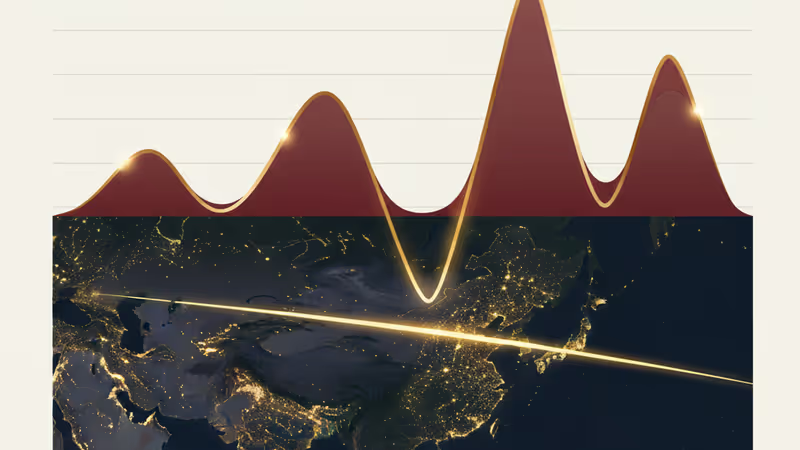
畢馬威(KPMG)最新調查顯示,儘管華盛頓加強脫鉤力道,仍有高達75%在中國營運的跨國企業在2025年維持或增加投資,準備撤離市場者僅佔1%。