
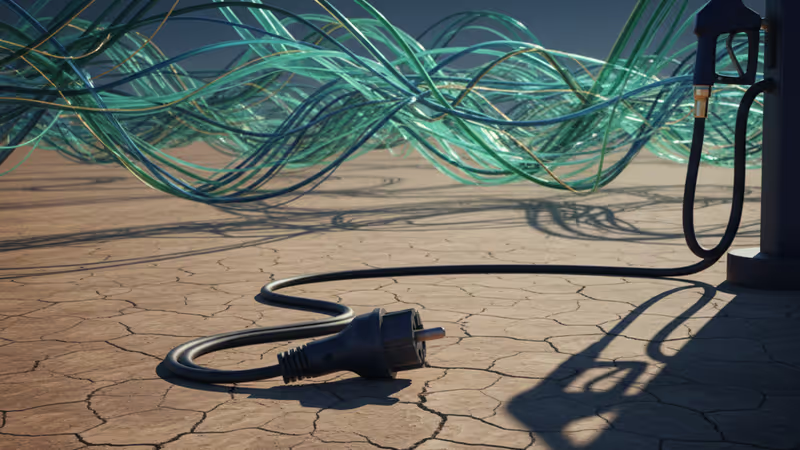
EV Gold Rush Is Over: Automakers Pivot Back to Gas Guzzlers After Billions Burned
The EV euphoria in the U.S. auto industry is over. Automakers like GM and Ford are pulling back on EV investments after billions in losses, pivoting back to profitable gas trucks and hybrids as consumer demand stalls.
The U.S. auto industry’s electric vehicle euphoria has slammed into a wall of realism. After wasting billions on an all-electric future that consumers didn't fully embrace, giants like and are hitting the brakes. They're now scaling back ambitious EV plans and refocusing on what sells: large, profitable gas-guzzling trucks and SUVs, with many executives admitting that government policies, not customers, were driving the charge.
A Costly Miscalculation
The financial fallout from this pivot is staggering. announced last week it expects to record about in special charges related to its restructuring and EV pullback. Meanwhile, has already disclosed a impact from its own scale-back, with more write-downs expected.
"We're following customers to where the market is, not where people thought it was going to be," CEO told CNBC. His counterpart at , CEO , noted it’s “too early to tell” what true EV demand is, suggesting the next six months will reveal the market’s natural level without heavy-handed incentives.
The Data Tells the Story
The numbers confirm the downturn. According to , U.S. EV sales peaked in September at of the new vehicle market, just before the administration killed federal incentives of up to . In the fourth quarter, that demand plummeted to a preliminary . Experts now believe the EV timeline is being “recalibrated.” forecasts EVs will make up of the U.S. market by 2030—a respectable figure, but one that doesn't justify the colossal upfront investments.
The 'Tesla Delusion' and the Rise of Hybrids
A core strategic error, analysts say, was misinterpreting ’s success. "Tesla wasn't creating a battery-electric vehicle market. They created a market for the Tesla brand," said Stephanie Brinley of . Consumers were making a "tech-buy," not simply choosing an EV. When legacy automakers tried to replicate this, they found customers weren't interested. Now, the industry is embracing what calls the "mosaic of powertrains." is refocusing on hybrids, plans to offer plug-in hybrids, and even is allocating production for hybrids at its new Georgia plant.
The era of rewarding 'all-in' EV strategies is over. For investors, the focus is shifting from pure-play EV growth stories to automakers with flexible production capabilities. Companies that can pivot between EVs, hybrids, and traditional ICE vehicles based on real-time market demand are now positioned as the more resilient, and potentially more profitable, long-term investments.
本内容由AI根据原文进行摘要和分析。我们力求准确,但可能存在错误,建议核实原文。
相关文章

馬斯克560億美元薪酬案大逆轉,PRISM深度解析。這不僅是個人勝利,更重塑了美國公司治理、高管薪酬及特拉華州的法律地位。

德拉瓦州最高法院推翻下級法院判決,恢復馬斯克560億美元薪酬方案。此案不僅影響特斯拉,更揭示了全球公司治理與法律管轄權的未來趨勢。
Filecoin(FIL)價格下跌2.2%,在$1.33阻力位面臨機構賣壓,但在$1.28支撐位出現強勁買盤。市場正處於機構多空博弈的關鍵時刻。
在經歷近二十年的盈利低迷後,日本玻璃大廠日本板硝子(NSG)利用其英國子公司的先進技術,全力投入超薄「鈣鈦礦太陽能電池」材料,力圖透過高附加價值產品實現重生。