
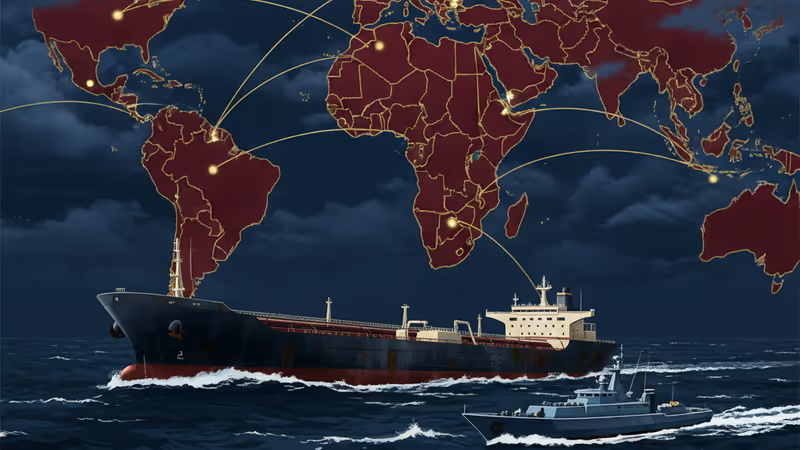
Sanction or Piracy? US Seizure of Venezuelan Oil Tanker Ignites International Legal Firestorm
The recent U.S. seizure of a Venezuelan oil tanker has sparked a fierce debate over international law, pitting claims of legitimate sanction enforcement against accusations of state-sponsored piracy. We analyze the legal and geopolitical fallout.
In the choppy waters of the Caribbean, a U.S. Coast Guard interception of a Venezuelan state-owned oil tanker has escalated into a full-blown international dispute. The incident puts a sharp focus on a critical question: Was it a legitimate enforcement of economic sanctions, or a modern-day act of piracy on the high seas?
According to reports, the confrontation occurred in early December 2025 in international waters. The Venezuelan-flagged tanker, 'El Libertador,' owned by state oil company PDVSA and bound for Asia, was stopped by a U.S. Coast Guard cutter. U.S. authorities claim the vessel was engaged in an illicit crude oil shipment, violating stringent sanctions against Venezuela. The tanker was subsequently seized and diverted to a port in Texas.
The seizure marks one of the most assertive actions taken by the Biden administration this year, following a period of re-tightening sanctions aimed at pressuring the Maduro regime. Washington's long-standing position is that cutting off the government's oil revenue is crucial for restoring democracy in the nation.
We will continue to use all available tools to prevent the illegitimate Maduro regime from using state assets to finance its oppressive activities. This action is part of our lawful and ongoing sanction enforcement efforts to uphold international norms.
Caracas's response was swift and furious. The Venezuelan government condemned the seizure as an act of 'economic terrorism' and 'imperialist aggression.' In a fiery statement, Venezuela's Ministry of Foreign Affairs accused the U.S. of flagrantly violating the UN Convention on the Law of the Sea (UNCLOS), which guarantees freedom of navigation, and called for international condemnation of the act.
The core of the dispute lies in a gray area of international law: the extraterritorial application of a nation's domestic sanctions. UNCLOS firmly establishes freedom of navigation on the high seas for all states. The right to board a foreign ship is strictly limited to exceptional cases like piracy, slave trading, or unauthorized broadcasting. Legal experts argue that unilaterally enforcing domestic sanctions in international waters is a highly contentious practice that risks undermining the rules-based maritime order. This seizure could set a significant precedent, potentially encouraging similar actions and escalating maritime tensions globally.
本内容由AI根据原文进行摘要和分析。我们力求准确,但可能存在错误,建议核实原文。
相关文章
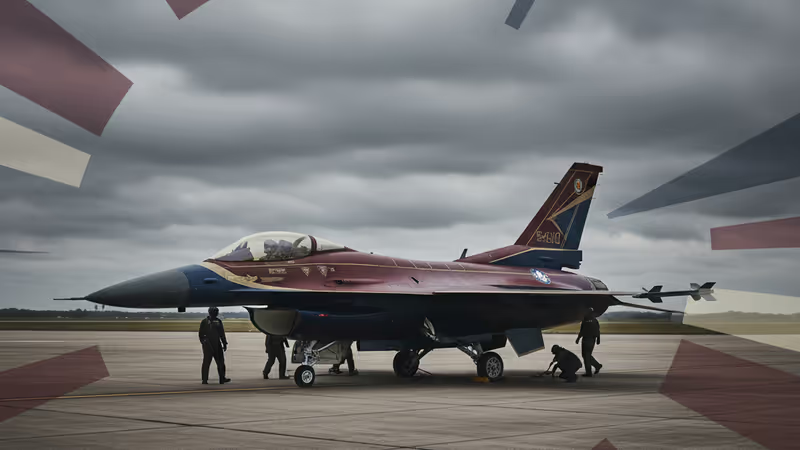
在多次延遲交付後,台灣訂購的新型F-16V戰機終於在美國展開地面測試。照片顯示,此計畫在地緣政治壓力下已進入實質測試階段,為台灣空防現代化帶來新進展。

美國總統川普向委內瑞拉總統馬杜羅發出警告,敦促其下台,同時美方扣押委國油輪,升級施壓。俄羅斯與中國齊聲譴責美國行動,稱其違反國際法,地緣政治緊張局勢急劇升高。
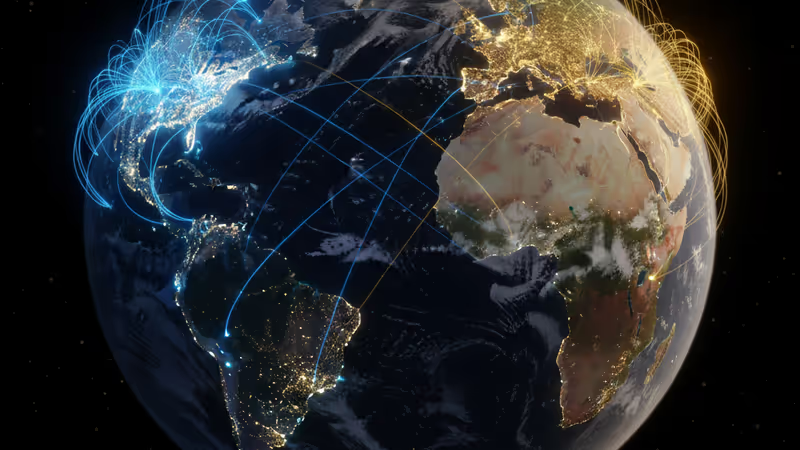
2025年,全球經濟體系面臨轉捩點。專家分析,隨著美中集團化成形,AI時代的決勝關鍵已非美元,而是能源與水資源。本文深入剖析此一趨勢對全球權力格局的影響。
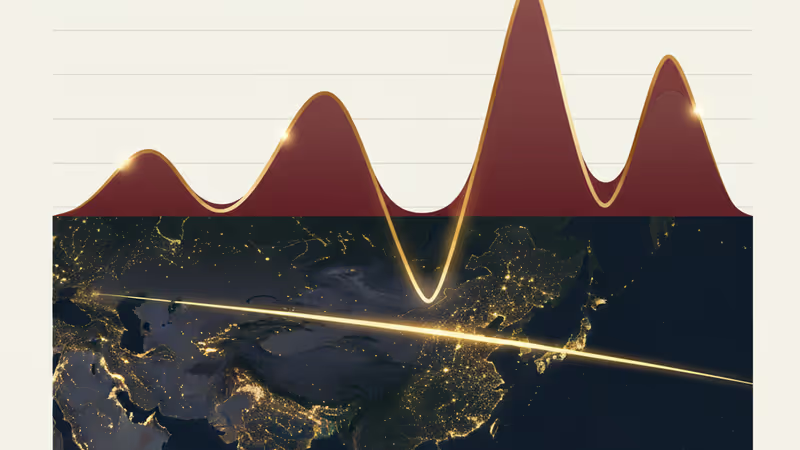
畢馬威(KPMG)最新調查顯示,儘管華盛頓加強脫鉤力道,仍有高達75%在中國營運的跨國企業在2025年維持或增加投資,準備撤離市場者僅佔1%。