
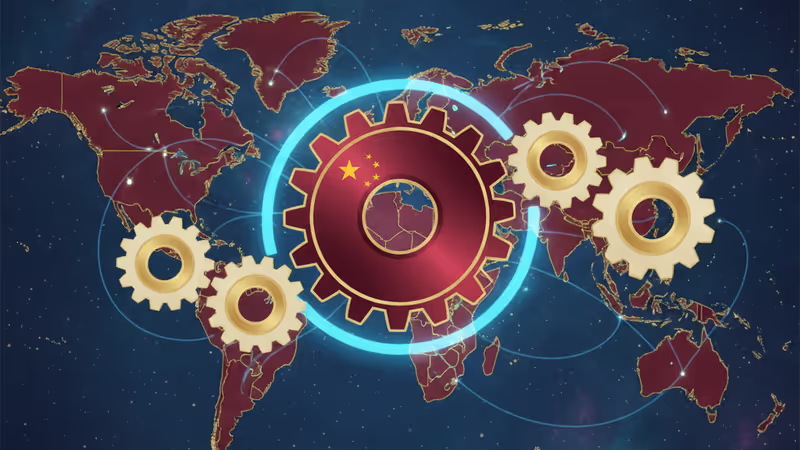
China Taps the Brakes on Steel Exports, Signaling Move to Ease Trade Friction
China is set to impose an export licensing system on steel products from January 1, a strategic move seen as an attempt to cool rising trade tensions with its new, vital export partners in the developing world.
China has announced it will implement an export licensing system for around 300 steel products starting January 1. While technical on its face, the move is being interpreted as a clear signal that Beijing is proactively trying to manage a significant source of trade friction with its crucial emerging market partners.
The policy's intent becomes clearer in the broader context of China's shifting trade landscape this year. Amid rising global protectionism, China’s export sector has shown remarkable resilience. Even as shipments to its largest market, the United States, dropped by 18.3% year-on-year in the first 11 months, China’s overall exports still managed to grow by 6.2%.
This resilience is partly due to strong performance in high-tech exports like EVs, batteries, and solar equipment. But just as critical, according to analysis from the South China Morning Post, has been a deliberate pivot to emerging markets—especially in Southeast Asia, Africa, and Latin America—where trade barriers are lower and demand is growing. These markets are increasingly vital for keeping China's export engine running.
Yet these new relationships are becoming delicate. While most developing economies haven't adopted an openly adversarial stance, trade frictions are accumulating, with steel emerging as the most visible flashpoint.
From early last year through September this year, China faced 54 trade remedy cases targeting its steel exports—more than in the previous five years combined. Last year alone saw countries like Brazil, South Africa, and Turkey impose new anti-dumping duties. This year, Vietnam and Malaysia, China's largest and third-largest trading partners among developing countries, followed suit. Mexico also recently introduced tariffs of up to 50% on steel imports from several Asian countries, including China.
本内容由AI根据原文进行摘要和分析。我们力求准确,但可能存在错误,建议核实原文。
相关文章
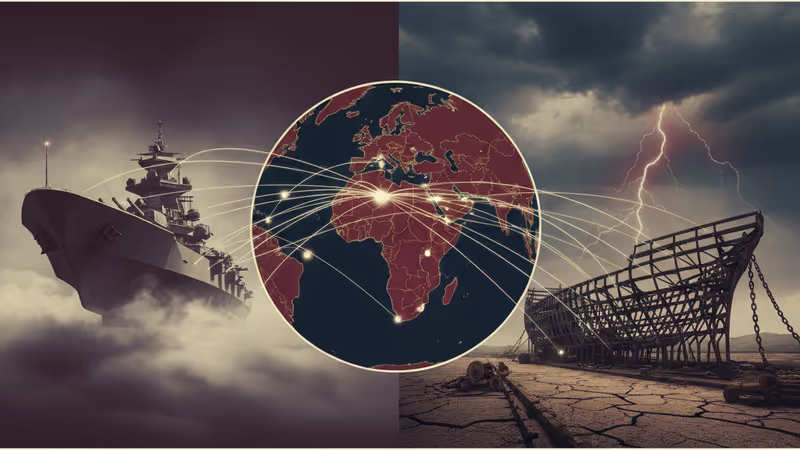
美國前總統川普宣告將打造「史上最強」戰艦的宏偉計畫。然而,美國海軍一個月前才因延誤與成本超支取消新艦計畫,凸顯了政治野心與國防現實之間的巨大鴻溝。
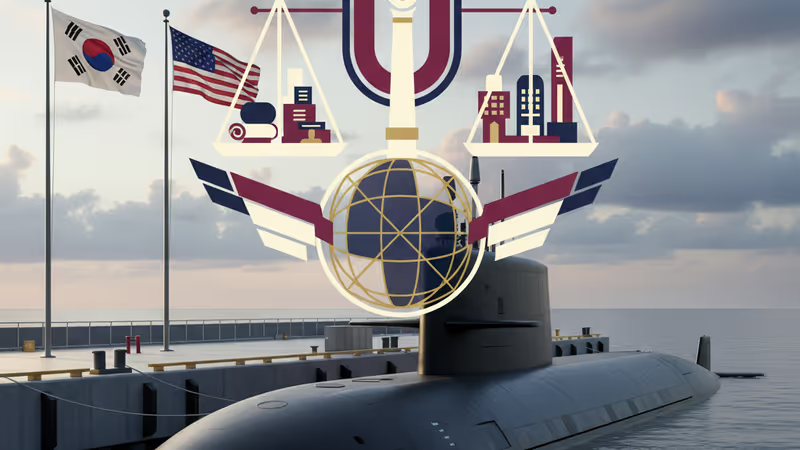
美國海軍一艘洛杉磯級核動力攻擊潛艦「格林維爾號」已於23日抵達韓國釜山進行補給。韓國海軍表示,此舉旨在促進雙邊合作,強化美韓聯合防衛態勢。
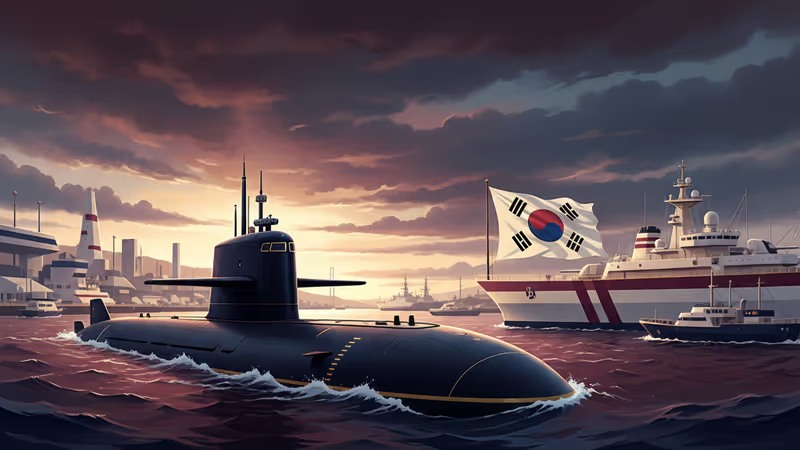
美國海軍核動力攻擊潛艦「格林維爾號」抵達南韓釜山進行補給。此為南韓新政府上任後首次有美國核潛艦到訪,旨在強化美韓聯合防衛態勢,而北韓過去曾對此類行動表達強烈不滿。

根據路透社報導,美國前總統川普上任後的首五個月內,美國農業部(USDA)因招聘凍結與預算壓力等因素,流失了約2萬名員工,引發外界對農業服務品質的擔憂。