
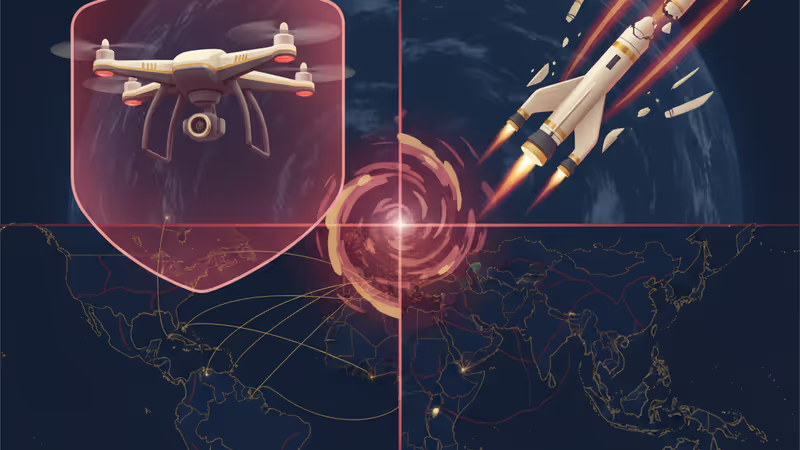
US Blacklists Drone Giant DJI as China's Own Tech Ambitions Falter
The US escalates its tech crackdown by blacklisting drone maker DJI, citing national security risks. Meanwhile, China suffers a major setback in its space program with a second failed reusable rocket recovery, highlighting the intensifying rivalry.
Washington Grounds a Chinese Tech Giant
The US telecommunications regulator is escalating its crackdown on Chinese technology, adding Shenzhen-based DJI, the world’s largest drone maker, to a list of companies deemed to pose “unacceptable risks” to national security. The move effectively bars the approval of new DJI models and all other foreign drones, marking what sources call a significant escalation in a policy that gained momentum under the Trump administration.
A Setback in the New Space Race
As Washington tightens its grip, China is facing its own internal technology hurdles. On Tuesday, December 23, the debut launch of the Long March 12A, China's first state-owned reusable rocket, ended in a setback when the recovery of its first stage failed. This is the second such failure in a single month.
According to reporting from the South China Morning Post, the repeated failures could put China's reusable rocket program as much as 10 years behind the US, where companies like SpaceX have mastered the technology. The incident highlights the persistent gap between China's state-led ambitions and the privately-driven innovation ecosystem in the US.
The Taiwan Question Looms
These technological and economic confrontations are unfolding against a backdrop of rising geopolitical tension over Taiwan. Analysts are closely examining Beijing's recent policy announcements, military posturing, and the creation of a new commemoration day for signs that its tone on “peaceful reunification” may be shifting towards one of greater urgency.
The twin events highlight a critical phase in the US-China rivalry. Washington is leveraging its regulatory power to proactively contain Chinese tech dominance (DJI), while Beijing's state-driven push for indigenous innovation (reusable rockets) is hitting significant, public hurdles. The competition is no longer just about chips; it's a full-spectrum contest for the technological high ground.
本内容由AI根据原文进行摘要和分析。我们力求准确,但可能存在错误,建议核实原文。
相关文章
2025年12月23日,中國可重複使用火箭「長征十二號甲」回收失敗,同時全球無人機巨頭大疆(DJI)被美國列入國安風險名單,中美在航太與科技領域的競爭升溫。

全球地緣政治緊張局勢加劇。本文報導俄羅斯對烏克蘭的致命導彈襲擊、以色列防長對加薩的強硬表態,以及敘利亞、委內瑞拉等地的最新動態。
美國CBS新聞網王牌節目《60分鐘》臨時撤下一則關於薩爾瓦多爭議監獄的報導,引發軒然大波。內部人士指控母公司為討好川普政府而進行政治審查,正值其競購華納兄弟探索之際,新聞自由面臨嚴峻考驗。
美國貿易代表署(USTR)認定中國半導體產業政策具歧視性,對美國商業構成威脅,因此宣布將實施新關稅。初始稅率為0%,預計於2027年6月起調升。