
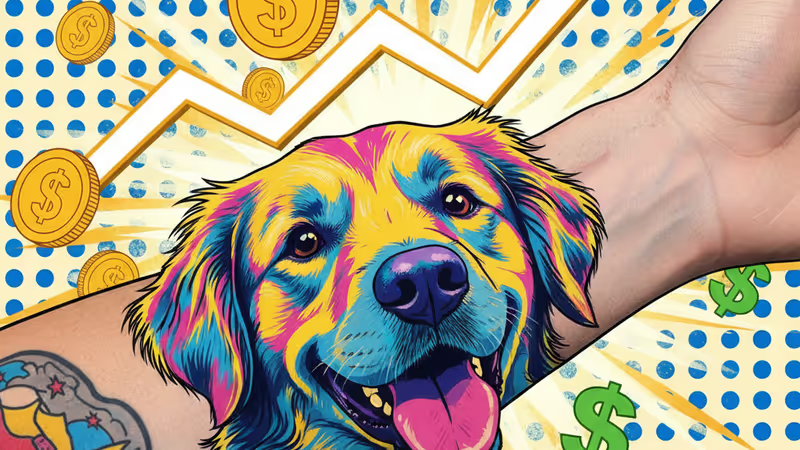
Beyond Memorials: How Pet Tattoos Reveal the Future of the $136B Human-Animal Economy
An analysis of the growing trend of pet tribute tattoos as a key economic indicator for the booming $136B pet care industry and the future of personal identity.
The Lede: The New Premium Consumer
While the images of intricate pet portraits inked on skin may seem like a niche, sentimental trend, they are a powerful leading indicator of a profound economic and cultural shift. For executives and investors, these tattoos are not just body art; they are data points. They signify the final stage in the 'humanization' of pets, cementing their status not as property, but as core family members. This emotional upgrade is the engine driving the explosive growth of the global pet care market, now valued at over $136 billion and projected to surge past $200 billion by 2028. The decision to permanently memorialize a pet on one's body is a consumer signal of the highest order, reflecting a willingness to spend at premium, human-grade levels on everything from food and healthcare to wellness and end-of-life services.
Why It Matters: The 'Pet Parent' Flywheel
This trend transcends the tattoo parlor and has significant second-order effects across multiple industries. The 'pet parent' demographic is a powerful economic force with distinct behavioral patterns:
- CPG & Retail: The demand for 'human-grade' pet food, organic treats, and subscription-based, customized meal plans is soaring. Brands that fail to adopt this premium, wellness-focused language are being left behind.
- Healthcare & Insurance: Pet insurance is one of the fastest-growing insurance sectors. Consumers are now willing to finance complex medical procedures for pets, mirroring human healthcare expenditure. This drives innovation in veterinary medicine (vet-tech) and pharmaceuticals.
- Real Estate & Hospitality: Pet-friendly amenities are no longer a perk but a requirement in urban rental markets and hotels. The concept of a 'family' has been redefined to include non-human members, influencing architectural design and community planning.
The pet tattoo is the cultural artifact that proves this integration is complete. It represents an emotional bond so deep that it warrants the same level of reverence and permanence once reserved exclusively for human relationships.
The Analysis: From Backyard to Body Art
Historically, pets occupied a utilitarian or peripheral role in the family structure. Concurrently, tattoos were relegated to subcultures, far from the mainstream. The last two decades have witnessed a powerful convergence of two macro-trends: the mainstreaming of tattoo art as a form of luxury self-expression and the elevation of pets to familial status. The rise of social media platforms like Instagram has acted as an accelerant, transforming tattoo artists into 'creators' with global reach and turning personal tributes into shareable, viral content. A studio like London's Sacred Gold is no longer just a local shop; it's a global brand node in the creator economy, marketing a highly personalized, emotionally resonant service. This isn't just about grief; it's about identity curation. A pet tattoo signals values like loyalty, compassion, and a capacity for deep connection—a form of personal branding etched in skin.
PRISM Insight: The Coming Age of Digital Memorialization
The physical tattoo is the analog anchor for the next frontier: the digital human-animal afterlife. As consumers demand more sophisticated ways to honor their companions, we anticipate a surge in tech-driven memorialization services. This represents a nascent but high-growth investment opportunity.
Expect to see the emergence of platforms offering:
- AI-Powered Digital Avatars: Services that analyze photos and videos to create interactive digital versions of deceased pets, allowing owners to 'interact' with them in VR or AR environments.
- Bio-Data Legacy: Companies offering to sequence and store a pet's DNA, creating a permanent biological record that can be integrated into digital family trees.
- NFTs as Memorials: Unique digital tokens representing a pet's most cherished moments or even their 'digital soul,' providing a new, blockchain-verified form of eternal ownership.
The tattoo is the permanent, physical token of a bond. Technology will soon offer a permanent, digital one to match.
PRISM's Take: The Humanization Thesis is Non-Negotiable
Dismissing pet tribute tattoos as mere sentimentality is a strategic error. They are a clear, visceral manifestation of the 'humanization' thesis that underpins one of the most resilient and fastest-growing consumer markets today. This trend demonstrates that the emotional infrastructure of the modern family has been re-architected to include non-human members. For any B2C company, understanding this shift is no longer optional. The brands that will win the next decade are those that recognize this new family dynamic and build products, services, and narratives that treat the bond between humans and their pets with the gravity and permanence it's now being given—right down to the skin.
相关文章
首屆美國TikTok大獎在一片混亂中落幕。這不只是一場頒獎典禮,而是TikTok試圖從App晉升為文化帝國的關鍵一步。PRISM深度解析其背後戰略。
回顧90年代奇特玩具Jibba Jabber。這款為主管設計的紓壓娃娃,為何在今日會引發爭議?分析其文化意涵與當代紓壓科技的演進。
南韓驚爆比N號房更邪惡的非法影像網站。PRISM深度分析其遊戲化商業模式、技術演進,以及數位性犯罪「平台化」的未來威脅。
分析第三位星際訪客3I/ATLAS的深遠意義。它不僅是古老彗星,更是驅動天文觀測技術與未來太空任務的催化劑。