

10 Years After Dentsu's 'Karoshi' Suicide: Has Japan's Corporate Culture Really Changed?
It's the 10th anniversary of the Dentsu 'karoshi' (overwork death) tragedy. The victim's mother says her 'suffering only increases.' How much has Japan's work culture truly changed in a decade?
Has a decade been long enough to heal the wounds of a young employee's tragedy? It's now 10 years since a new recruit at Japanese advertising giant Dentsu died by suicide from overwork on Christmas Day, 2015. On the anniversary, the mother of the late Matsuri Takahashi stated that her "suffering only increases with time," revealing a wound that's far from healed. The case was a watershed moment that forced Japan to confront the deadly reality of 'karoshi'—death from overwork.
Public Outcry and 'Work Style Reform'
Ms. Takahashi, then 24, was reportedly logging over 100 hours of overtime a month before her death. The incident sparked widespread public anger against Dentsu, culminating in a guilty verdict for violating labor laws. In response, the Japanese government launched its 'Work Style Reform' (Hatarakikata Kaikaku) initiative, which included introducing a legal cap on overtime hours.
A Decade Later, The Lingering Challenge
A decade on, while many companies have attempted to improve working conditions, experts point out that Japan's deep-rooted culture of long working hours is far from gone. The fact that Ms. Takahashi's mother is speaking out on the 10-year anniversary suggests that cultural and structural problems persist beyond the reach of legal regulation. Her tragic death continues to pose a heavy question to Japanese society and corporations about the meaning of work and the value of life.
本内容由AI根据原文进行摘要和分析。我们力求准确,但可能存在错误,建议核实原文。
相关文章
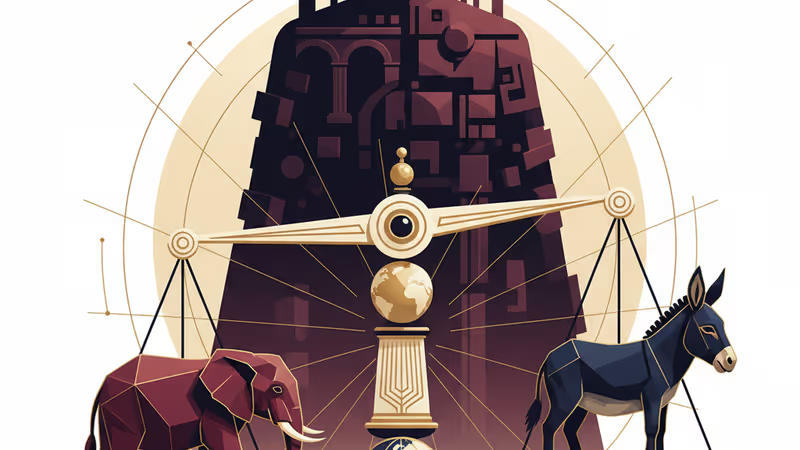
2026年明尼蘇達州長選舉,共和黨迎來勝選良機,但前總統川普的爭議言論與親信林德爾的參選,恐將反成敗筆。本文深入剖析共和黨內部的路線分歧與戰略困境。
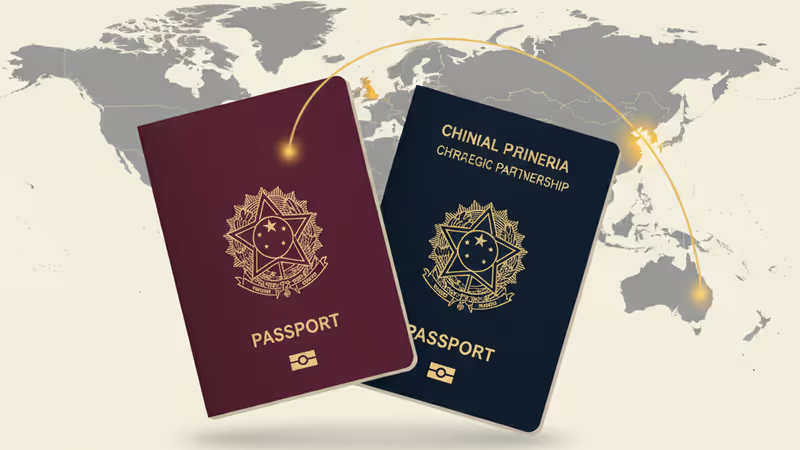
據報導,巴西正計畫對中國的觀光及商務旅客實施免簽證,預計於2026年初宣布。此舉旨在回應中國的單方面免簽措施,並深化與其最大貿易夥伴的關係。

阿爾及利亞國會無異議通過立法,將法國長達132年的殖民統治宣告為「犯罪」,並正式要求道歉與賠償,為兩國緊張關係再添變數。

馬利、布吉納法索與尼日宣布成立「薩赫爾國家聯盟」,並將組建一支5000人的聯合部隊,以對抗日益猖獗的武裝團體。此舉標誌著三國在疏遠西方、擁抱俄羅斯後進一步深化軍事合作,但專家對其能否改善安全局勢表示懷疑。
2026年明尼蘇達州長選舉,共和黨迎來勝選良機,但前總統川普的爭議言論與親信林德爾的參選,恐將反成敗筆。本文深入剖析共和黨內部的路線分歧與戰略困境。
據報導,巴西正計畫對中國的觀光及商務旅客實施免簽證,預計於2026年初宣布。此舉旨在回應中國的單方面免簽措施,並深化與其最大貿易夥伴的關係。
阿爾及利亞國會無異議通過立法,將法國長達132年的殖民統治宣告為「犯罪」,並正式要求道歉與賠償,為兩國緊張關係再添變數。
馬利、布吉納法索與尼日宣布成立「薩赫爾國家聯盟」,並將組建一支5000人的聯合部隊,以對抗日益猖獗的武裝團體。此舉標誌著三國在疏遠西方、擁抱俄羅斯後進一步深化軍事合作,但專家對其能否改善安全局勢表示懷疑。